Each year the PBRC looks for a recent academic graduate, based on interests that reflect the various interests of faculty and students. Intended to support young scholars whose research emphasizes humanistic development in and connections between the peoples of the Pacific Basin, the Montgomery fellow teaches courses both in one of SUA’s concentrations and in the General Education curriculum, including a special topics course related to their expertise. A valuable addition to campus life, this program allows students and faculty alike to benefit from the latest innovations in scholarship relevant to the university’s mission.
John D. Montgomery Postdoctoral Fellowship
Since 2013 the PBRC has offered an annual John D. Montgomery Postdoctoral Fellowship.
Conrad Yu Hirano
2026-2027 John D. Montgomery Post-Doctoral Fellow
Conrad Hirano received his PhD in History from Northwestern University (Evanston, IL), where he wrote his dissertation on the history of air pollution and anti-smoke campaigns in urban Japan from the 1880s to the 1990s. His interest in the history of air pollution began in 2011, when he spent three months living in Beijing, China, as a junior at Soka University of America. Witnessing the ubiquitous and suffocating presence of airborne pollutants and their effects on human health and the environment inspired him to dedicate his scholarship to the understudied field of air quality history. Before pursuing his PhD, he examined the century-long history of smoke abatement efforts in modern Japan in the MA History program at Montana State University (Bozeman, MT). His research has been supported by numerous awards, including the Japanese Studies Doctoral Fellowship from the Japan Foundation. Conrad returned to Soka after teaching at Northwestern University, Northeastern Illinois University (Chicago, IL), and North Central College (Naperville, IL). He is particularly interested in exploring the intersections of energy and environmental history with the history of science and technology.
Conrad’s doctoral dissertation offers the first comprehensive study of how Japanese people perceived and addressed urban air pollution from the 1880s to the 1990s. His research demonstrates that anti-smoke initiatives emerged from multiple sites and actors, including corporate executives in Osaka, metropolitan police authorities in Tokyo, and influential Japanese settlers in Dalian, all of whom led surprisingly intensive efforts to mitigate the harmful effects of industrialization. Osaka, the earliest center of pollution control, remained a leading hub and, by the 1930s, helped establish an intra-imperial network of experts dedicated to improving air quality across the Japanese Empire. Advocates of coal smoke abatement understood pollution as both a domestic and a global problem—intertwined with resource scarcity, imperial expansion, and public welfare—and actively engaged with counterparts in the West, introducing international scientific knowledge, technological innovations, and policy frameworks to Japanese audiences. By foregrounding these cosmopolitan and scientifically grounded policy efforts, this project recovers an overlooked dimension of imperial governance often obscured by Tokyo-centric narratives and contributes to scholarship on the global circulation of progressive reform ideals in response to the rise of carbon-intensive economies and widespread urban air pollution.
Conrad participated in several collaborative research projects while conducting archival research and writing his dissertation chapters in Japan from 2022 to 2023. Particularly valuable were his regular study meetings with scholars in Osaka, where he identified significant pollution-related documents and exchanged ideas about their contributions to understanding the urban and industrial history of Osaka and other economic centers. One outcome of these collaborations was a co-authored book chapter titled “Air Pollution Lawsuit and ‘Community Development for Environmental Regeneration’: The Case of Mizushima District in Kurashiki City, Okayama Prefecture,” published in Environmental Pollution and Community Rebuilding in Modern Japan (Springer, 2023). Conrad continues to maintain and expand his professional network in Japan through ongoing scholarly collaboration.
In addition to revising his dissertation into a book manuscript, Conrad has begun preliminary research on three new projects that extend his interest in Japan’s energy and environmental history. The first examines the environmental costs of the service sector—including schools, hospitals, and public bathhouses—which was essential to the development of modern states. The second traces the global spread of coal smoke measurement techniques in the early twentieth century. While historians have examined the use of the Ringelmann smoke scale in the Atlantic world, this project demonstrates that it was also widely adopted and legally enforced throughout the Japanese Empire to balance economic development with environmental protection. The third project turns to Kagawa Toyohiko (1888–1960), one of Japan’s most influential Christian social reformers, and his untranslated 1922 novel about anti-air pollution activism, analyzing it as a work of social criticism that connects Christian ethics, environmental concern, and popular literature. Together, these projects bridge history, cultural studies, and the environmental humanities to illuminate the entanglements of technology, social reform, and transimperial connections in modern Japan.
For the Fall 2026 semester at Soka, Conrad will teach a course on East Asian history that emphasizes how China, Japan, and Korea developed, from antiquity to the present, through continual interaction with the wider continental and global worlds. Conrad will also lead a seminar, Introduction to the Pacific Basin, which first examines how political, cultural, and economic boundaries have defined and shaped the region, and then explores how natural disasters, animals, humans, cultural commodities, and ideas have crossed these boundaries and contributed to the Pacific Basin’s transnational character.

Advocates of coal smoke abatement understood pollution as both a domestic and a global problem—intertwined with resource scarcity, imperial expansion, and public welfare—and actively engaged with counterparts in the West, introducing international scientific knowledge, technological innovations, and policy frameworks to Japanese audiences.
PBRC Postdoctoral Fellow 2026-27
Previous Postdoctoral Fellows
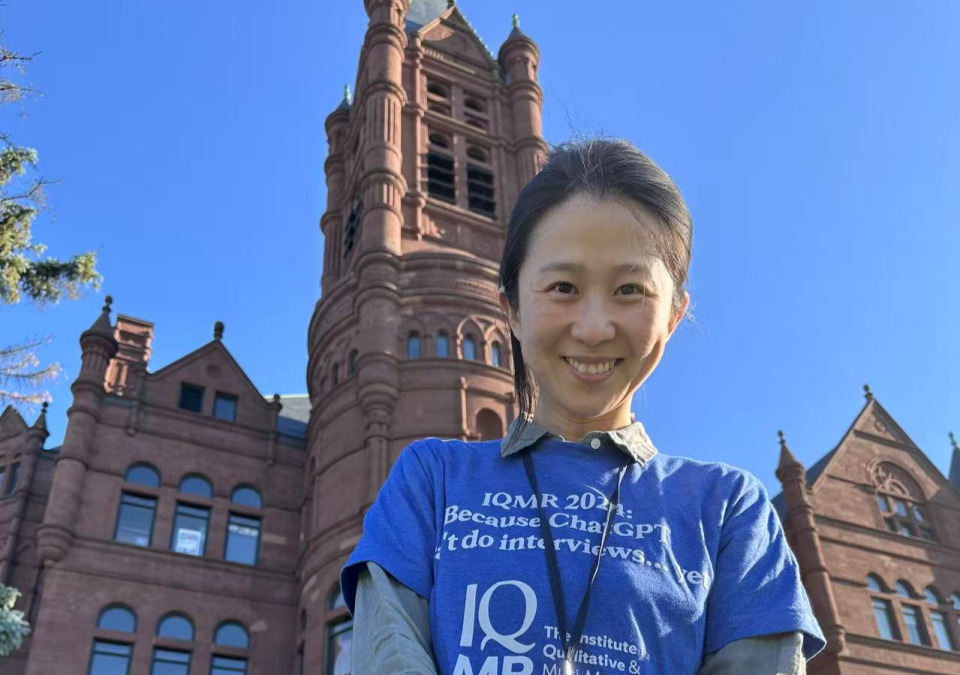
Yang Li Allen
2025-2026
Yang Li Allen received her PhD in Politics from the New School for Social Research, where she wrote her dissertation, “The Politics of Toilets: A Study of China’s Toilet Revolution 2015–2020,” which she is currently turning into a book manuscript. She served as the 2025–26 Post-Doctoral Fellow at the PBRC at Soka University of America and holds MA degrees from George Mason University and Yonsei University. Her research has been supported by fellowships and grants from The New School, the India China Institute, and the Confucius Institute. Her research interests include comparative politics, rural-urban divides in governance, public good provision, text-as-data methodology, and the political economy of China and East Asia.
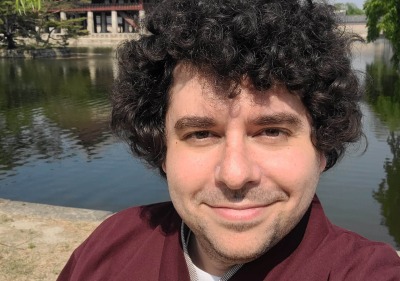
Zachary Gottesman
2024-2025
Zachary Gottesman received his PhD from the University of California, Irvine, where he wrote a dissertation “Korean Animation: Aesthetics in the Age of Globalized Production” which he is currently turning into a manuscript. He has published work in journals including the Journal of Japanese and Korean Cinema, Animation: an interdisciplinary journal the Journal of Settler Colonial Studies and positions: asia critique and presented his research at conferences including the Association of Asian Studies Conference, the World Congress of Korean Studies, and the Modern Language Association Conference. His research interests include animation, Japanese and Korean popular culture, global political economy, new media, and transnational fandoms.

Michael Schaefer
2019-2020
Michael Schaefer received a PhD in Environmental Earth System Science from Stanford University where his research focused on how humans become exposed to environmental contaminants. In Asia, naturally occurring arsenic is so pervasive in groundwater that it has been termed “the largest mass poisoning in human history” and millions of people around the world continue to be exposed to unsafe arsenic concentrations in drinking water. Michael’s dissertation research included field work in Cambodia, China, and Vietnam to understand how drinking water wells become contaminated with naturally-occurring arsenic, focusing on how interactions between surface and groundwater affect when and where arsenic is likely to occur in dangerous concentrations.
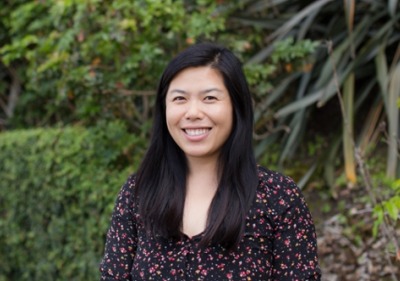
Laureen Hom
2018-2019
Laureen D. Hom received her PhD in Planning, Policy, and Design with an emphasis in Asian American Studies at the University of California, Irvine. She also received a BA in Anthropology and Art History at the University of California, Los Angeles and an MPH in Sociomedical Sciences, Urbanism and the Built Environment concentration at the Mailman School of Public Health at Columbia University. Her research interests are in the areas of urban studies, ethnicity and race, neighborhood change, and the political economy of space. Her work also emphasizes the importance of interdisciplinary approaches and community engagement to promote social equity and inclusion of historically underrepresented groups in academic and policy conversations.
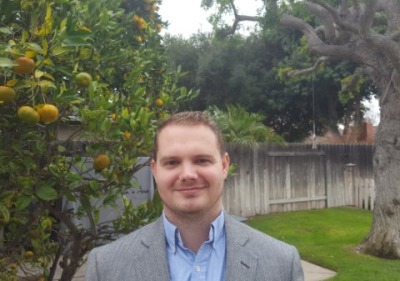
Jeremy Guida
2017-2018
Jeremy Guida arrived at Soka having recently finished his PhD in religious studies at the University of California, Riverside. His research focuses on how people learn spiritual beliefs and practices outside of religious organizations. As a postdoctoral fellow at PBRC, Jeremy focused on investigating the importance of the Pacific Basin in the religious developments of the 1960s. In addition to carrying out the above projects, Jeremy taught two classes at SUA: World Religions Today and The Religious History of California.
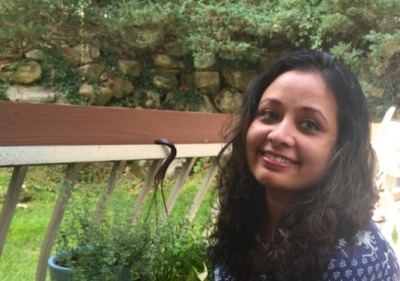
Rumela Sen
2016-2017
Rumela Sen earned a PhD in Political Science, specializing in comparative politics, with a regional interest in South Asia. In addition to pursuing her research interests, Rumela taught an interdisciplinary course titled Introduction to Peace Studies. In the spring, she offered another course on the political economy of conflict, with a regional focus on South Asia.
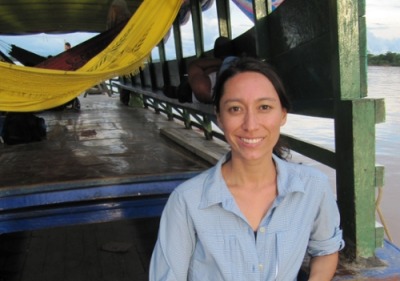
Lauren Baker
2015-2016
Lauren Baker earned a PhD in Environmental Studies, specializing in social and political ecology. Her work focuses on indigenous development and social movements, identity politics, environmental justice, environmental governance, and the political ecology and political economy of natural resource extraction as a form of development. In addition to advancing her research, Lauren also taught two courses: Indigenous Development and Social Movements in the fall and Introduction to the Pacific Basin in the spring.
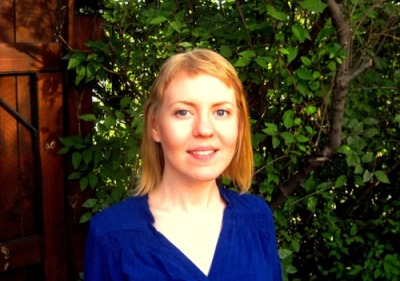
Ilona Moore
2014-2015
Ilona Moore earned a PhD in Geography, specializing in economic and political geography. Her work focuses on the geopolitics of food, agriculture, and development. In addition to continuing her research, Ilona also taught two courses during her time at SUA: Introduction to the Pacific Basin in the fall and Entitlements and Exclusions: Approaching Human Development in South Asia in the spring.
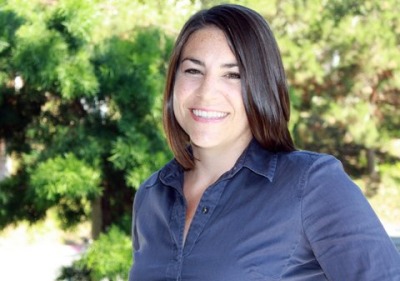
Erica Vogel
2013-2014
Dr. Erica Vogel is a cultural anthropologist who works on issues of globalization, migration, and religious conversion between Asia and Latin America. As a postdoctoral fellow at the PBRC, Erica taught two courses: Intro to the Pacific Basin in the fall and a course about Asia and Latin America in the spring. Dr. Vogel is currently the Anthropology Instructor in the Department of Social Sciences at Saddleback College.