
The Office of Institutional Research and Assessment collects and publishes data on enrollment, graduation, and student outcomes. This information supports institutional planning, regulatory reporting, and the transparency that prospective students, families, and researchers rely on.

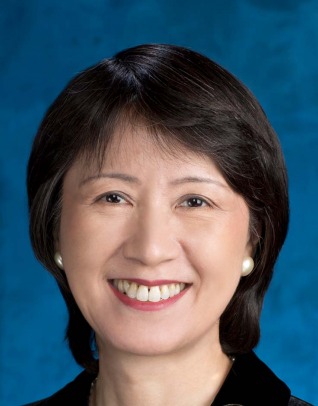
Questions about our data? Contact Tomoko Takahashi, PhD, EdD, LHD, Vice President for Institutional Research and Assessment.

Accreditation

Soka University of America is accredited by the WASC Senior College and University Commission (WSCUC), 1080 Marina Village Parkway, Suite #500, Alameda, CA 94501, (510) 748-9001.

WSCUC accreditation confirms that SUA meets rigorous standards for educational quality, institutional integrity, and student learning outcomes. For more information, visit the WSCUC website.

Student Success Data

88%
average undergraduate graduation rate (2001–present)
92%
of graduates earning their degree within four years (2005–present)
95%
graduate program average completion rate.

Student admission, enrollment and graduation

Undergraduate

YEAR ADMITTEDNumber AdmittedNumber EnrolledNumber GraduatedNumber ContinuingNumber DiscontinuedGraduation Rate
200114612010201885%
200212086820495%
200312793860792%
2004128988701189%
200511886770990%
200612785780792%
20072051018701486%
200818412710102680%
200921013311601787%
20101751039301090%
20111791101040695%
2012158103940991%
201318311310201190%
20141761008701387%
201520812711501291%
20161921049201288%
20171771079301487%
201817711110101091%
20191991099501485%
20202201028421676%
202127213411341784%
2022275129N/A11415N/A
2023274128N/A11414N/A
2024273127N/A1207N/A
2025259110N/A1091N/A
TOTAL476227461989463294Average 88%

Of students who have graduated (2005 - present), 92% graduated within four years, and the rest within six years.

Student admission, enrollment and graduation

Graduate

YEAR ADMITTEDNumber AdmittedNumber EnrolledNumber GraduatedNumber ContinuingNumber DiscontinuedGraduation Rate
201476600100%
201596600100%
2016117700100%
2017118800100%
201876600100%
201987700100%
20206430175%
20218640267%
202276600100%
2023106600100%
2024105N/A50N/A
2025116N/A60N/A
TOTAL1057359113Average 95%

Additional resources:

Flowers Orange

Where Soka graduates go

Soka graduates go on to graduate programs, careers in education, government, business, and nonprofits, and organizations from the United Nations to Apple to the Peace Corps. The lists below reflect outcomes across our undergraduate and graduate program alumni.

American University; Boston University; Brock University; California State University, Los Angeles; Cardiff University, Wales; City University of New York; Columbia University; Columbia University Teachers College; Cornell University; Duke University Nicholas School of the Environment; George Mason University; Georgetown University; Indiana University; Johns Hopkins University; King's College London; London School of Economics; Mills College; Nanyang Technological University, Singapore; National Chiao Yung University, Taiwan; New York University; Relay Graduate School of Education; Rutgers University; Sciences Po (Paris); Scripps College; Seton Hall University; Soka University of America; St. Catherine University; Texas Tech; The Graduate Institute of International and Development Studies, Switzerland; Tufts University; University of Amsterdam; University of California, Irvine; University of California, San Diego; University of Chicago; University of Denver; University of East Anglia; University of Glasgow; University of Greenwich; University of Leeds; University of London; University of Michigan; University of Pennsylvania; University of Tokyo; University of Utah; University of Washington; University of Waterloo; University of York; UCLA; United Nations University, Tokyo; USC; Western Washington University; York Law School

ANA Airport Service; Anneliese Schools; Apple, Inc.; Booz Allen Hamilton; Broadcom; CalFirst National Bank; Caterpillar Japan Ltd.; Columbia University; Conde Nast; Cornell University; Creia Consulting; DAISO CO., LTD.; Deloitte Consulting; Dentsu Inc.; Embassy of Japan; Ernst & Young Advisory; General Electric; Goldman Sachs; Harvard University; International Organization for Migration (IOM); Japan Exchange and Teaching Program (JET); Marriott International; Mitsubishi UFJ Morgan Stanley Securities; Nintendo of America; Nomura Research Institute; Peace Corps; The Supreme Court of Japan; The Walt Disney Company; The World Bank; United Nations; Uniqlo; University of Illinois at Urbana-Champaign; University of Southern California; Wellesley College; Whole Foods Market

Ph.D. programs at: University of Texas at Austin (Educational Policy and Planning); Texas A&M (Urban Education); Oklahoma State (Social Foundations of Education); UC Irvine (Political Science); Purdue (Curriculum and Instruction); Claremont Graduate University (Educational Policy Studies); University of Hawaii (Education); University of Auckland (Education and Social Work); New York University (Sociology); and others.

Practitioner roles including: Fulbright Teaching Fellow in Ecuador; Peace Corps Response Volunteer in Liberia; UNESCO Project Assistant, Nairobi; Demonstration Teacher, UCLA Lab School; District Assessment System Architect, Chicago Public Schools; Co-founder and Chief Education Officer of an NPO in Nepal; Residence Hall Director, Iowa State University; Teacher at École Teueikan serving the Innu First Nation in Quebec City; and others.

  • Education and Social Reproduction: A Case Study of Cuba and Soka
  • Possibilities and Challenges to Implementing a Culture of Care Through Teacher Education in Brazil and India
  • School Choice: It's Common Sense?
  • Student Engagement: A Vehicle for Preventing High School Dropout in the Coastal Urban Regions of Guyana
  • Contemporary Humanistic Schools Committed to Social Change: Brazil, Japan, and the United States
  • The Negotiation of Western and Andean Worldviews in Ecuador's Intercultural Bilingual Education
  • A Future Worth Investing In?: An Exploration of Various Factors Affecting State Support in Public Higher Education
  • Educational Purpose: An Examination of Perceptions
  • Challenges Teachers Face When Implementing Montessori in Public (Non-Charter) Elementary Schools
  • On the Role of Music and Music Education in Peacebuilding: The Cases of Cuba, Brazil, and Japan
  • Youth Education for Societal Change: The Norwegian Folk High School’s Nuances
  • Clustering States for Effective Stem Education Policy Borrowing Using NECS Data of 4th and 8th Grades
  • Women Leaders In K-12 Education in South Asia
  • Literacy as Empowerment: A Case Study of an NGO Family Literacy Program in a Low Socioeconomic Community
  • Perceptions of Teachers and Researchers on Inquiry-Based Learning
  • Development of a Global Citizenship Rubric: India, Japan, and the USA
  • The Integration of Refugees into the German School System: Challenges and Barriers and the Perceptions and Attitudes of Teachers and Principals
  • I Am Not a Human Being, I Am a Human Becoming: An Exploration of Humanistic Education in Value-Creation Schools in Japan and the U.S.
  • Learning from the Lived Experiences of Black Independent School Alumni
  • "You're a Boy, You Can Do It. I'm a Girl, I Can Also Do It": Female Youth Experiences of Leadership in Ghana
  • Teacher's Social and Emotional Competence: Impact of In-Service Teacher Trainings on Teacher-Student Relationships
  • (Re)Inverting Architecture Education: Promising Practices in Africa
  • Comparative Math Education in 20th Century United States and Japan and Soka Educator Josei Toda
  • The Role of International Student Services in Students' Cross-Cultural Adaptation in U.S. and Japanese Universities
  • Facing the Facts: An Investigation of The Multicultural Attitudes of Teachers in Japan
  • Seeking the Truth?: Foucauldian Discourse Analysis of Global Human Resources
  • Exploring The Perspectives of Kenyan School Teachers on Themes in Educational Development and The Philosophy of Value-Creating Education
  • Followership of Professors in Higher Education: An Exploratory Study in Mongolia, Malaysia and Singapore
  • Emotional Intelligence in South America: An Exploratory Study of Social, Educational, and Political Leaders
  • An Exploratory Study of Teacher-Student and Mentoring Relationships in a Pan-African NGO Setting
  • Holistic Education at Soka Ikeda College: Multifaced Empowerment and Lifelong Happiness of Each Student
  • Women's Education in Colonial West Africa: The Role of Education on Shaping Identities
  • An Exploration of Teachers' Philosophies and Practices Towards a Transformative Education Through Their Narratives
  • Exploring Teacher Wellbeing and Equitable Educational Practices
  • Youth Leaders Now! How to Make Organizational Space for Youth Leadership Development Through Engagement in Brazil
  • Lockdown and Intrinsic Motivation in Public High Schools: Online Teaching Practices During the Pandemic in Brazil and in the United Kingdom
  • "Dewey Needed Software”: Technology and Pedagogy in the 21st Century
  • Looking Into Language Use, Literacy, Power: Impactful Interactions in Higher Education
  • Long-Term Effects of Global Citizenship Education and Study Abroad Program: Learning from a U.S. Liberal Arts College
  • First-Generation College Students and Meaning-Making of Career Readiness: A Comparative Study of Career Support on Campus
  • Public-Private Partnerships in Education: Alternative Finance Opportunities in India's Silicon Valley
  • Intercultural Dialogues in the War History Curriculum: The Process of Promoting Peace and Becoming a Global Citizen
  • The Intersections of Climate Justice, Indigenous Liberation, and Rights of Nature
  • Towards a Model Collaborative Framework Between Data Scientists and Educators: A Mixed-Method Study
  • Financial Literacy and Poverty Reduction: Comparative Study of Rural-Urban Financial Literacy Levels
  • International College Students' Experience and Preparation for Society
  • Comparative Study of Generalized Self-Efficacy between USA, Japan, and Taiwan: Life-Long Value Creation for Themselves and Others
  • Value-Creating Approaches to Early Childhood Global Citizenship Education
  • Navigating the Road to Higher Education: Bridging the Digital Divide for Online Applications in Uganda
  • Comparative Analysis of Incorporation of Environmental Education in the Competency-Based Curriculum Implemented in East Africa
  • Global Citizenship: Fostering Global Leaders through the Power of Education
  • Edu-tourism in Finland: Analytical Perspectives and Consequences on the Commodification of Education
  • Educators as Social Emotional Leaders: Creating a Culture of Hope in Nepalese Schools
  • Diversity, Equity, and Inclusion in Sports and Educational Leadership: Representation of New York Asian Americans in School Sports
  • How a School’s Philosophy Shapes Conflict Resolution Strategies and Influences Teachers
  • Digital Literacy for Moroccan College-Age Students and Socioeconomic Empowerment

Common Data Set

The Common Data Set (CDS) is a collaborative standardized reporting initiative involving data providers and publishers including the College Board, Peterson’s, and U.S. News & World Report. It provides consistent, comparable information about higher education institutions.

Download Soka’s Common Data Set by year:

Contact our office