Final East Asia Symposium Continues Building Trust Across Historical Divides
In a region shaped by war, colonialism, and contested memory, what does genuine reconciliation require?
The Soka Institute for Global Solutions (SIGS) continued exploring this question at the third and final symposium in its Peace and Reconciliation in East Asia series, a multiyear initiative examining how dialogue, cultural exchange, and shared acknowledgement of past harms can help build trust across historical divides.
Dongyoun Hwang, professor of Asian studies and chair of the organizing committee, built the series around three commitments: keeping students at the center of each symposium; drawing participants from across disciplines, including NGO activists, artists, and academics; and opening the programming to the wider SUA community through pre-symposium events.
Held April 17–18 at SUA, the final symposium focused on the People’s Republic of China and brought together scholars, artists, and students from East Asia and North America for two days of presentations, performances, and roundtable discussions. The diverse series of sessions explored artistic exchange and expression, wartime memory, territorial disputes, the role of artificial intelligence, and environmental cooperation.
Across sessions, participants returned to a shared premise: reconciliation is never a finished achievement, but an ongoing practice sustained by artists, scholars, students, and ordinary citizens.
Student voices shaped the symposium from start to finish, with SIGS student research fellows and students from other institutions in East Asia serving as respondents and discussants and presenting original research on film, diplomacy, historical disputes, anti-war activism, and peace education museums. This depth of student involvement reflects one of the symposium’s core commitments: creating opportunities for emerging scholars to contribute to debates with real stakes for the region’s future.
In the closing discussion, student participants reflected on the difficulty and promise of the work they had encountered. “Being mature, sometimes [we] have to face reality,” said Yuji Ishiyama ’26, a student research fellow at SIGS, “but thanks to the severe winter, we can bloom in spring.”
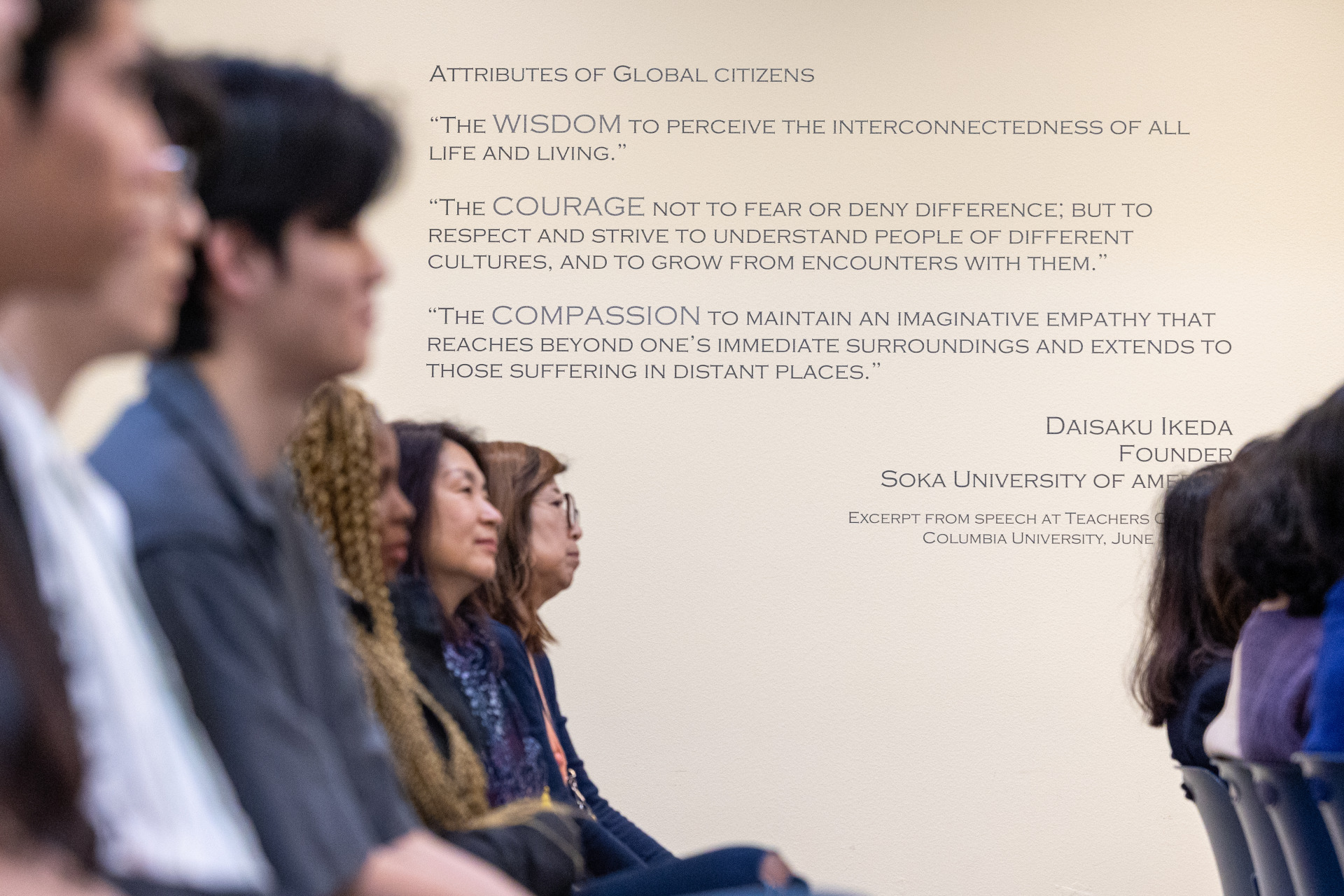
Hwang, who opened and closed the symposium, reminded participants to carry Soka’s values of wisdom, courage, and compassion into the long work of peace and reconciliation.
“The symposia affirmed the importance of what we call ‘Soka Steps,’” said Hwang, “which involves a long, continuous, and open process that includes dialogue. Pursuing peace and reconciliation in East Asia and beyond requires both grassroots/people-based approaches and involvement at the national level, as suggested in SUA founder Daisaku Ikeda’s 1987 peace proposal.”
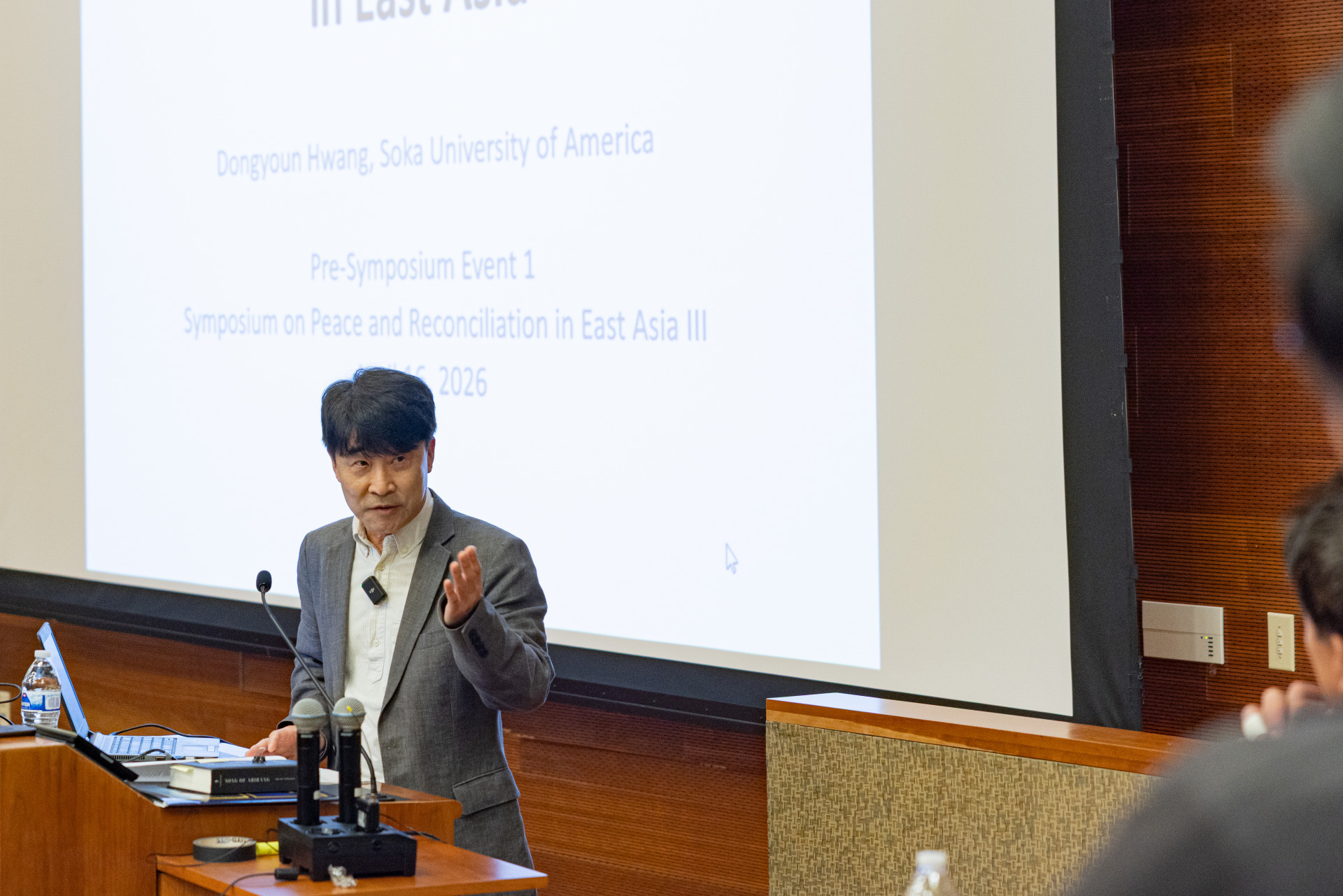
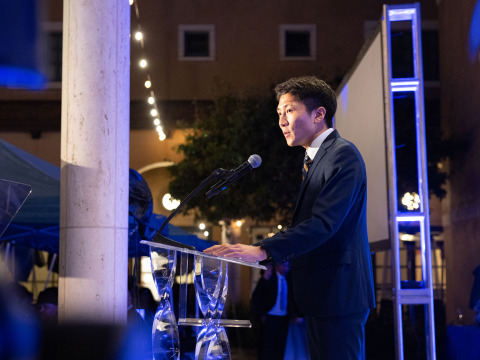
Professor of Asian Studies Dongyoun Hwang opens the first formal session of the third Peace and Reconciliation in East Asia symposium.
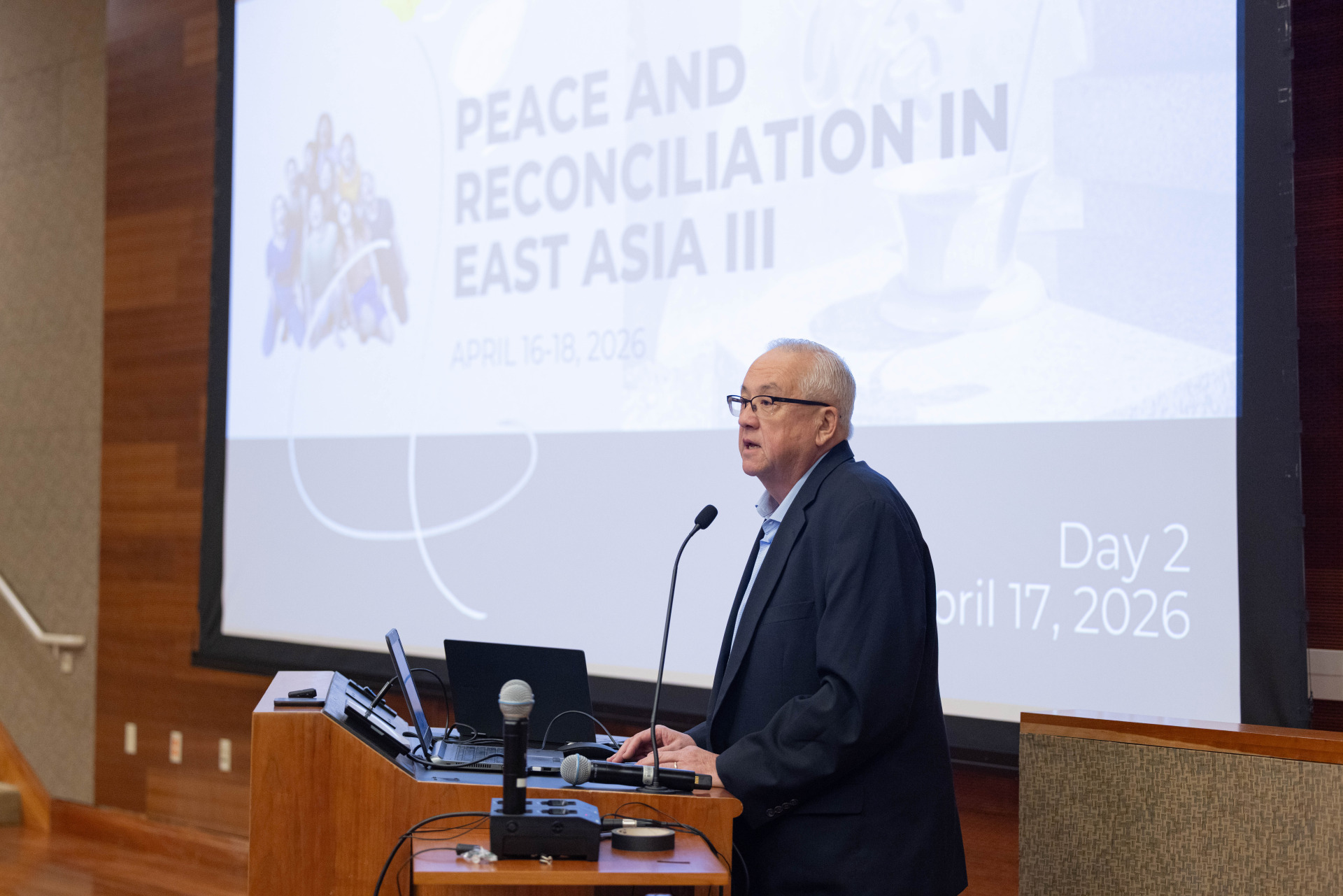
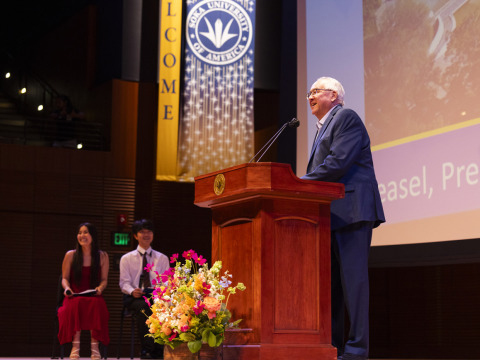
President Edward M. Feasel delivers welcome remarks during the opening session.
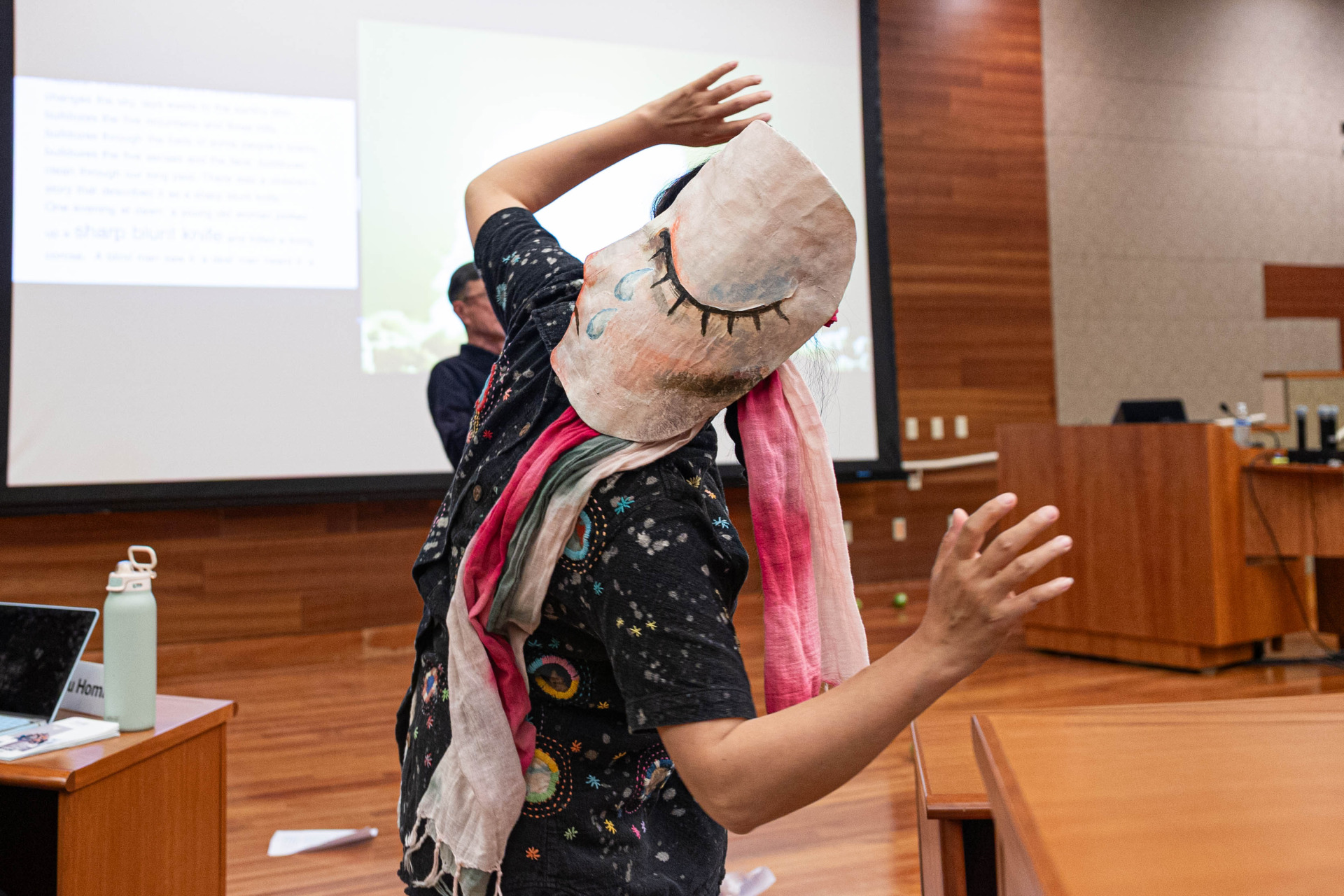
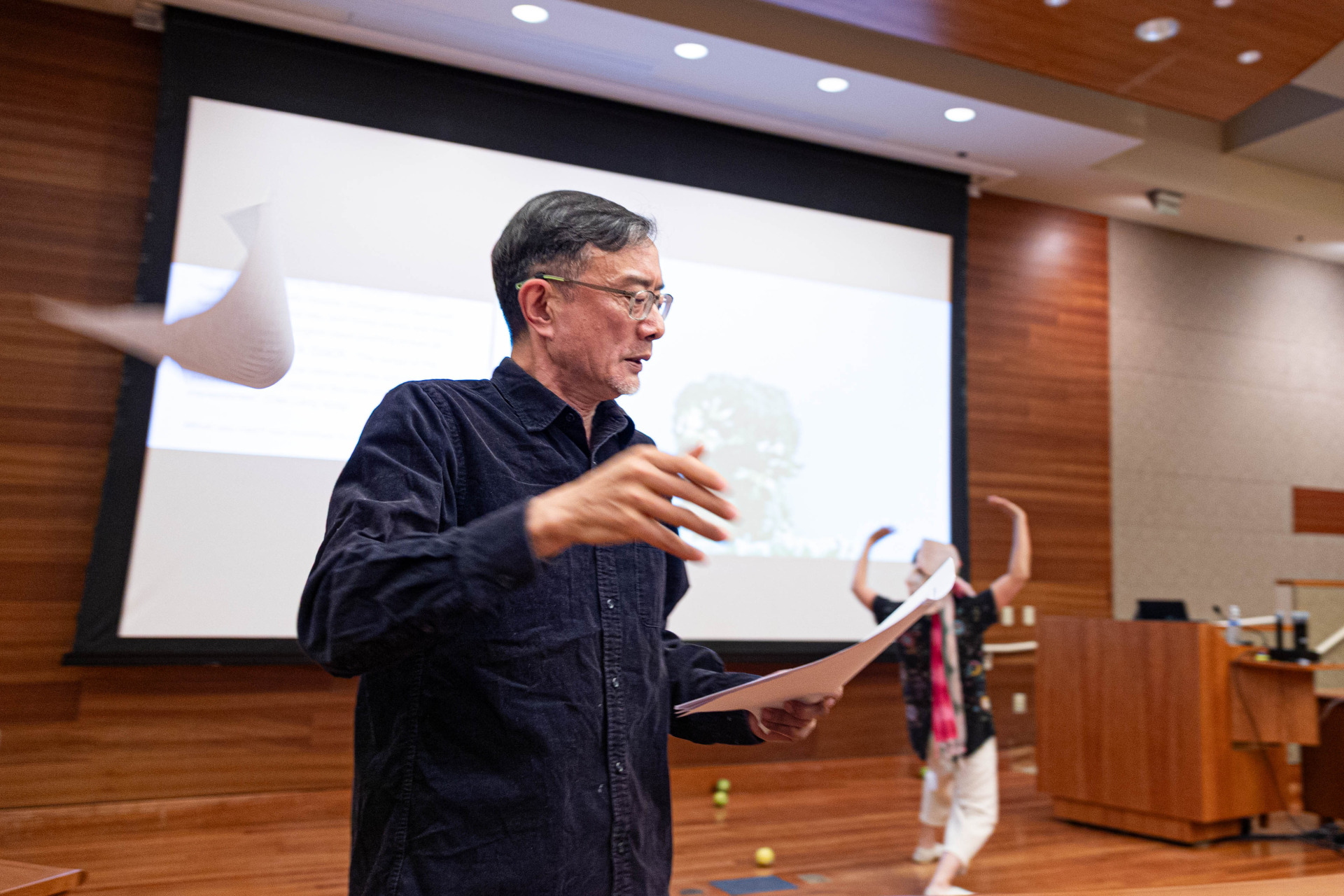
Wu Meng of the theater collective Grass Stage performs “Farewell to Today” during a speakers session.
Zhao Chuan, a founder and director of the theater collective Grass Stage, performs during a session.
Audience members watch presentations and performances during a pre-symposium event.
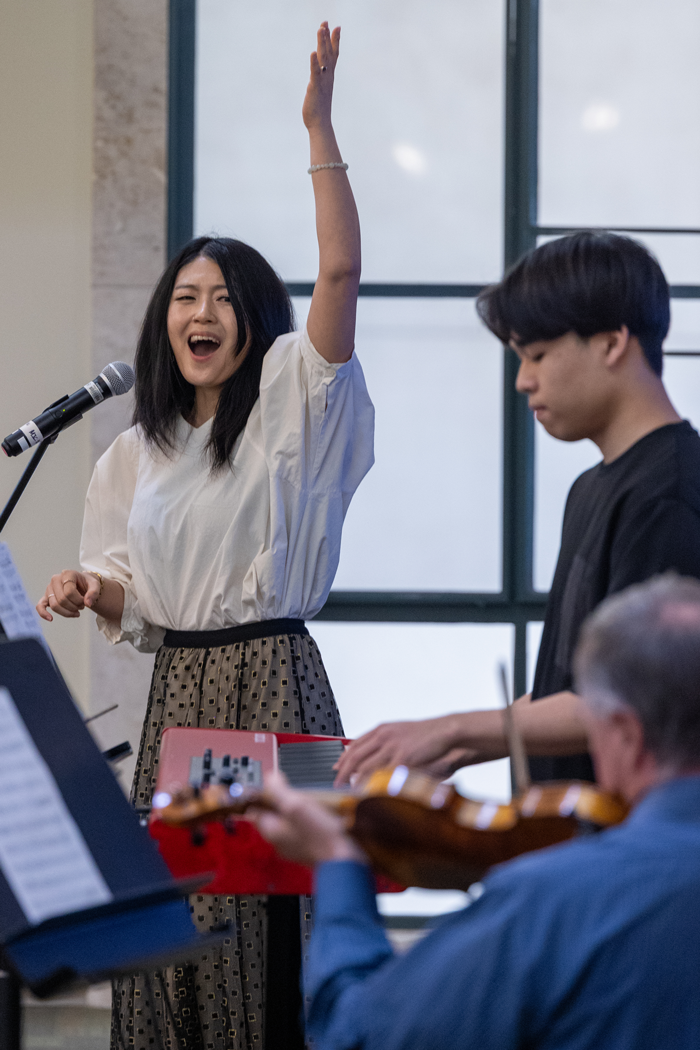
Geoff Westropp, on violin, Gloria Takahashi, and Hiroki Iwasa, on keyboard, perform during a pre-symposium event.
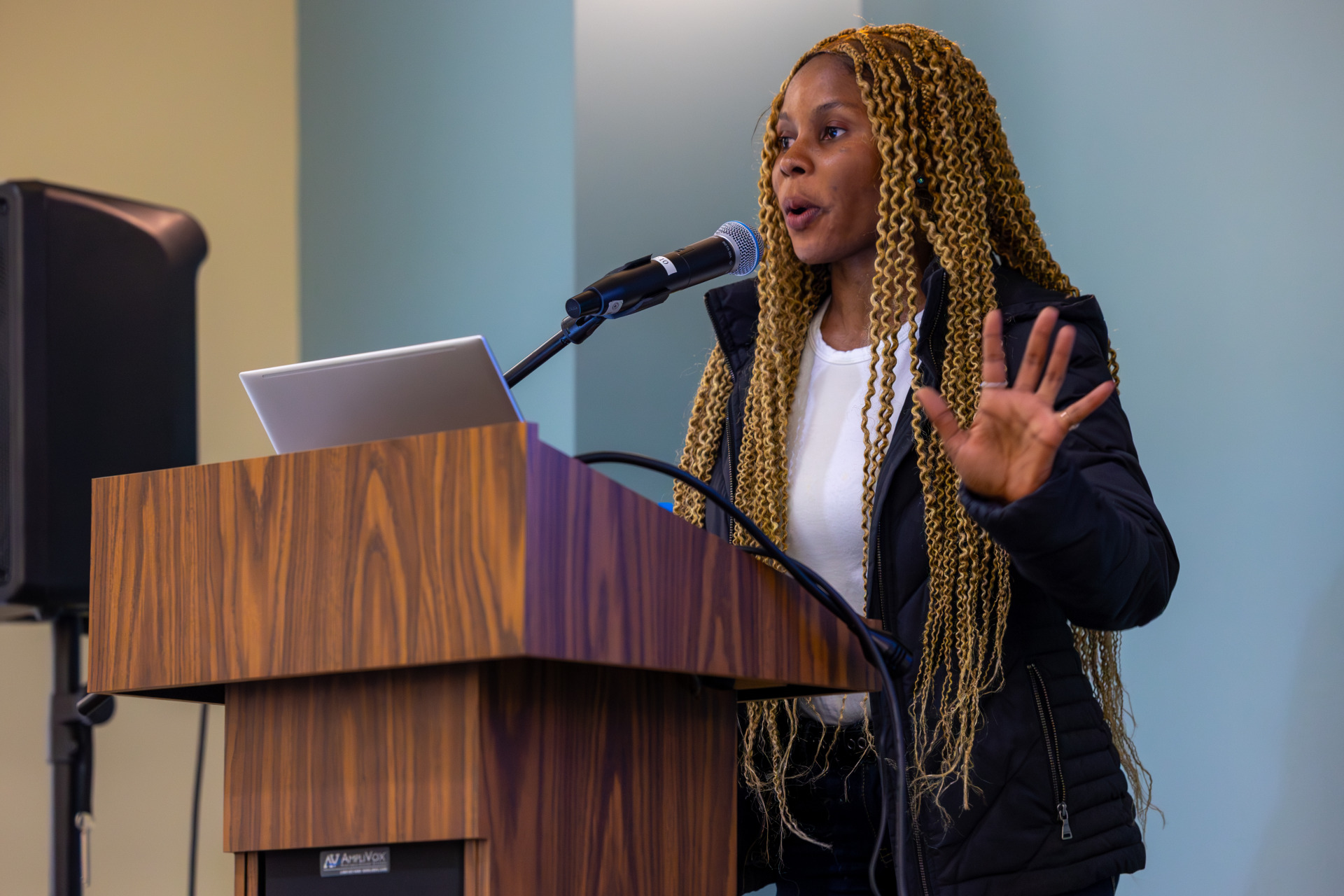
Chinenye Elom M.A. ’27 presents “Biafra at the Crossroads: Pathways to Dialogue, Justice, and Lasting Peace in Nigeria, Africa” during a pre-symposium event.
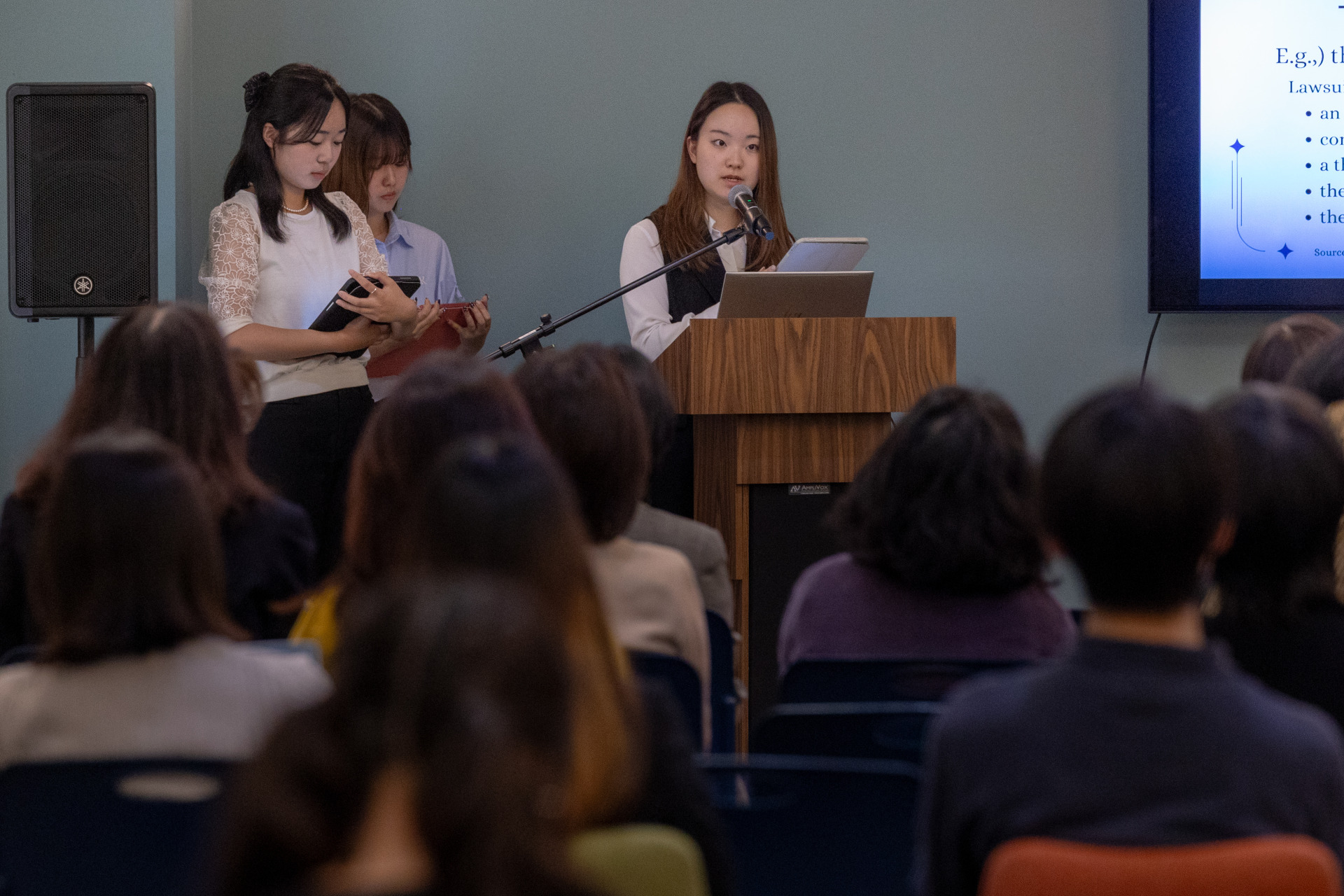
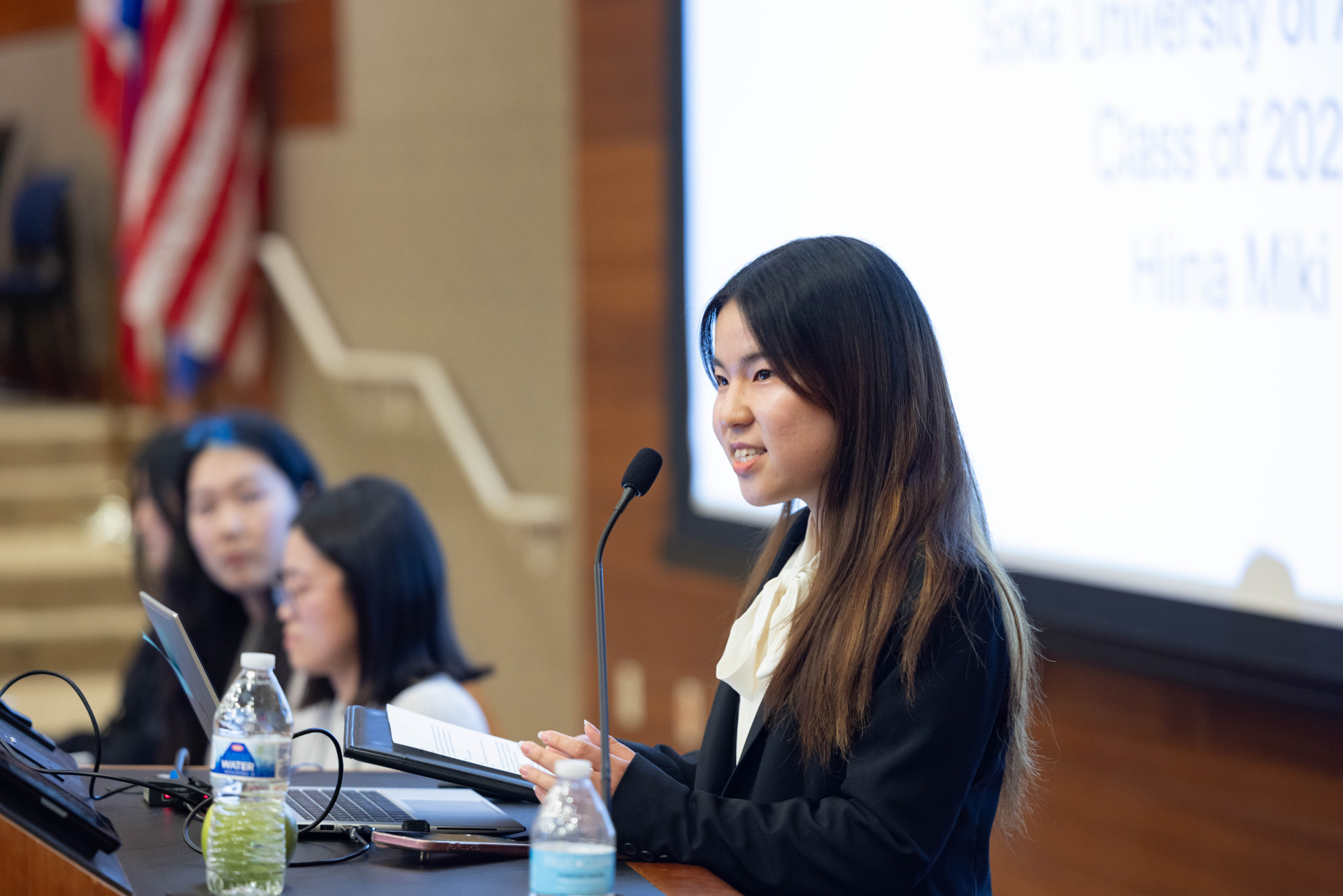
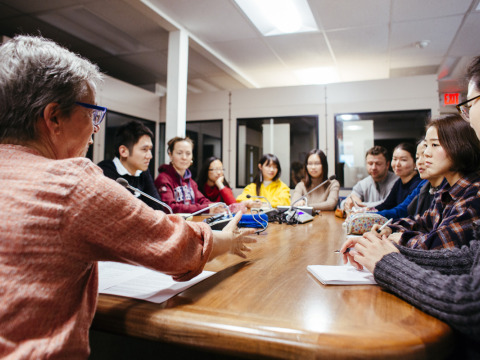
Hiina Miki ’27 presents during a roundtable discussion.
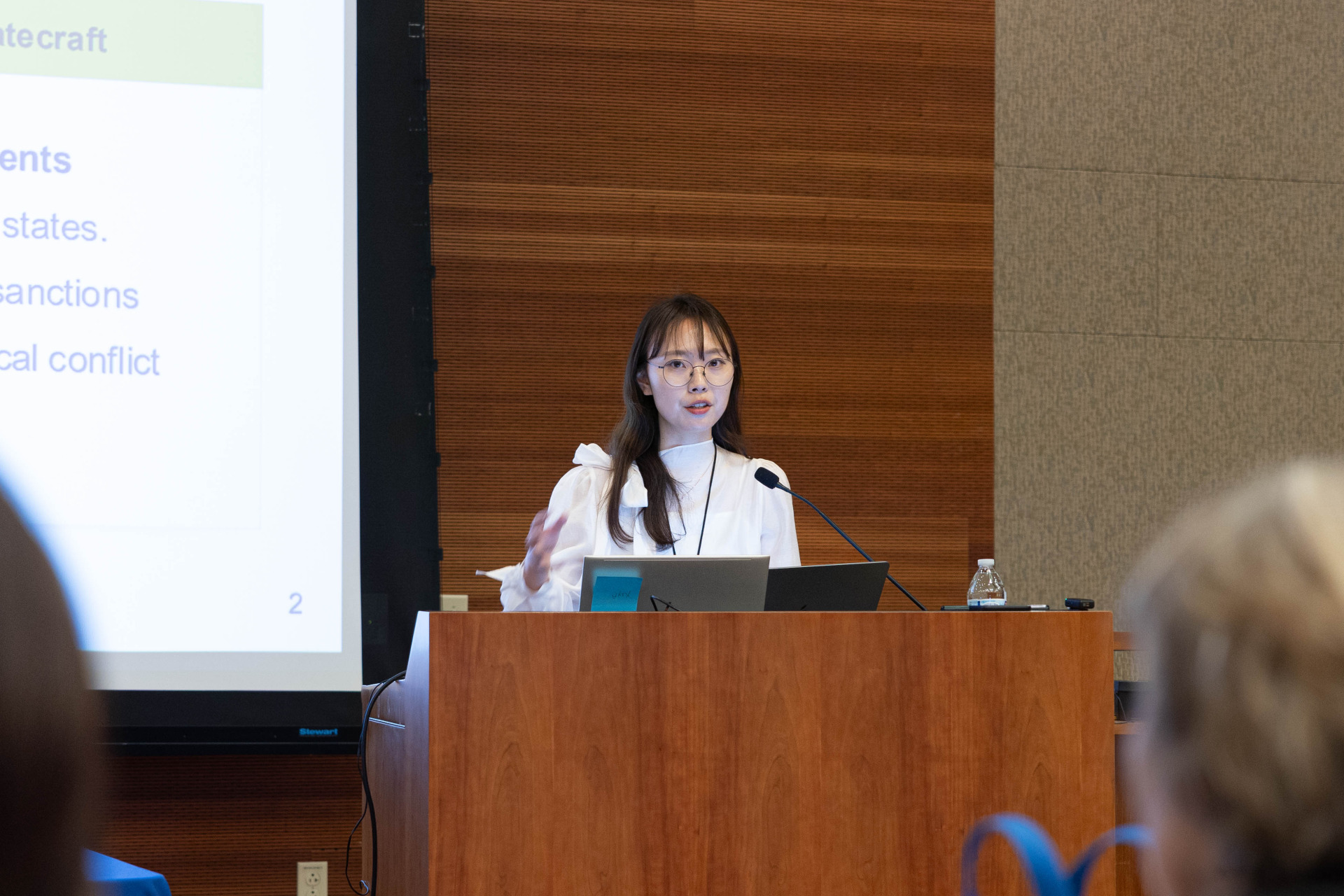
Nakyeong Kim, a graduate student at Seoul National University in South Korea, presents during a roundtable discussion.
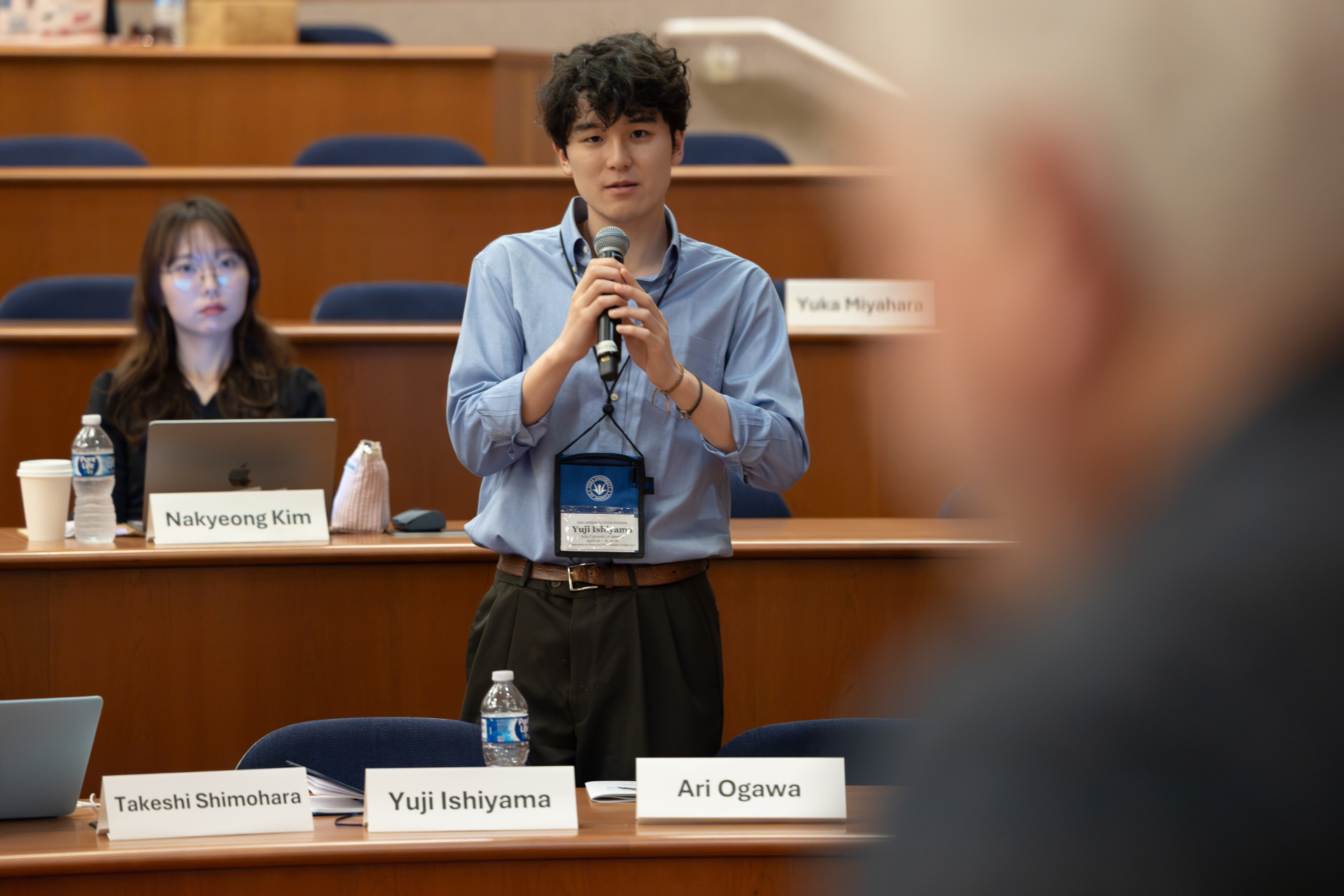
Yuji Ishiyama ’26 asks a question during Chris Connery’s presentation, “War, Anti-War, Capitalist Peace, Real Peace: Frameworks for Thinking U.S.-China Relations.”
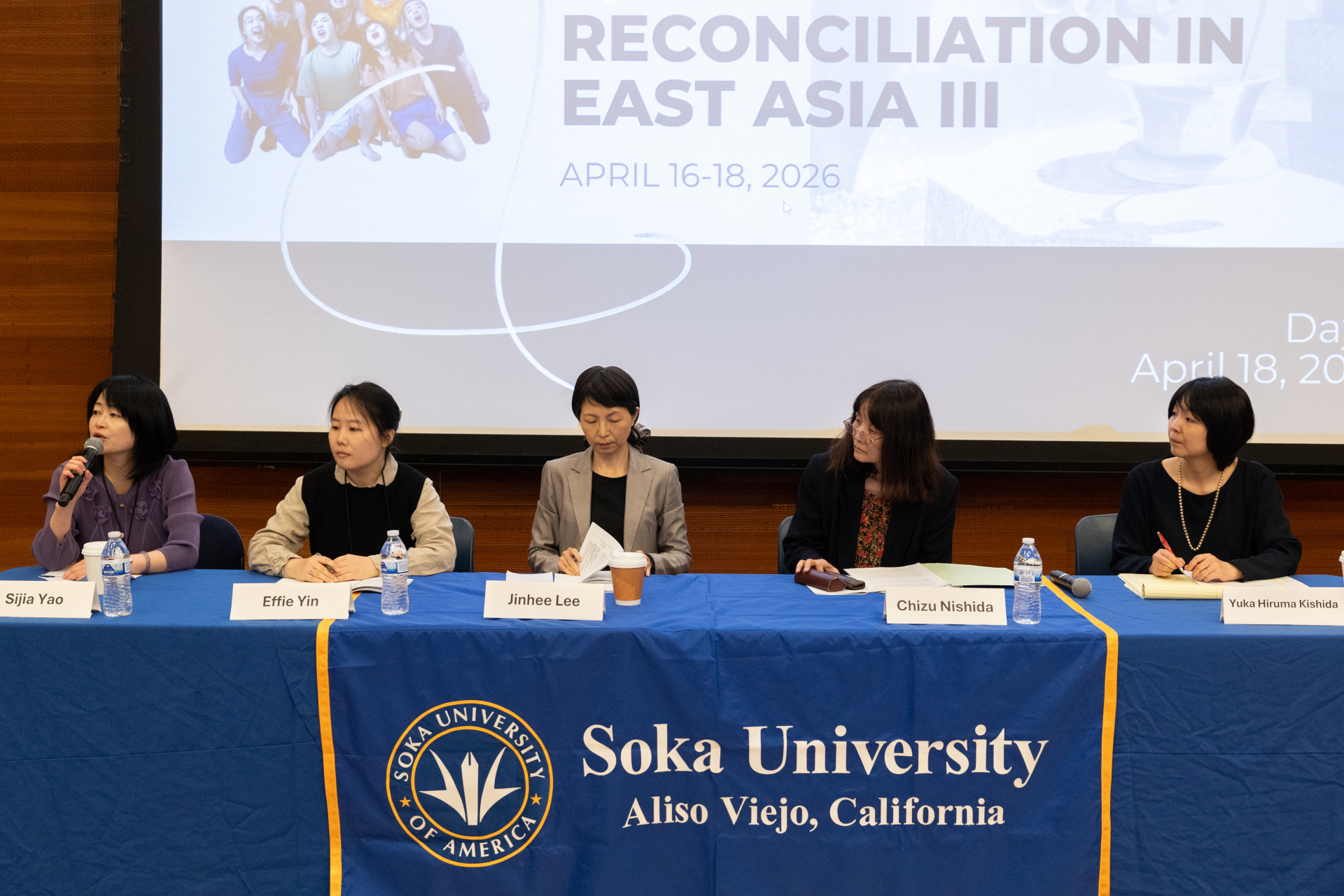
Left to right: Sijia Yao, assistant professor of Chinese language and culture at Soka University of America; Effie Yin, liberal arts faculty at the Ringling College of Art + Design; Jinhee Lee, professor of history at Eastern Illinois University; researcher Chizu Nishida of Nara Women’s University; and Yuka Hiruma Kishida, associate professor of history at Bridgewater College, participate in the “Lessons from the Past” session.
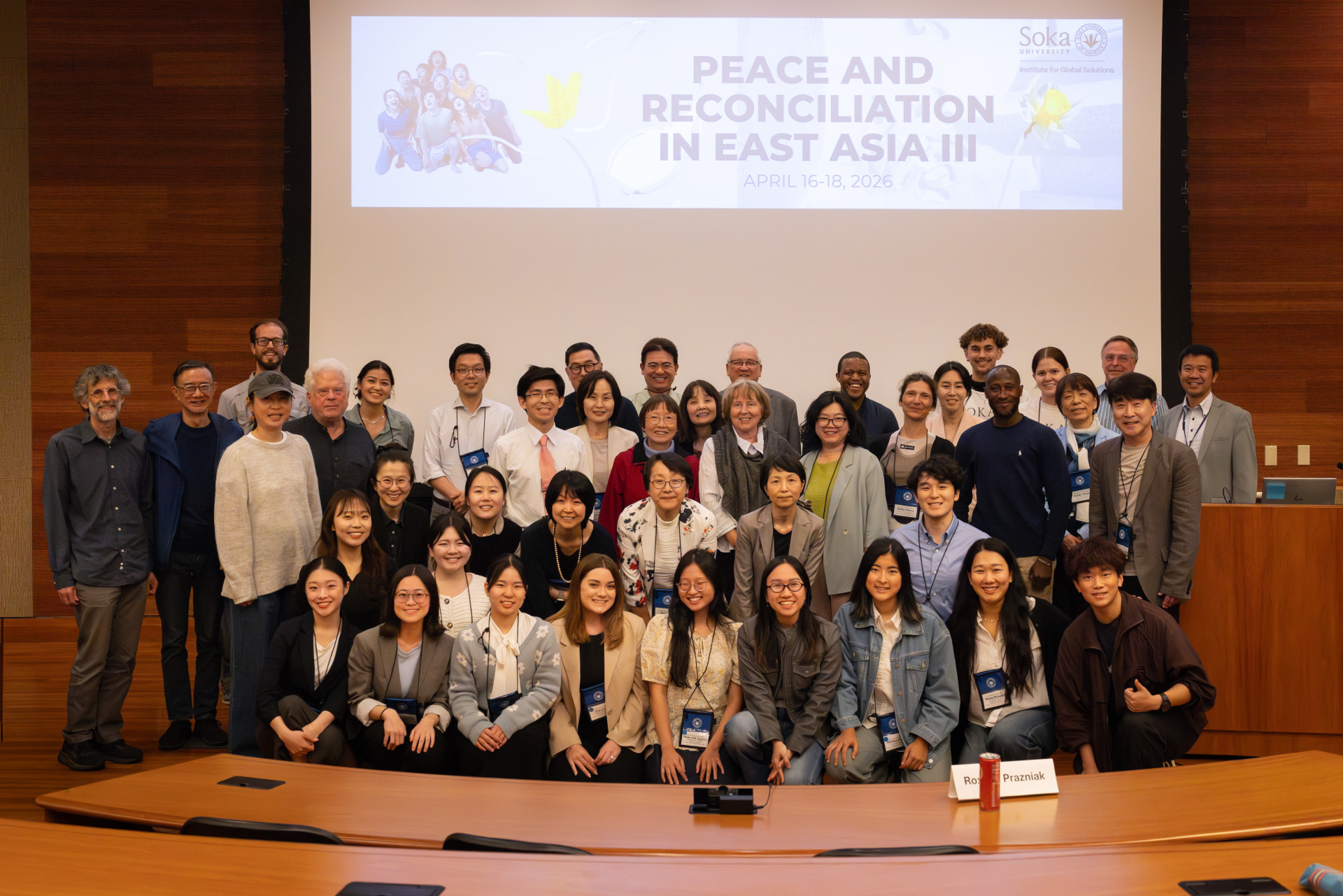
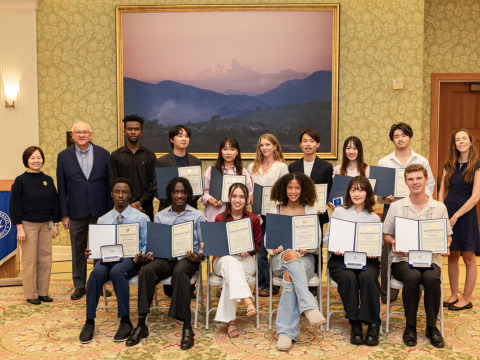
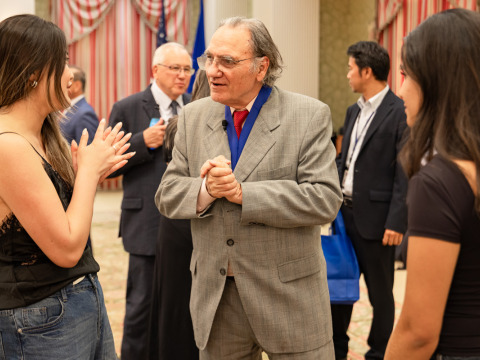
SUA students, faculty, and staff join visiting scholars and student researchers from partner institutions during the third Peace and Reconciliation in East Asia symposium at Soka University of America.
Kate Selfe ’27 of Plettenberg Bay, South Africa, signed up for the Emerging Leaders Program because it felt complementary to the work she was already doing at her campus job. At the time, she was a fi...
Soka University of America President Edward M. Feasel and Tetsushi Ogata, managing director of the Soka Institute for Global Solutions, spent two days in September at the Hazel Henderson Center in St....
What can education do for students, communities, and entire societies worldwide? Karen Moran Jackson often facilitates discussions around this question with graduate students. She directs the M.A. in ...
“Our students are striving to become global citizens who contribute to the world,” Soka University of America President Edward M. Feasel said in his remarks to donors at the 22nd annual Peace Gala on ...
SUA students spent part of the summer in New York City and the Amazon rainforest, exploring how their education can address global challenges. The Luis and Linda Nieves Family Foundation funded both t...
The Campus Green was buzzing on Sept. 23 as students, faculty, and staff gathered for SUA’s annual Welcome Back Community Event, an afternoon of food, games, and friendly competition to kick off the n...
Soka University of America has named this year’s top scholars — recipients of the Ikeda Scholarship, the John D. Montgomery Scholarship, the Soka Merit Award, and the Academic Excellence awards. Presi...
“If you believe in global citizenship education,” said eminent education scholar Carlos Alberto Torres during his lecture after receiving the 2026 Soka Global Citizen Award, “find a social movement an...
Team practices may have paused over the summer, but for SUA student-athletes, the season offered a different kind of training ground. High jumper Mili Fukada ’28 interned at U.S. Bank and taught balle...
When local residents Steve and Carol Theiss signed up for a community gardening program on SUA’s campus this summer, they expected to learn about growing organic produce and pick up a few tips for eco...
Nearly five decades apart, two institutions of higher learning were founded on a shared conviction — that education can help move the world toward peace and intercultural understanding.The Monterey In...
Dear Soka Community,I'm writing today to share a significant expansion of the Soka Opportunity Plan, made possible in part by the strength of our donor community.Beginning with the 2027–2028 academic ...
Kate Selfe ’27 of Plettenberg Bay, South Africa, signed up for the Emerging Leaders Program because it felt complementary to the work she was already doing at her campus job. At the time, she was a fi...
Soka University of America President Edward M. Feasel and Tetsushi Ogata, managing director of the Soka Institute for Global Solutions, spent two days in September at the Hazel Henderson Center in St....
What can education do for students, communities, and entire societies worldwide? Karen Moran Jackson often facilitates discussions around this question with graduate students. She directs the M.A. in ...
“Our students are striving to become global citizens who contribute to the world,” Soka University of America President Edward M. Feasel said in his remarks to donors at the 22nd annual Peace Gala on ...
SUA students spent part of the summer in New York City and the Amazon rainforest, exploring how their education can address global challenges. The Luis and Linda Nieves Family Foundation funded both t...
The Campus Green was buzzing on Sept. 23 as students, faculty, and staff gathered for SUA’s annual Welcome Back Community Event, an afternoon of food, games, and friendly competition to kick off the n...
Soka University of America has named this year’s top scholars — recipients of the Ikeda Scholarship, the John D. Montgomery Scholarship, the Soka Merit Award, and the Academic Excellence awards. Presi...
“If you believe in global citizenship education,” said eminent education scholar Carlos Alberto Torres during his lecture after receiving the 2026 Soka Global Citizen Award, “find a social movement an...
Team practices may have paused over the summer, but for SUA student-athletes, the season offered a different kind of training ground. High jumper Mili Fukada ’28 interned at U.S. Bank and taught balle...
When local residents Steve and Carol Theiss signed up for a community gardening program on SUA’s campus this summer, they expected to learn about growing organic produce and pick up a few tips for eco...
Nearly five decades apart, two institutions of higher learning were founded on a shared conviction — that education can help move the world toward peace and intercultural understanding.The Monterey In...
Dear Soka Community,I'm writing today to share a significant expansion of the Soka Opportunity Plan, made possible in part by the strength of our donor community.Beginning with the 2027–2028 academic ...