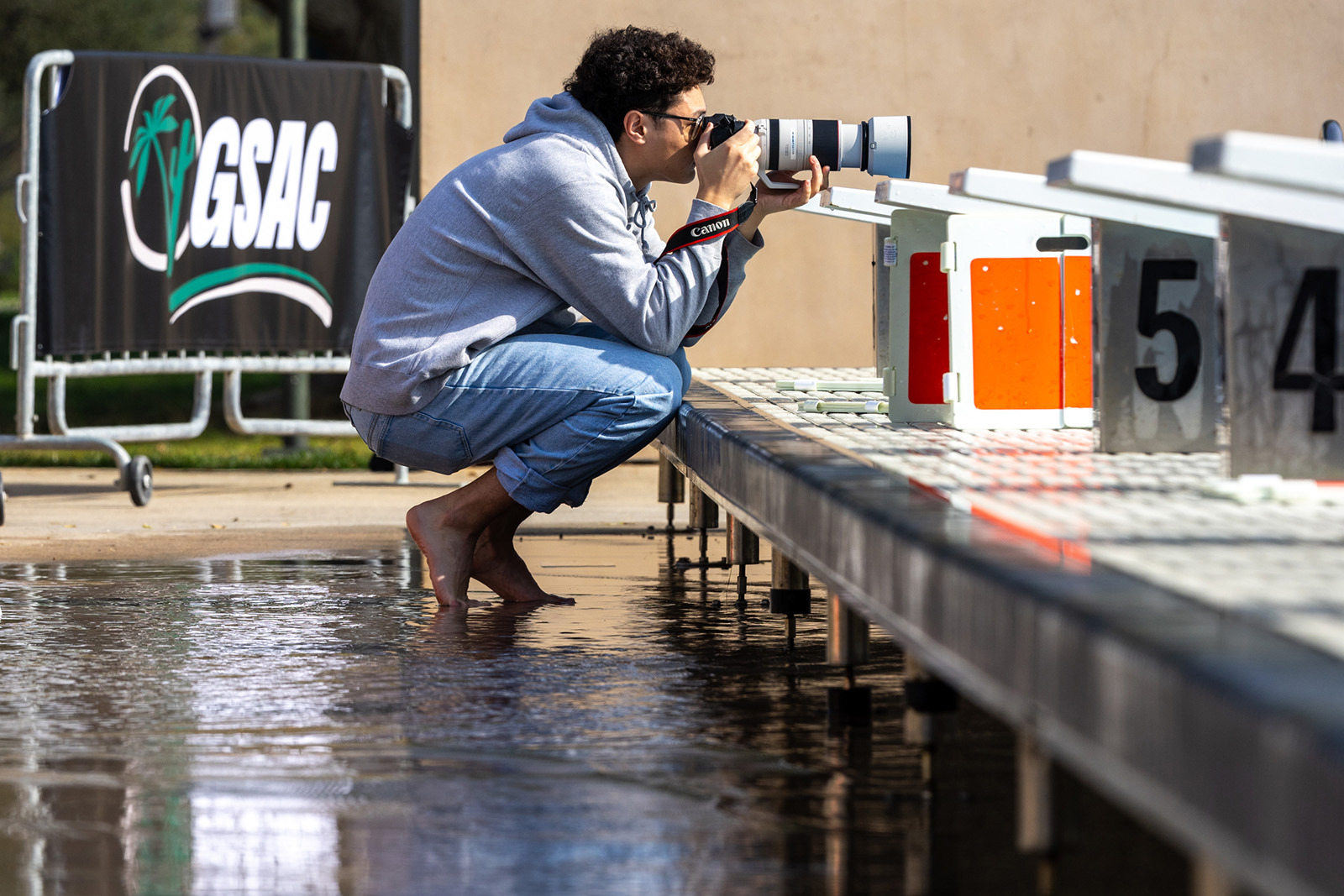
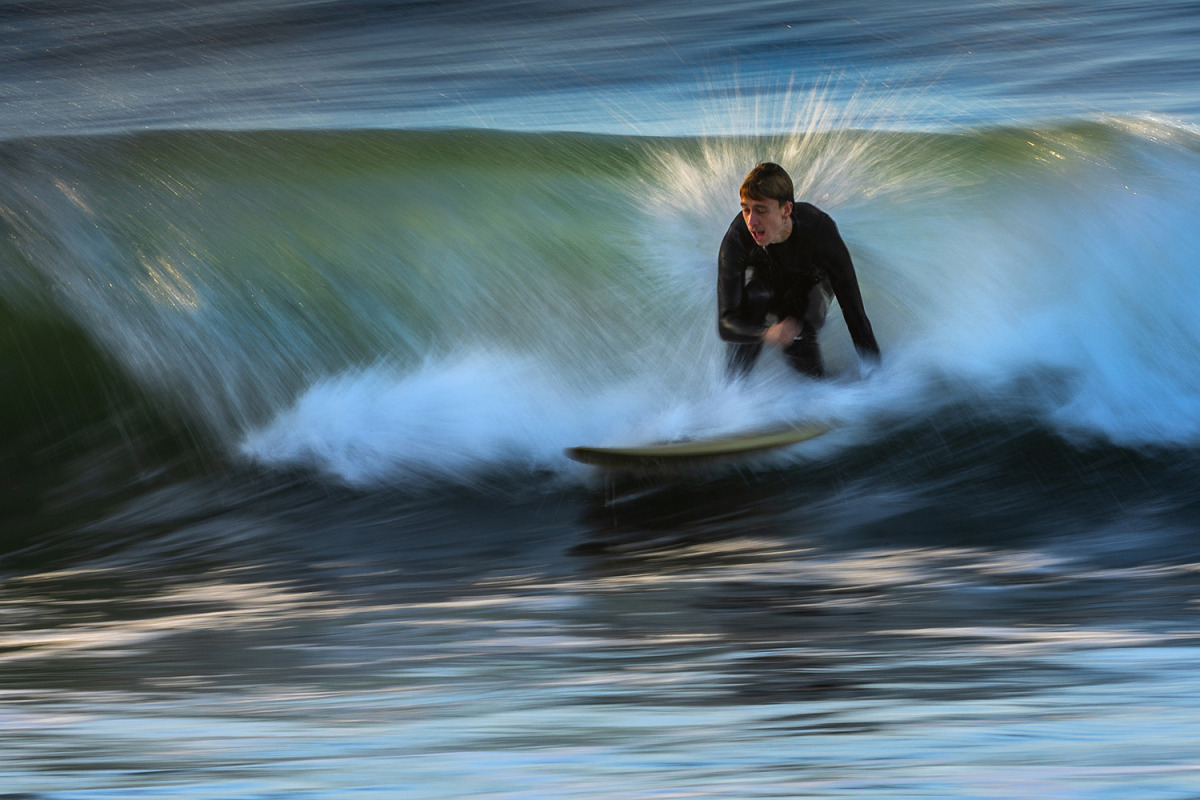
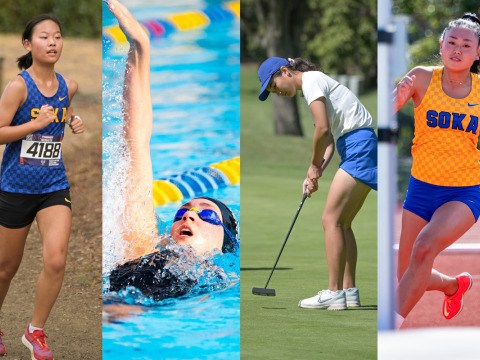
Keito Newman ’25 shooting the 2025 GSAC Swimming Championship at SUA.
April 22, 2026
10 Min Read
How a Campus Mentorship Launched a Photojournalism Career
Few photojournalists can claim a New York Times byline and a national award before their first anniversary in the field. Keito Newman ’25 already can.
Newman’s photos were featured in February as part of the New York Times coverage of an NHL game between the Ottawa Senators and the Detroit Red Wings. And earlier this month, he was named the recipient of the 2026 Tom Hanson Photojournalism Award — one of the most prestigious honors in Canadian journalism for early-career photojournalists. Presented annually by the Canadian Journalism Foundation and The Canadian Press (CP), the award offers a six-week paid internship at CP’s Toronto headquarters.
Since graduating last May with a double concentration in humanities and environmental studies, Newman has been working as a freelance photojournalist in his hometown of Ottawa, Ontario. In a social media post sharing the news of his award, Newman thanked the mentors including a special shoutout to Watchara Phomicinda, an experienced photojournalist and SUA’s manager of digital media, who “fast-tracked a journalism education” for Newman during his senior year.
In a recent interview, Newman and Phomicinda discussed Newman’s growth and what it takes to go from a university campus to one of Canada’s most coveted photojournalism awards.
Keito, what first interested you about photojournalism, and how did you know this was a career you wanted to pursue?
I had always taken pictures, but I hadn’t come across photojournalism as a profession until late in high school. That’s when I encountered the work of Amber Bracken, a Canadian photojournalist who had been documenting the Standing Rock protests. I was quite moved by the pictures. It was one of the first times that I had really thought about documentary photography and the role that pictures can play in telling stories like that.
I worked for the digital media office during my first two years at SUA, and I learned a lot of the technical side of photography. But it wasn’t until my third year of university, after my semester studying abroad in the south of France, that I started seriously considering photojournalism as a career. That was also around the time that Watchara started working at SUA. I reached out to him and talked to him about my desire to work in the industry, and he brought me back on the media team for my final year at Soka. I’m really grateful that he recognized my passion.
What would you say were some of the key things about photojournalism that Keito learned while working with the media team?
Phomicinda: Every time we got an assignment, I would have us approach it the same way we would approach an assignment for a news outlet. We would go over it and make sure we knew exactly what we needed.
I taught Keito everything I know — we talked about professionalism, liability, and meeting deadlines. We went over how to anticipate moments and work under pressure. We went over a lot of real-life scenarios, because photojournalism is not as glamorous as people think. You’re not going to just pick up a camera and get hired. You get a lot of no’s and a lot of “no access.” You’re fighting for better assignments. I wanted Keito to understand that the reality is not easy, but I also wanted to encourage him. I knew he was ready to handle it.
Newman: I learned a lot of the behind-the-scenes part of the job from Watchara. Taking the photo is only about 25% of the job. The rest of it is knowing how to do my job properly within a system that is deadline-based and relationship-based, especially as a freelancer. It’s knowing how to do the research for the job and being ready for it. It’s personality management, managing all your files, writing good captions, and delivering the right format.
It was super beneficial to me to have someone in my corner who had just come out of the industry and was able to share all of this basic information about how you do the job beyond taking the picture.
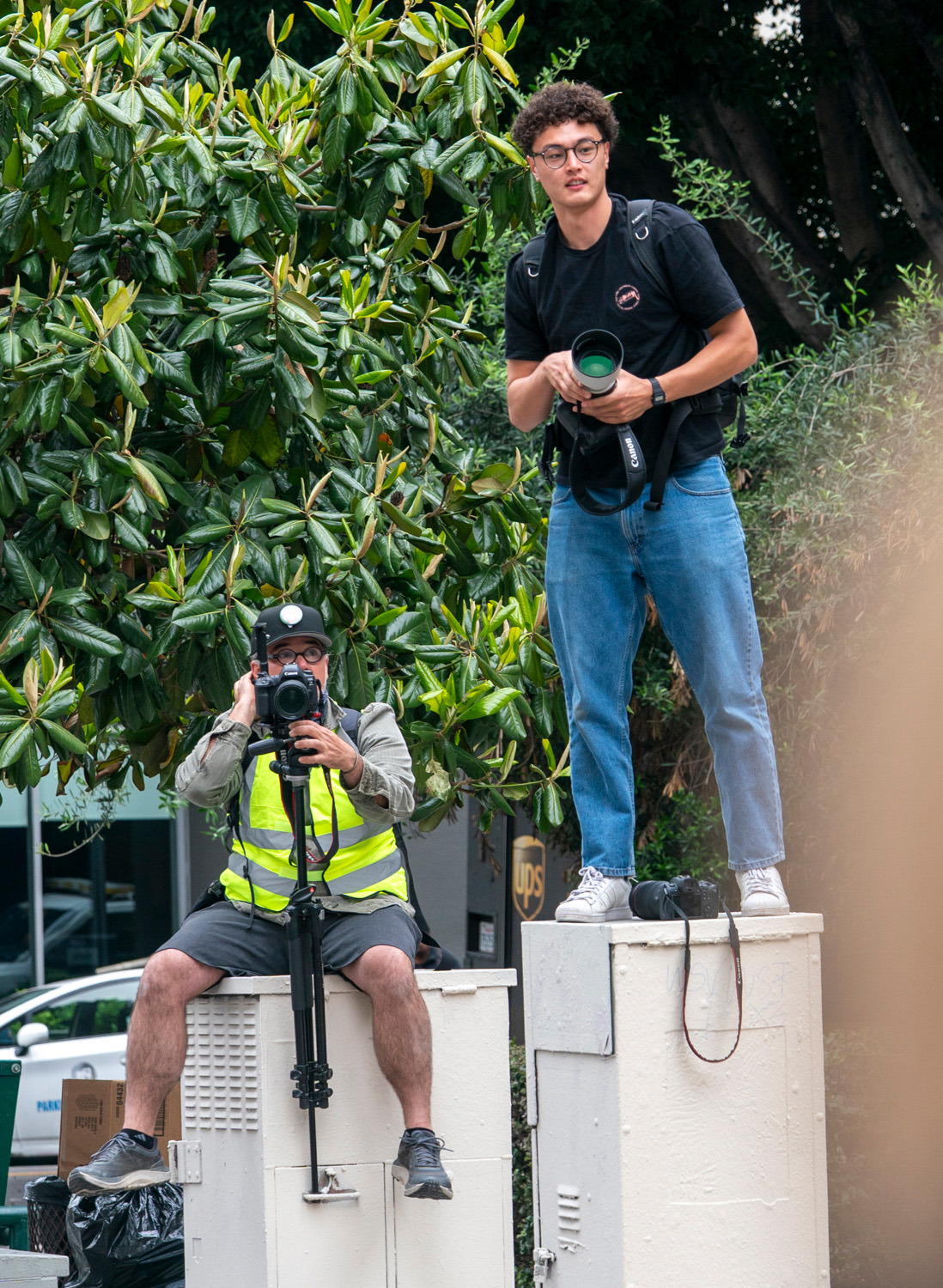
Newman documenting a May Day protest in Downtown Los Angeles.
Watchara, what were some of the biggest challenges that you faced when you were getting started in photojournalism, and how did that influence the advice and guidance that you gave Keito?
Phomicinda: I started out doing stuff for free, and I was taken advantage of a lot. Knowing your value is something I always want to pass on to younger photographers.
And to be prepared for the opportunity. I was afraid of rejection, and I always felt like I wasn’t ready for the job. But I was obsessed with photos and with the work. Often I would just shoot for myself. No one would ever see the photos, but I would still show up and put myself out there as if I were hired to do the job. I just kept pushing and persisting. The opportunity will come — just be ready, and be available.
Also, I didn’t have a mentor at first, but the photojournalism community is very close. Once you ask for help, everyone is very willing to help you.
Keito, what were some of the most memorable projects that you worked on while you were part of the media team? Was there anything that you were especially proud of?
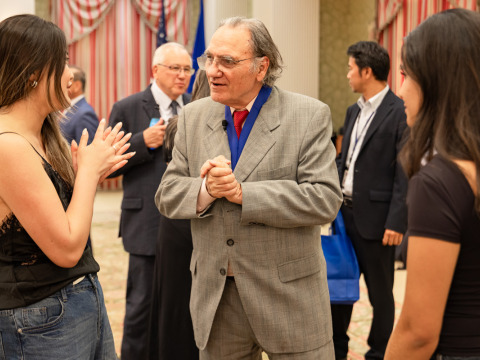
Newman: I think it was being the main photographer for Herbie Hancock’s visit to campus [to receive the Soka Global Citizen Award. It was both a personal challenge and a confidence booster that Watchara trusted me with such a big job.
Phomicinda: I had full trust. Keito did his homework. He went out the day before and scoped out the spots. He brought lights, tested it out, and prepared for the worst scenario. And he delivered everything on time.
Newman: Besides that experience, some of the other projects that helped me grow were assignments I gave myself. Early on, I realized that I didn’t have the skills to shoot sports at the level that the wires required. So I would go out and shoot a sports event, and then I’d review the photos with Watchara. I would practice the skills I needed to be ready to work once I graduated.
Can you tell me about how Watchara helped Keito work on his portfolio?
Phomicinda: We worked on portraits, sports, feature stories, news — all the typical things you need for a photojournalist portfolio. At the time he didn’t have spot news photos because there is not a lot of breaking news here on campus. So we went and shot a protest in LA. I would encourage Keito to keep shooting, and I would often ask him if he had anything new to share.
Newman: Building a portfolio is an excellent way of reviewing your work and reflecting on growth and what makes a good photo. One of the things you quickly learn is that what you think is a pretty picture is often a terrible news photo. Your job isn’t to just make nice pictures — it’s to tell a story.
We would throw my pictures up on the TV in the media office and go through them. We discussed the building blocks for a strong news photo, like how you need a certain human element.
Watchara had some of his photojournalist colleagues look at my portfolio as well. Getting other eyes on it was super helpful.
Keito, could you tell me about your photos that were published in the New York Times in February? What did it take for you to achieve that byline?
Newman: There are a few agencies that shoot professional hockey in Ottawa. I had noticed that one of them brought a photographer from Montreal to shoot a previous match, which could mean their roster wasn’t very deep here. So I reached out, and it turned out that they did need someone. They distribute worldwide through USA Today and Reuters, so this was a big deal.
Then I did my homework. This match was the first game back from the Olympic stretch after the American men had won gold and met the president. I knew I needed to file photos of Brady Tkachuk, Dylan Larkin, and Jake Sanderson. They were all on the American team at the Olympics, and they are in hot water in Canada right now. It was very likely that someone would write a story about them.
This kind of research is a big part of the job, especially as newsrooms get gutted. Going into an assignment, you have to know what things are important for the story, even if the editor hasn’t briefed you on that.
Do either of you have words of advice for current SUA students who are interested in photojournalism?
Newman: My biggest advice would be to take advantage of the intimacy of Soka while holding yourself to the standard of a much bigger operation. SUA’s student newspaper is inactive, and that’s where most college students are getting their experience. But working for the media office, I had access to a wealth of knowledge and gear. And because SUA is small, I was connecting with people I’d already seen around campus, which made it a lot easier to do my job.
However, it’s very important to think bigger than SUA’s campus. Photojournalism is tough, and there are a lot of exceptional people fighting for a dwindling number of jobs. You need to be studying the work of the best photojournalists so you know the level to aspire to. I would spend a lot of time looking at the wire and at photojournalists’ portfolios. I wasn’t happy until I was starting to make pictures that looked like that and told those kinds of stories.
Phomicinda: And Keito put his work out there. He reached out to editors and applied for internships. He didn’t just show up, take pictures, and save them on his hard drive. He actually did the work and reached out.
What do you admire about each other as photographers?
Newman: One of the hardest things about photojournalism is that you’re often going into places where people might not want to be photographed. Or you might be doing a portrait of someone who is uncomfortable getting their picture taken. You’re not working with professional models on a commercial shoot where you have several hours and tons of money to get everything right.
What I noticed about Watchara was that he’s able to quickly connect with people and make them feel comfortable in front of the camera. When you’re taking a portrait, that’s the entire battle: how quickly can you connect with someone, and can you make that connection come across in your picture? The people around Watchara never feel threatened when he carries a camera. That’s something I try to emulate — the way his kindness comes across, even from behind the camera.
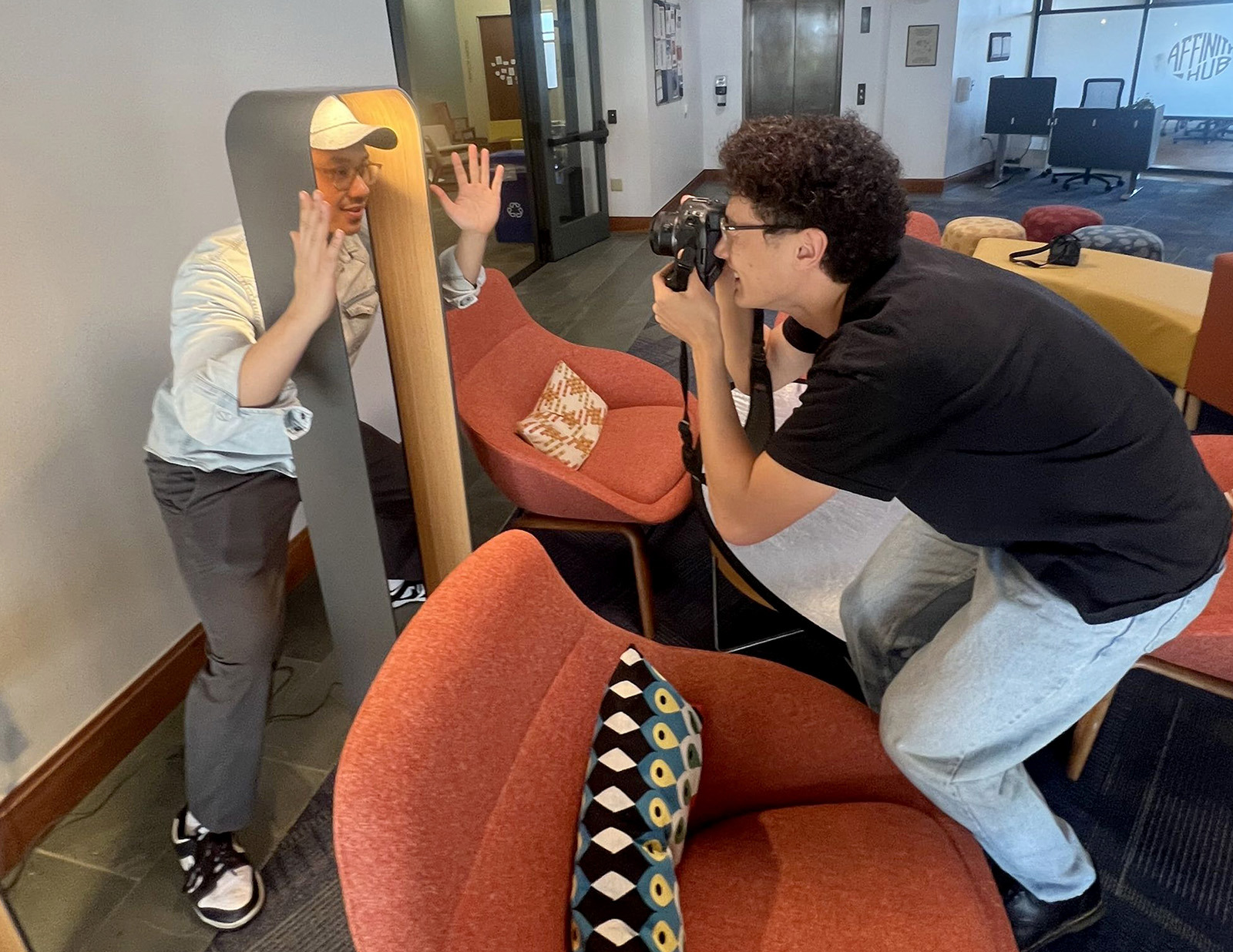
Newman, right, photographs Watchara Phomicinda while practicing portrait techniques using available light as a student at SUA.
Phomicinda: Keito is driven. He’s not afraid to go for it, and he takes initiative. He doesn’t wait to be told what to do. Another thing that stands out is Keito’s writing. I don’t think people realize how much having strong writing skills helps with photojournalism.
And Keito built confidence without ego. When he learned something new, he would share it with other students and teach it to them. And to me, that’s a great way to grow as a person and as a photographer. Journalism starts with being a good human. And I think Soka helped Keito build that foundation.
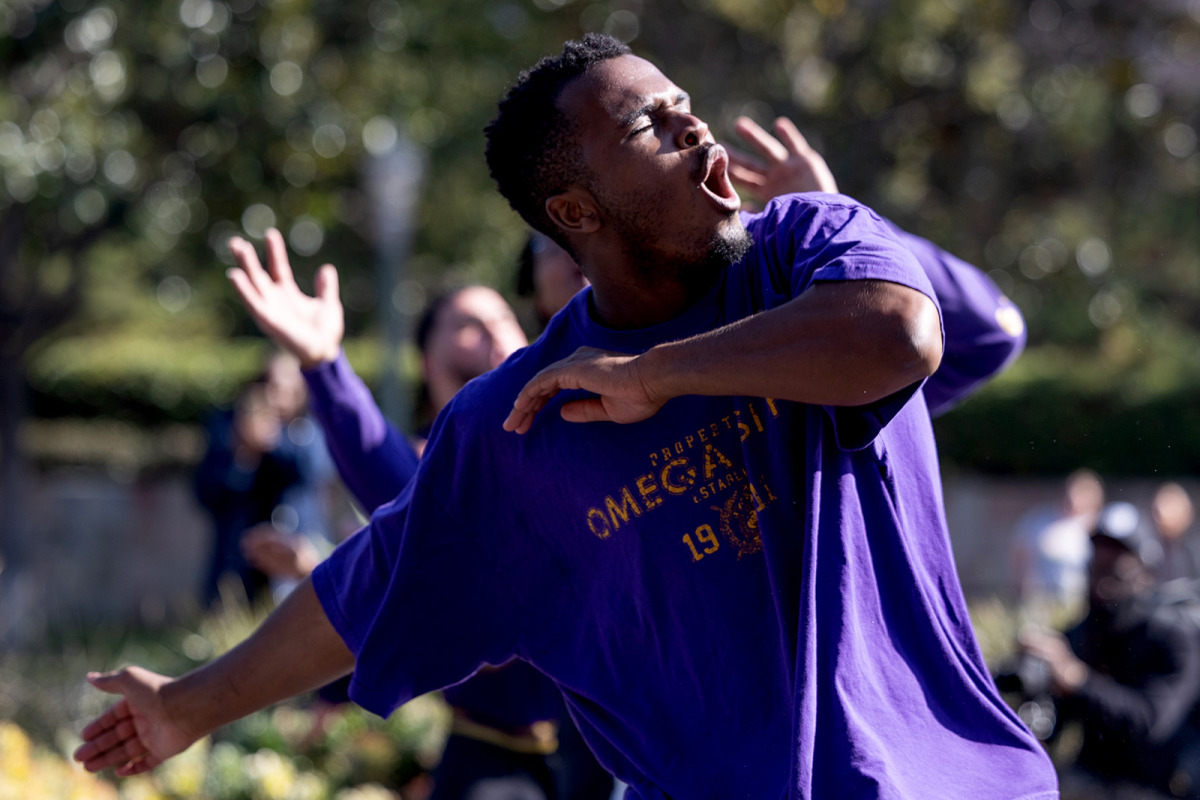
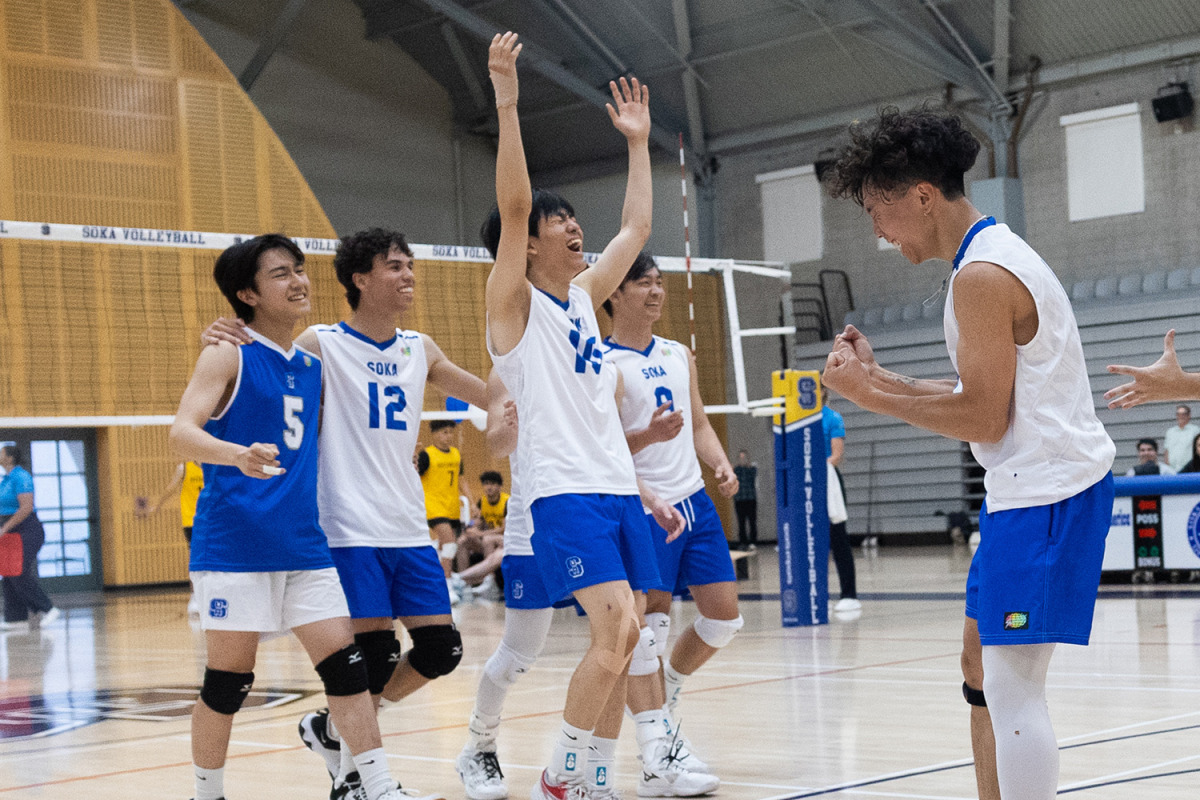
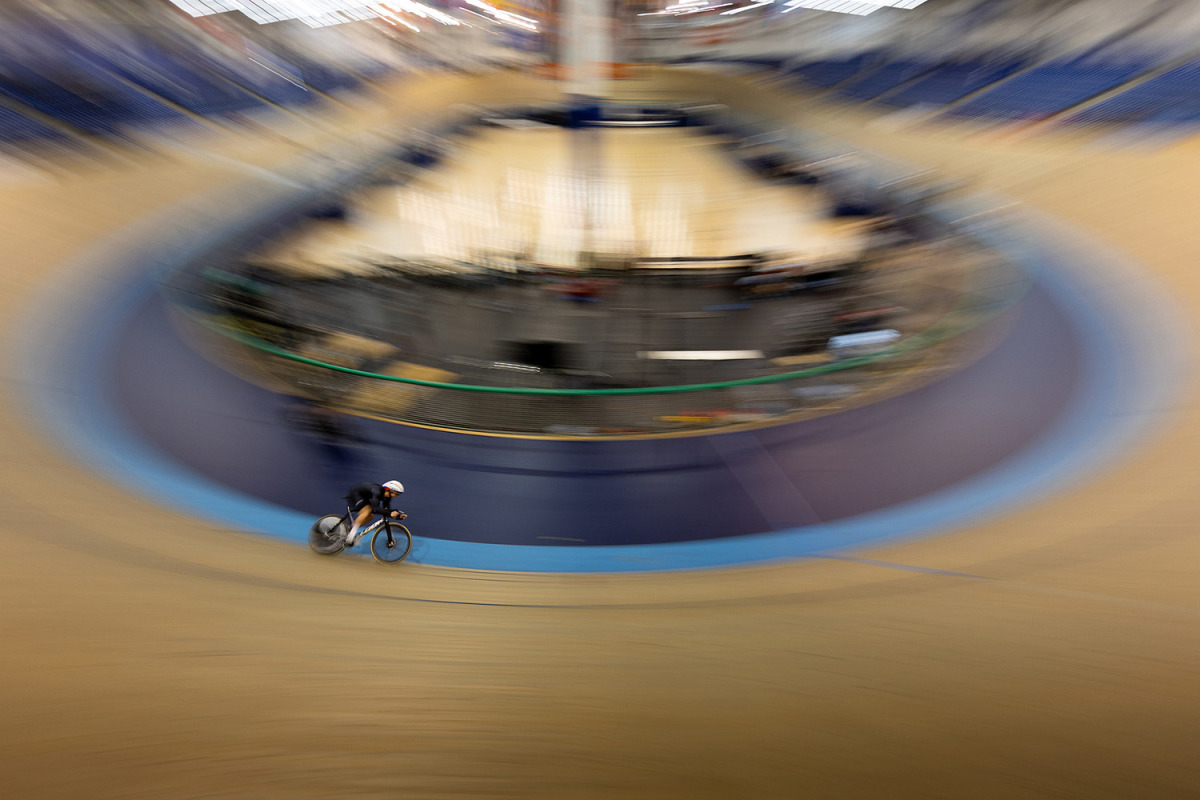
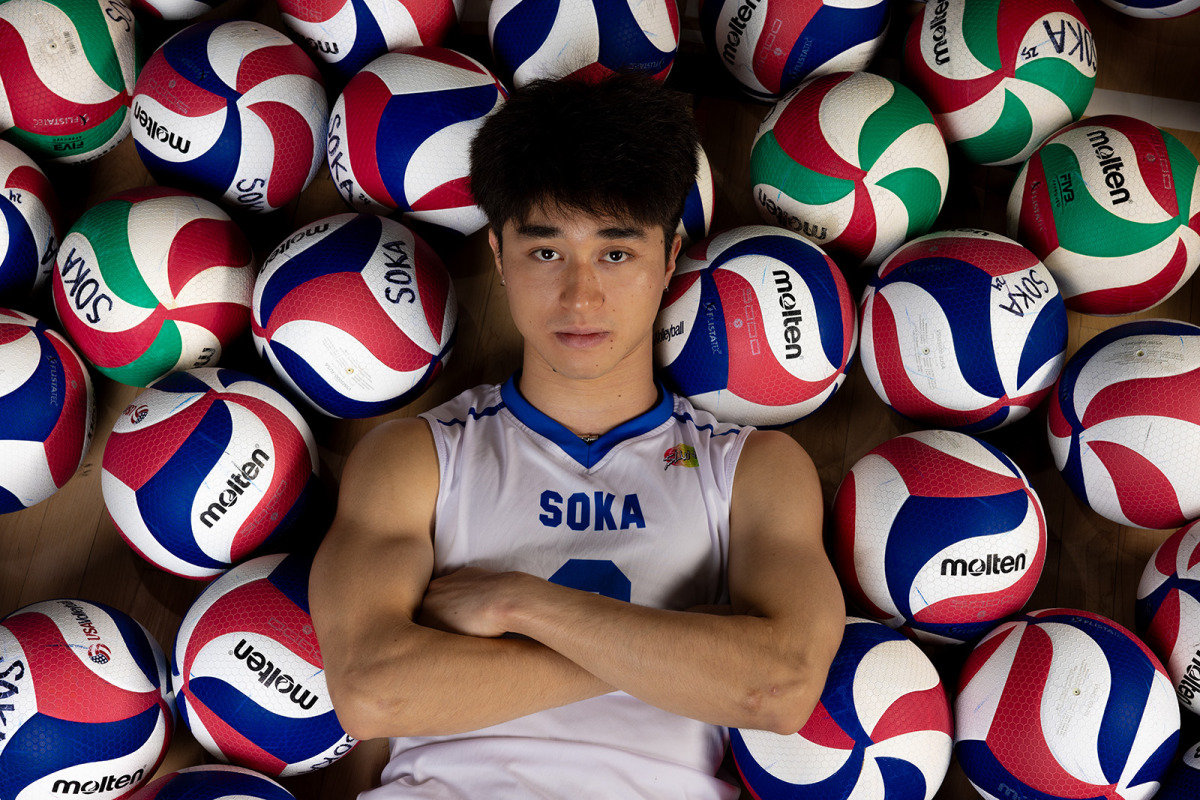
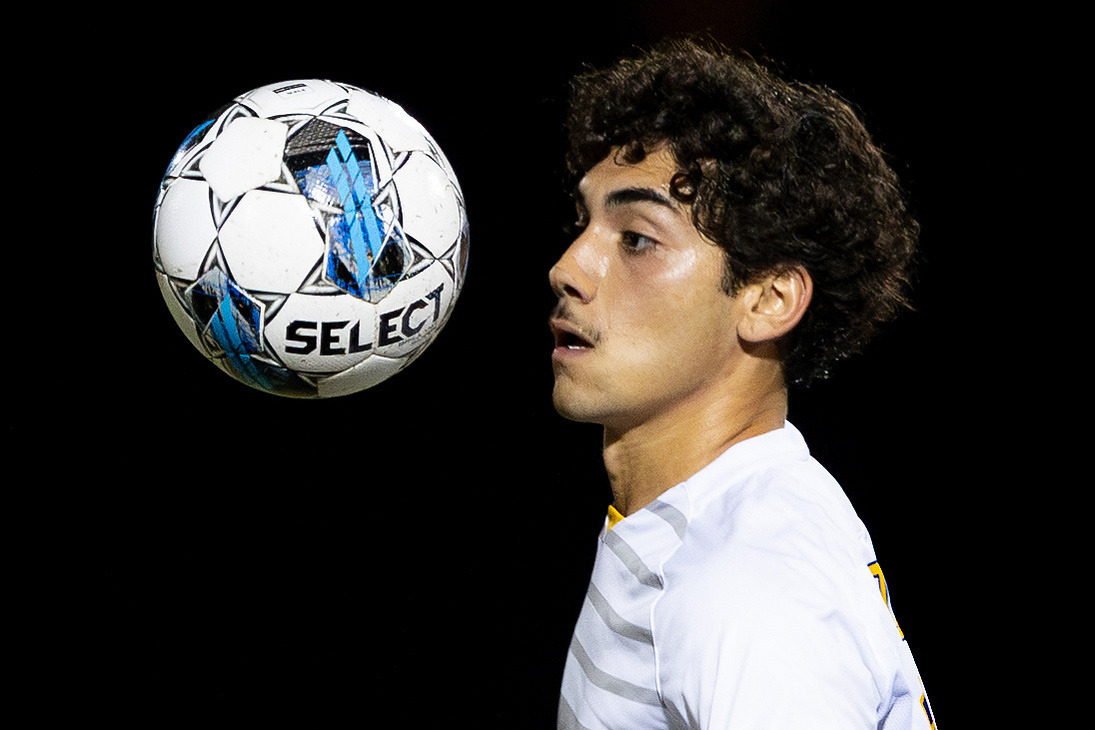
Browse a gallery of photos Newman shot while at SUA below, and then take a look at his winning portfolio for the 2026 Tom Hanson Photojournalism Award for more examples of his work.
Kate Selfe ’27 of Plettenberg Bay, South Africa, signed up for the Emerging Leaders Program because it felt complementary to the work she was already doing at her campus job. At the time, she was a fi...
Soka University of America President Edward M. Feasel and Tetsushi Ogata, managing director of the Soka Institute for Global Solutions, spent two days in September at the Hazel Henderson Center in St....
What can education do for students, communities, and entire societies worldwide? Karen Moran Jackson often facilitates discussions around this question with graduate students. She directs the M.A. in ...
“Our students are striving to become global citizens who contribute to the world,” Soka University of America President Edward M. Feasel said in his remarks to donors at the 22nd annual Peace Gala on ...
SUA students spent part of the summer in New York City and the Amazon rainforest, exploring how their education can address global challenges. The Luis and Linda Nieves Family Foundation funded both t...
The Campus Green was buzzing on Sept. 23 as students, faculty, and staff gathered for SUA’s annual Welcome Back Community Event, an afternoon of food, games, and friendly competition to kick off the n...
Soka University of America has named this year’s top scholars — recipients of the Ikeda Scholarship, the John D. Montgomery Scholarship, the Soka Merit Award, and the Academic Excellence awards. Presi...
“If you believe in global citizenship education,” said eminent education scholar Carlos Alberto Torres during his lecture after receiving the 2026 Soka Global Citizen Award, “find a social movement an...
Team practices may have paused over the summer, but for SUA student-athletes, the season offered a different kind of training ground. High jumper Mili Fukada ’28 interned at U.S. Bank and taught balle...
When local residents Steve and Carol Theiss signed up for a community gardening program on SUA’s campus this summer, they expected to learn about growing organic produce and pick up a few tips for eco...
Nearly five decades apart, two institutions of higher learning were founded on a shared conviction — that education can help move the world toward peace and intercultural understanding.The Monterey In...
Dear Soka Community,I'm writing today to share a significant expansion of the Soka Opportunity Plan, made possible in part by the strength of our donor community.Beginning with the 2027–2028 academic ...
Kate Selfe ’27 of Plettenberg Bay, South Africa, signed up for the Emerging Leaders Program because it felt complementary to the work she was already doing at her campus job. At the time, she was a fi...
Soka University of America President Edward M. Feasel and Tetsushi Ogata, managing director of the Soka Institute for Global Solutions, spent two days in September at the Hazel Henderson Center in St....
What can education do for students, communities, and entire societies worldwide? Karen Moran Jackson often facilitates discussions around this question with graduate students. She directs the M.A. in ...
“Our students are striving to become global citizens who contribute to the world,” Soka University of America President Edward M. Feasel said in his remarks to donors at the 22nd annual Peace Gala on ...
SUA students spent part of the summer in New York City and the Amazon rainforest, exploring how their education can address global challenges. The Luis and Linda Nieves Family Foundation funded both t...
The Campus Green was buzzing on Sept. 23 as students, faculty, and staff gathered for SUA’s annual Welcome Back Community Event, an afternoon of food, games, and friendly competition to kick off the n...
Soka University of America has named this year’s top scholars — recipients of the Ikeda Scholarship, the John D. Montgomery Scholarship, the Soka Merit Award, and the Academic Excellence awards. Presi...
“If you believe in global citizenship education,” said eminent education scholar Carlos Alberto Torres during his lecture after receiving the 2026 Soka Global Citizen Award, “find a social movement an...
Team practices may have paused over the summer, but for SUA student-athletes, the season offered a different kind of training ground. High jumper Mili Fukada ’28 interned at U.S. Bank and taught balle...
When local residents Steve and Carol Theiss signed up for a community gardening program on SUA’s campus this summer, they expected to learn about growing organic produce and pick up a few tips for eco...
Nearly five decades apart, two institutions of higher learning were founded on a shared conviction — that education can help move the world toward peace and intercultural understanding.The Monterey In...
Dear Soka Community,I'm writing today to share a significant expansion of the Soka Opportunity Plan, made possible in part by the strength of our donor community.Beginning with the 2027–2028 academic ...