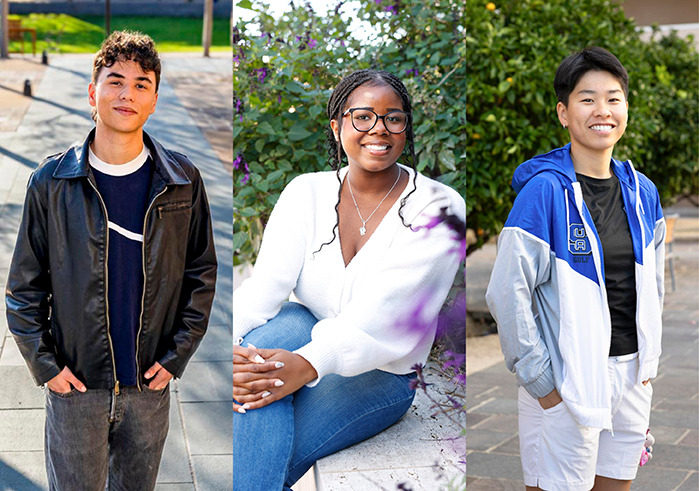
As a core pillar of Soka University of America’s liberal arts education, study abroad prepares students to encounter the world not as spectators, but as engaged participants dedicated to serving their communities. After learning a new language through immersion, dialogue, and lived experience, many Soka students believe the semester abroad was a defining chapter in their education that strengthened their commitment to leading contributive lives.
From navigating daily life in Santiago and discovering what truly matters, to encountering cultural plurality in Barcelona, to experiencing warm hospitality and community in Dakar, three Soka students who returned recently from study abroad shared how it challenged their comfort zones and expanded their moral imagination. Together, these portraits offer a glimpse into how studying abroad helps Soka students grow into informed, compassionate global citizens.
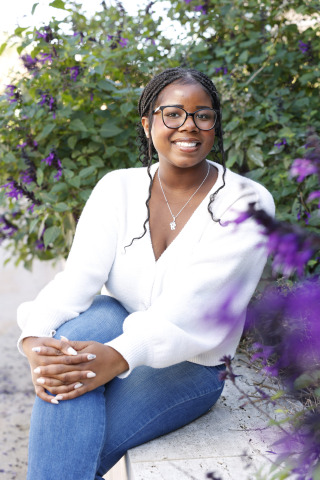
Kiarra Hoes ’27
Hometown: Germantown, Maryland
Studied abroad in Santiago, Chile
Studying abroad in Chile taught me how to deepen my appreciation for what — and who — I have in my life. It reminded me that experiences and relationships carry far more meaning than anything I could ever buy. Although I left Santiago, my homestay family and the team at the Chilean Red Cross remain forever part of my family, and the memories we shared are now deeply ingrained in who I am and will be.
Being on my own in a foreign country pushed me well outside my comfort zone, from getting lost in a big city to unexpectedly finding myself and what truly matters to me. This experience helped me align more clearly with the person I want to become and showed me that humanism and kindness transcend all languages and cultures.
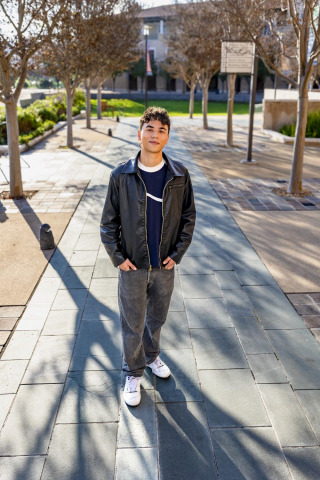
João Pedro ’27
Hometown: São Bernardo do Campo, São Paulo, Brazil
Studied abroad in Barcelona, Spain
I believe that what will remain with me the most is the beauty of cultural plurality. By staying in Barcelona, I was able to understand and immerse myself in Spanish and Catalan culture. The variety of people was also very evident, which amazed me. I visited different places and restaurants and met people from all over the world. Having this broader perspective is what’s going to stick with me the most.
During my journey, it was very interesting to see how each country has its own characteristics and uniqueness, and how the population’s habits and daily lives are shaped around these singularities, such as daily conversations and interpersonal relationships, food, holiday traditions, and other quotidian habits. I could understand more about how the world and cultures can be complex and interesting.
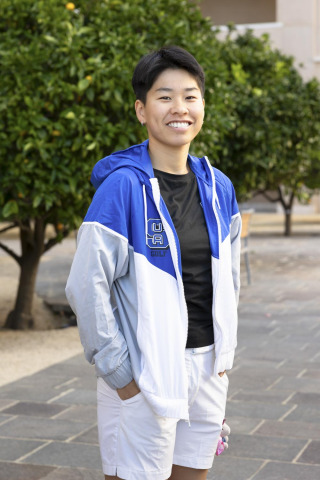
Mizuki Yano ’27
Hometown: Nishinomiya, Japan
Studied abroad in Dakar, Senegal
What will stay with me the most is the deep sense of community and hospitality in Senegal. Not only my host family, but the entire neighborhood welcomed me as if I were part of their family. People would stop to talk with me on the street, invite me to share tea or meals, and include me naturally in their daily lives.
Through these everyday interactions, I felt genuinely cared for and supported. The idea of “family” extended far beyond the household and became something shared by the whole community. Spending four months surrounded by such warmth and openness is something I will always carry with me.
This experience deeply changed how I understand cultural differences and human connection. Living in Senegal taught me to approach differences with curiosity rather than assumptions, and to see them as opportunities to learn rather than barriers. I became more open to listening, asking questions, and understanding the backgrounds that shape people’s perspectives.
During my internship, I also experienced how connection can exist beyond language. In a village where I did not share a common spoken language, I was able to build strong relationships through sports, especially basketball. Playing on the same team created trust and friendship, and some of those connections have lasted beyond my time abroad. This showed me that meaningful relationships can form in many ways, even without words.