From Aliso Viejo to Monterey, a Shared Vision of Education Takes Shape
Nearly five decades apart, two institutions of higher learning were founded on a shared conviction — that education can help move the world toward peace and intercultural understanding.
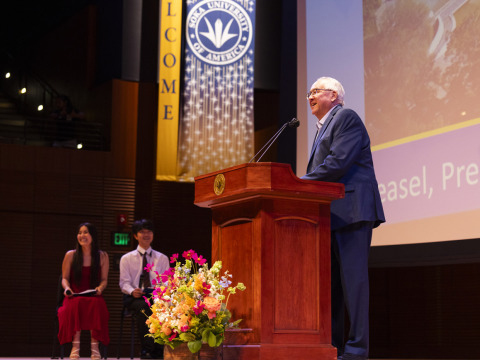
The Monterey Institute of International Studies began in 1955 to bridge nations through the study of language and culture. Soka University of America opened its Aliso Viejo campus in 2001 with a mission to foster a steady stream of global citizens committed to living contributive lives. Now, with SUA President Ed Feasel’s announcement on Aug. 19 that SUA acquired the Monterey campus, those two educational lineages are coming together.
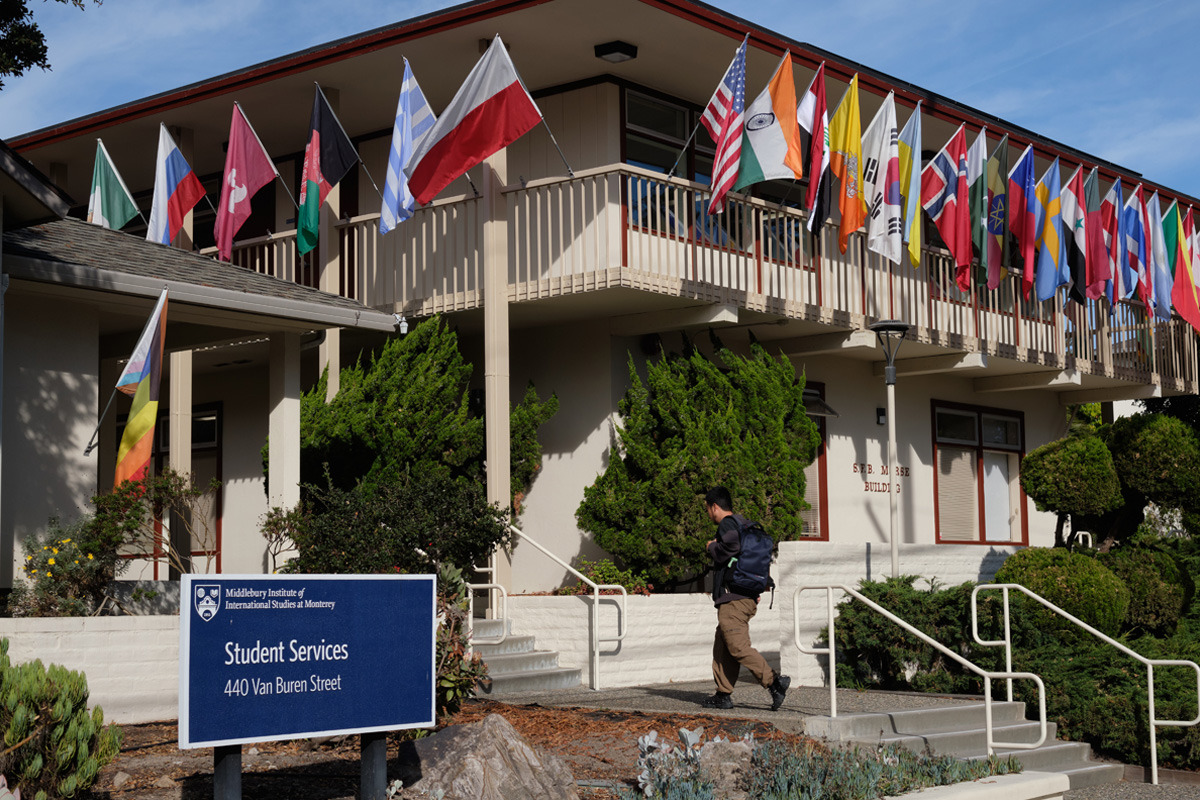
SUA’s second campus will continue select graduate programs previously offered by the Middlebury Institute of International Studies under the new name Monterey Institute of International Studies at Soka University of America, with classes expected to begin in fall 2027.
“Our university founder, Daisaku Ikeda, believed that education should empower students to become bridge builders, peacemakers, and leaders of a global society,” Feasel said. “The Monterey Institute of International Studies has pursued the same work of transformative education for seven decades, and I believe that this new chapter will expand our shared ability to foster global citizens dedicated to the betterment of society.”
In a statement released the day of the announcement, Middlebury President Ian Baucom expressed excitement that the legacy of the institute would continue in Monterey. “Our institutions share closely aligned missions and a commitment to preparing students to address global challenges,” he said. “This agreement will allow many MIIS academic programs to continue under Soka University of America and create opportunities for some faculty and staff to carry that important work forward.”
Founding Visions
Daisaku Ikeda founded SUA in Aliso Viejo to realize what he described as the kind of education the world urgently needs: “education that fosters love for humankind, that develops character — that provides an intellectual basis for the realization of peace and empowers learners to contribute to and improve society.”
Gaspard Etienne Weiss also dreamed of a new kind of education that would foster international understanding through the immersive study of language and culture. A Frenchman who moved to Monterey to teach French and German, Weiss founded the Monterey Institute of Foreign Studies with several co-founders, including a former president of Occidental College, Remsen DuBois Bird.
There was little fanfare when, in 1955, the institute welcomed its first students as a summer language and culture program with classes offered in French and German. Emerging on the Monterey Peninsula during the height of the Cold War, the founders’ vision of immersive language education ran against the grain of the era. But rather than reject the value of cross-cultural exchange or accept language learning as a rote exercise — the old “book is on the table” model — they developed a novel approach that situated the study of foreign cultures and history in the target language itself.
By 1958, the school had expanded from its original French and German offerings to five languages, adding Italian, Spanish, and Russian. It became the first school in the U.S. to train professional interpreters and translators for the United Nations and other global organizations, eventually changing its name in 1979 to the Monterey Institute of International Studies to reflect its broader global mission.
Fumihiko Tominaga ’08, MIIS ’11, concentrated in International Studies at SUA before earning a master’s degree in International Environmental Policy at MIIS. He believes the educational philosophies of both institutions are remarkably similar: both celebrate diversity, are internationally focused and community-based, and cherish peace, dialogue, and humanistic values.
Tominaga reflected that the close-knit and supportive international community at MIIS reminds him of SUA. “The small class sizes and the opportunity to get to know my professors and fellow students well were among the highlights of my time at MIIS,” he said. “There was a similar sense that learning was not simply about acquiring knowledge, but also about learning from one another and developing the perspectives and relationships needed to engage with the wider world.”
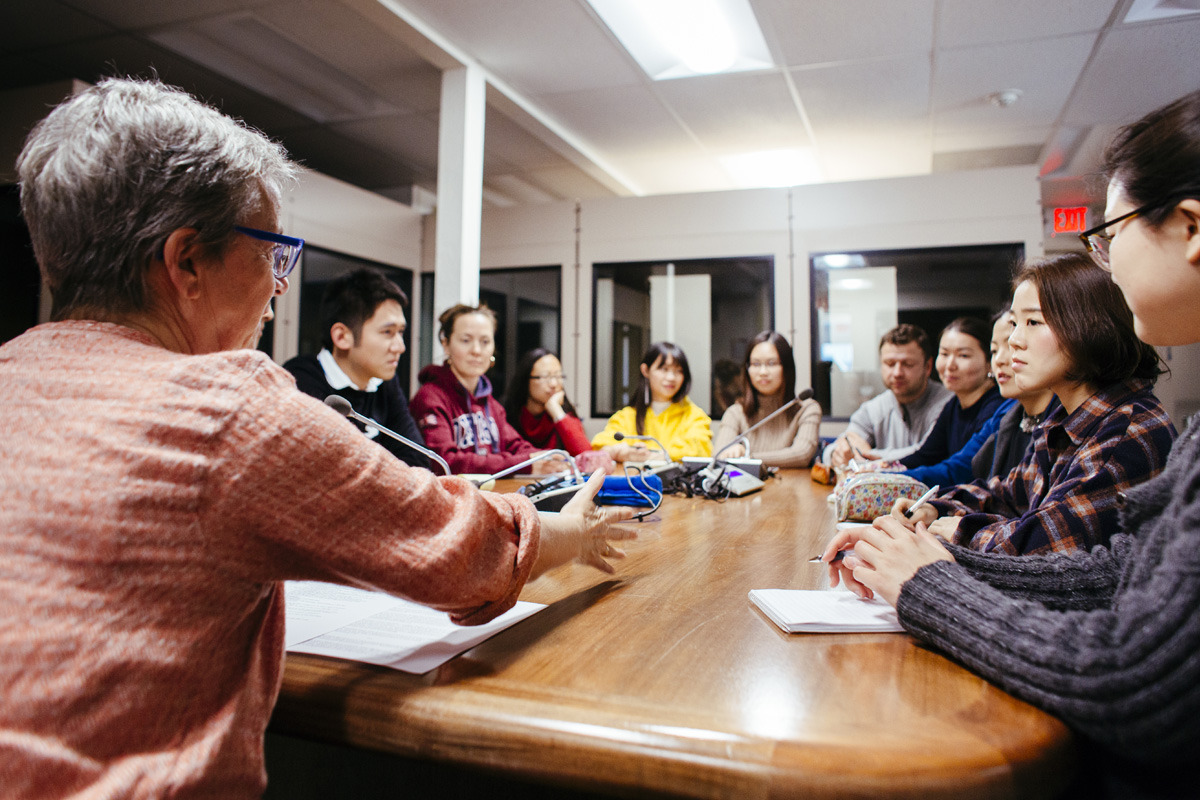
MIIS offers students a variety of opportunities to apply what they are learning to real-world challenges through internships, practica, global courses, Diplomacy Lab projects, and independent research. Experiential learning helps graduate students develop the experience, relationships, and practical understanding needed to contribute meaningfully in their fields after graduation.
What connects these two educational institutions, then, is more than a shared idea: both are rooted in the conviction that education should prepare people not simply to understand the world, but to engage with and contribute to it. The Monterey Institute of International Studies at Soka University of America will bring these traditions together, uniting SUA’s vision of value-creating global citizenship with MIIS’s long history of preparing professionals to work across languages, cultures, and borders.
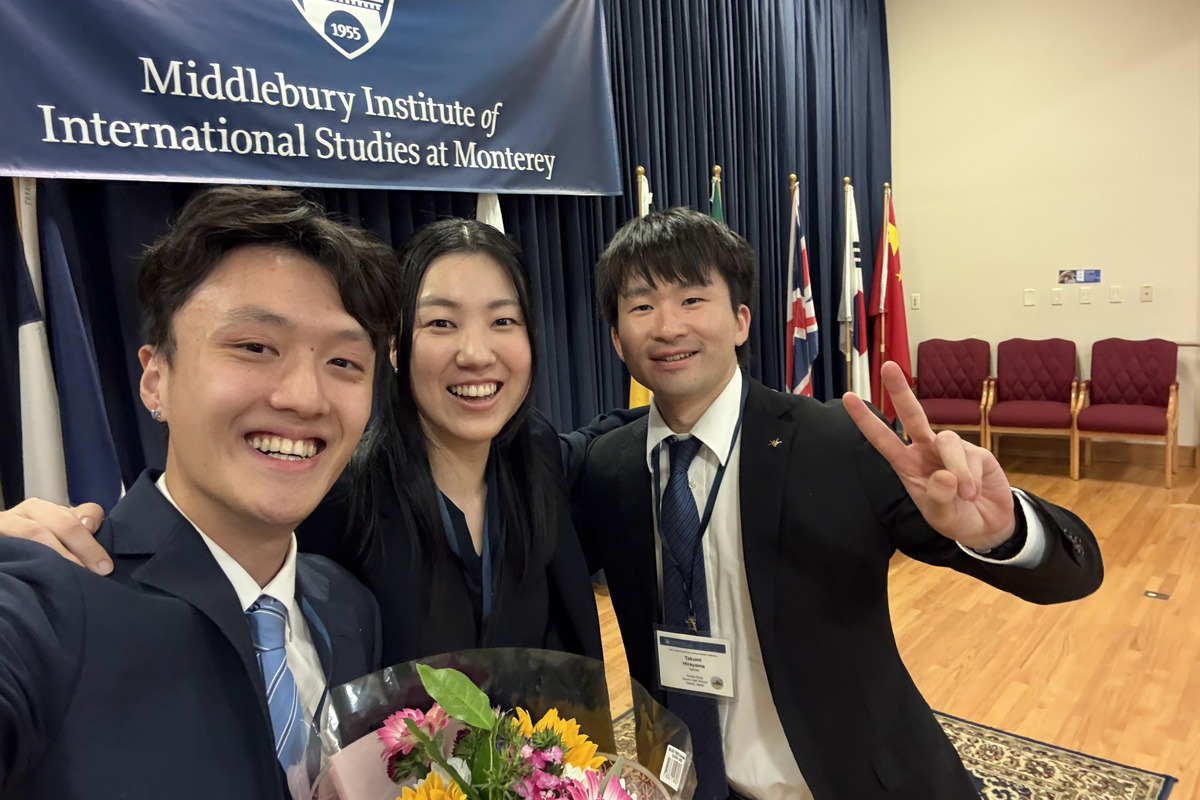
Max Lau ’24, MIIS ’26, left, with fellow SUA alumni Miyu Fukuda ’22 and Takumi Brian Hirayama ’19 during his graduate studies at MIIS.
Where Purpose Meets Practice
President Feasel has described this new chapter as an opportunity to connect SUA’s mission-driven “why” with the professional “how” embodied in MIIS’s graduate programs. “This exciting development significantly expands the graduate degrees available to our students,” he said, preparing graduates for careers in diplomacy, interpretation, policy, sustainability, and nonproliferation.
Max Lau ’24, MIIS ’26, experienced that progression firsthand. “At MIIS,” Lau said, “the mission statement — ‘Educate professionals to advance understanding, promote peace, and drive change in pursuit of a more just world’ — gave me the opportunity to take what I learned at Soka and put it to the test in the real world.”
Tominaga said his time at SUA helped him to begin imagining what kind of contributive life he wanted to pursue. Studying abroad in Ecuador was especially formative, inspiring him to work with and for vulnerable communities in developing countries at the intersection of economic development and environmental sustainability. MIIS then helped him turn this budding sense of purpose into professional preparation, providing both the in-depth knowledge and practical skills he would need as an international development and sustainability practitioner. He now carries that work forward as an environmental and social specialist at the Green Climate Fund, a multilateral climate fund established under the United Nations Framework Convention on Climate Change to help developing countries respond to the effects of climate change.
One of Tominaga’s favorite graduate classes showed him how conservation could be approached in economically sustainable ways, moving beyond theory into the practical know-how and wisdom one needs to successfully navigate the field. He said he learned about “mechanisms such as payment for ecosystem services,” as well as “how to negotiate with people whose perspectives differed fundamentally from my own, and even how to handle challenging media interviews and respond to difficult questions.”
Lau experienced a similar progression in his own studies. After studying approaches to dialogue and conflict resolution at SUA, he continued developing those skills in Monterey. “I was able to build on these skills further in my Nonproliferation Treaty Simulation class,” Lau said, “where I represented Mexico in a semester-long simulation focused on finding solutions to nuclear disarmament.”
As SUA works toward the start of classes in Monterey in fall 2027, the work ahead includes integrating programs, welcoming new colleagues, and ensuring that students in Monterey and Aliso Viejo can benefit from the strengths of both campuses. At the heart of that work is a conviction that has guided both institutions from the beginning: education should cultivate the values, courage, and practical skills people need to respond to the world’s most urgent challenges.
For Lau, that shared purpose was not abstract; it was something he lived as a student at both SUA and MIIS. “Having experienced both institutions firsthand,” Lau said, “I see this continuation not as the joining of two separate missions, but as the natural extension of one.”
Kate Selfe ’27 of Plettenberg Bay, South Africa, signed up for the Emerging Leaders Program because it felt complementary to the work she was already doing at her campus job. At the time, she was a fi...
Soka University of America President Edward M. Feasel and Tetsushi Ogata, managing director of the Soka Institute for Global Solutions, spent two days in September at the Hazel Henderson Center in St....
What can education do for students, communities, and entire societies worldwide? Karen Moran Jackson often facilitates discussions around this question with graduate students. She directs the M.A. in ...
“Our students are striving to become global citizens who contribute to the world,” Soka University of America President Edward M. Feasel said in his remarks to donors at the 22nd annual Peace Gala on ...
SUA students spent part of the summer in New York City and the Amazon rainforest, exploring how their education can address global challenges. The Luis and Linda Nieves Family Foundation funded both t...
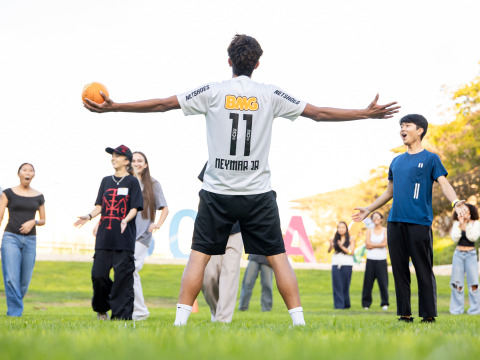
The Campus Green was buzzing on Sept. 23 as students, faculty, and staff gathered for SUA’s annual Welcome Back Community Event, an afternoon of food, games, and friendly competition to kick off the n...
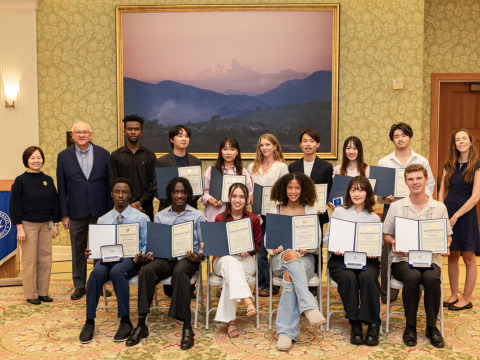
Soka University of America has named this year’s top scholars — recipients of the Ikeda Scholarship, the John D. Montgomery Scholarship, the Soka Merit Award, and the Academic Excellence awards. Presi...
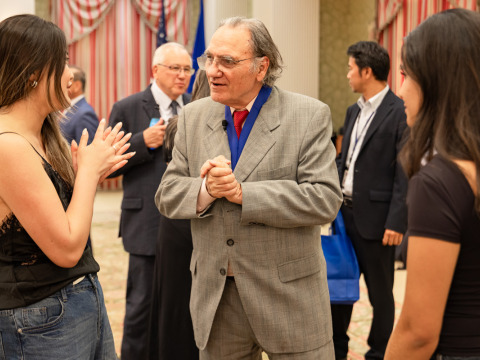
“If you believe in global citizenship education,” said eminent education scholar Carlos Alberto Torres during his lecture after receiving the 2026 Soka Global Citizen Award, “find a social movement an...
Team practices may have paused over the summer, but for SUA student-athletes, the season offered a different kind of training ground. High jumper Mili Fukada ’28 interned at U.S. Bank and taught balle...
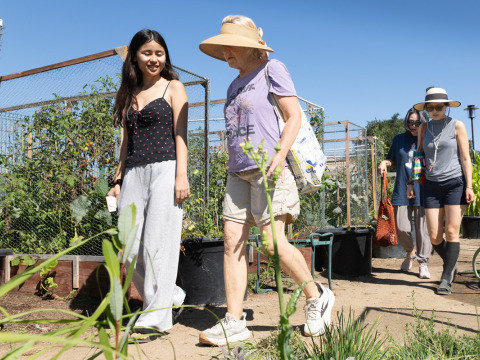
When local residents Steve and Carol Theiss signed up for a community gardening program on SUA’s campus this summer, they expected to learn about growing organic produce and pick up a few tips for eco...
Dear Soka Community,I'm writing today to share a significant expansion of the Soka Opportunity Plan, made possible in part by the strength of our donor community.Beginning with the 2027–2028 academic ...
Dear Soka Community,After completing our negotiations with Middlebury College, I am pleased to announce that Soka University of America will establish a second campus in Monterey, California, continui...
Kate Selfe ’27 of Plettenberg Bay, South Africa, signed up for the Emerging Leaders Program because it felt complementary to the work she was already doing at her campus job. At the time, she was a fi...
Soka University of America President Edward M. Feasel and Tetsushi Ogata, managing director of the Soka Institute for Global Solutions, spent two days in September at the Hazel Henderson Center in St....
What can education do for students, communities, and entire societies worldwide? Karen Moran Jackson often facilitates discussions around this question with graduate students. She directs the M.A. in ...
“Our students are striving to become global citizens who contribute to the world,” Soka University of America President Edward M. Feasel said in his remarks to donors at the 22nd annual Peace Gala on ...
SUA students spent part of the summer in New York City and the Amazon rainforest, exploring how their education can address global challenges. The Luis and Linda Nieves Family Foundation funded both t...
The Campus Green was buzzing on Sept. 23 as students, faculty, and staff gathered for SUA’s annual Welcome Back Community Event, an afternoon of food, games, and friendly competition to kick off the n...
Soka University of America has named this year’s top scholars — recipients of the Ikeda Scholarship, the John D. Montgomery Scholarship, the Soka Merit Award, and the Academic Excellence awards. Presi...
“If you believe in global citizenship education,” said eminent education scholar Carlos Alberto Torres during his lecture after receiving the 2026 Soka Global Citizen Award, “find a social movement an...
Team practices may have paused over the summer, but for SUA student-athletes, the season offered a different kind of training ground. High jumper Mili Fukada ’28 interned at U.S. Bank and taught balle...
When local residents Steve and Carol Theiss signed up for a community gardening program on SUA’s campus this summer, they expected to learn about growing organic produce and pick up a few tips for eco...
Dear Soka Community,I'm writing today to share a significant expansion of the Soka Opportunity Plan, made possible in part by the strength of our donor community.Beginning with the 2027–2028 academic ...
Dear Soka Community,After completing our negotiations with Middlebury College, I am pleased to announce that Soka University of America will establish a second campus in Monterey, California, continui...