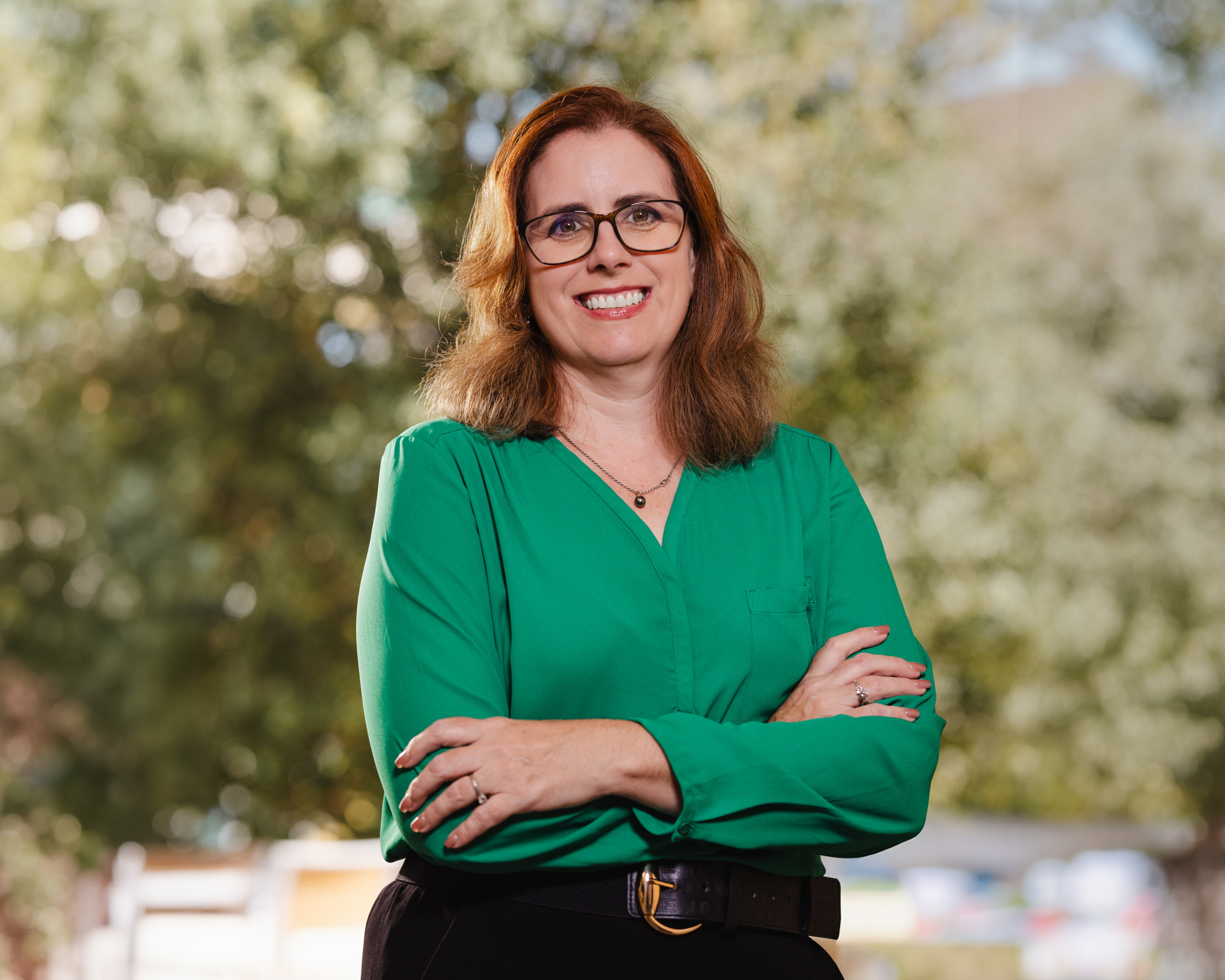
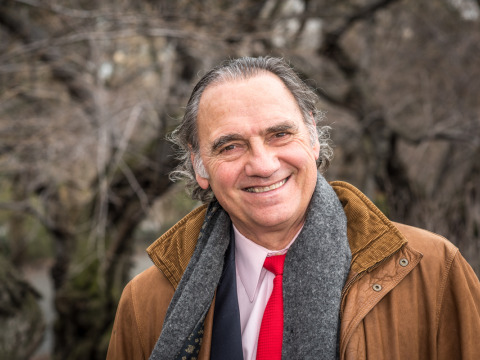
What can education do for students, communities, and entire societies worldwide? Karen Moran Jackson often facilitates discussions around this question with graduate students. She directs the M.A. in Educational Leadership and Societal Change at Soka University of America, where she’s also an associate professor of educational psychology and assessment. She earned a doctorate in educational psychology from the University of Texas at Austin and has taught at SUA since fall 2017.
Jackson talked with a member of SUA’s communications team about how people learn, what education can make possible, and how the master’s program prepares students to take on the issues they care about most.
How would you describe your academic area of expertise?
I have worked with colleagues across disciplines. One of my research areas concerns adolescent development from middle school to high school and beyond. I’ve focused on assessment and testing for that age group. I’ve studied what teaching and learning look like, particularly in technology and STEM. I’ve also worked on research about research methods.
What sparked your interest in these areas?
Before I started graduate school, I taught middle school science and technology. I would get young students who would start the class saying, “I’m no good at science” or “I don’t like doing this.” But I knew that before my class, they hadn’t had a real, dedicated science class with a lab. How had they already formed an opinion about what they could and couldn’t do?
Going into grad school, my research question became about how we develop these ideas about ourselves, our identity, and whether or not we’re “science people.” How do we develop an interest in a career and find ourselves fitting into that space? I particularly wanted to study how we form these ideas as children and adolescents and how we could change these ideas.
My dissertation was about adolescent development and adolescents’ ideas about science and STEM as long-term careers and part of their identity. I wanted to be able to speak to how we can motivate students to not limit themselves, to think about all the expansive possibilities that are out there for them. What does it look like to create societies that make those opportunities available to all of our children?
Your experience as a middle school science teacher has clearly influenced your work as a scholar. Could you tell me how it has influenced you as an educator at the graduate level?
I think I took a lot from being a middle school teacher. I went through a teacher credential program, and I was taught with a constructivist strategy. It’s a teaching strategy about how people need to construct their own knowledge and build their own schemas, particularly in science. It’s about asking, how does this work? What does it really mean to say that Earth revolves around the sun? What does that physically look like in the schema of your brain?
Working with students in middle school is a lot of hands-on learning. It’s making sure they keep asking and engaging with questions. We’re not just pouring knowledge into our students. We have to help them create or construct an understanding in their minds about how that knowledge fits into their world.
That same kind of creation is something I take into teaching graduate school, even though we’re learning different and more complex topics. My students are still coming in with prior knowledge that I need to adjust to. When we’re learning new vocabularies or theories, they need to connect that to something they’ve already developed in their minds. We’re still constructing knowledge in that graduate space, just like we do in a middle school space. The methods might look different, and the questions might be deeper, but there are parallels in the learning that is happening conceptually in a student’s mind.
What courses are you teaching this academic year, and what topics are you most looking forward to exploring with students?
This year I’m teaching Psychology of Education, Educational Assessment, and Research Methods in Educational Settings, which covers quantitative and mixed research methods. All faculty in the graduate school also supervise the master’s thesis for first- and second-year students.
I teach these classes every year, but during different semesters. By the time I teach each class again, the literature has moved on. There are more things to talk to students about. There’s often something in the news that I can bring into the classroom. I’m excited about all the classes because I feel that everything is interesting.
You mentioned teaching a course on research methods. That can sometimes be a class that students go into thinking it’s going to be boring, but then it ends up opening their minds when they realize that research is how you create knowledge. Do you have any insights on how or when that light bulb comes on for students?
I think SUA does a great job working with students on that light bulb moment in their undergrad years — that research is you creating new knowledge, not just someone dumping knowledge into you. You build things from what you’ve learned, and you can contribute those things to the world.
For many of our graduate students, that spark happens when they realize that something they’re really invested in, something they have an intrinsic interest in, is something that they can research. It can be something personal that happened to them, and maybe they can draw parallels to things that have happened to other people. And then they can research how prevalent that is or the underlying causes of that event.
As the director of the M.A. in Educational Leadership and Societal Change, how would you describe this program and the way it prepares graduate students to make an impact in the field of education and beyond?
Societal change is a broad, ambitious goal, but I think that’s what goals should be. One of the strengths of our program is that it’s interdisciplinary. Education happens everywhere, in every subject, with everybody. We can’t limit it to a single “education” field. So having this interdisciplinary approach — where we’re coming from education and policy, from international spaces, from quantitative and qualitative spaces — contributes to this deeper understanding of how everyone is learning throughout their life. Education is not just within the schools. We’re learning everywhere around us.
Our M.A. students develop interdisciplinary knowledge and skills that prepare them to take on a leadership role, whatever that looks like for them — whether it’s relevant to their prior knowledge and experiences or not. If they want to go somewhere new in the future, they’ve built the knowledge base and a wide variety of skills that can take them there.
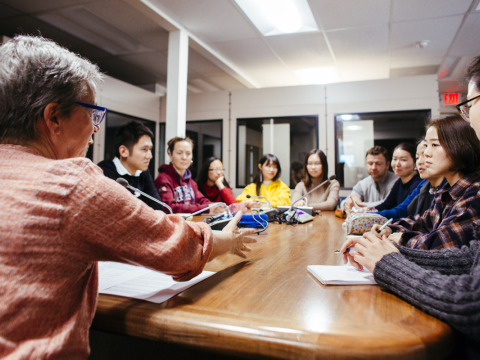
We work in a small cohort model, so our students get to know the other students in the graduate school, particularly in their class, very well. And we learn from each other. The international and domestic students are able to speak to what education looks like in their space and how education has changed over time for them or for people they know. They can compare who has led that change and how that has led to societal change. Those are powerful discussions we get to have in class all the time.
What is something you wish more people understood about education?
Education is very nuanced. What worked for you in one particular situation of your life, in a specific place and time, is different from what’s going to work in the future for other people in other places and times.
We tend to think of education as a monolith. We think, “It worked for me, or it worked for my friend. Why doesn’t it work for you?” We struggle with that in education because there’s a real tension between personalized and individual education and a need for standardization and commonality. How do we address students’ individual, personal needs while also making sure we’re all learning how to live in this world together?
That requires a very nuanced answer, and we don’t always have one. Education is constantly changing. The solutions to things are more nuanced and context-dependent than people realize.
Students need the power to discover what works for them. We need teachers with the power to help. And we need school systems that are designed to lift everyone up together.
What advice would you give students about how to excel in graduate school?
Excelling in graduate school is a matter of the sights you set for yourself. Some of our students go to graduate school with very practical aims in mind. They have a goal to get a specific kind of job when they graduate. Other students have goals more related to their own individual learning, growth, or development, which are also fantastic. What does it mean to excel for you?
It might mean that you join as many research groups as you can and get research experience. It might mean that you take or audit courses outside of your area. One thing our graduate students very much appreciate is being able to work on campus. That gives them a lot of experience in what campus culture and administration can look like. Depending on your ultimate goal, acquiring work or research experience is one way to get the most out of graduate school. And the other thing I would say is to be open to new opportunities.
We have alumni working in various fields, and we’re really proud that so many of them are doing something that’s meaningful to them. That’s the point of coming here — to take that meaning out into the world.