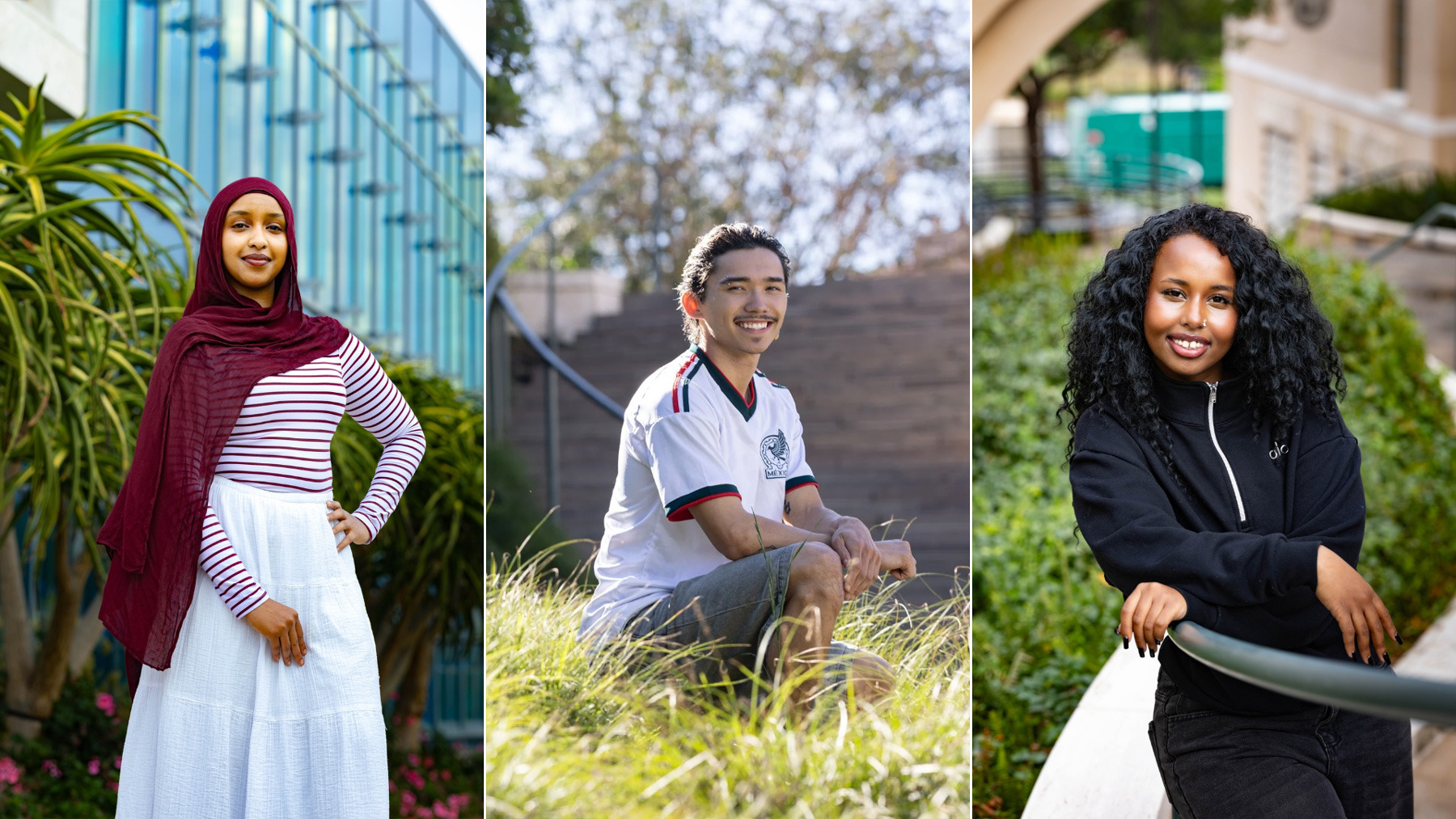
At Soka University of America, choosing a concentration is about discovering the questions and fields a student wants to explore more deeply. SUA’s five concentrations are designed to encourage interdisciplinary learning while giving students the flexibility to follow their curiosity and determine their own path through the liberal arts curriculum.
For Sumaya Awies Ahmed ’28, Andrew Magnuson ’28, and Hamdi Hussein ’28, this process of discovery unfolded through classes that sparked unexpected interests, one-on-one conversations with faculty, and an ever-deepening sense of what they wanted from their education. They share below how they chose their concentrations and what they learned along the way that may help other students navigating the same decision.
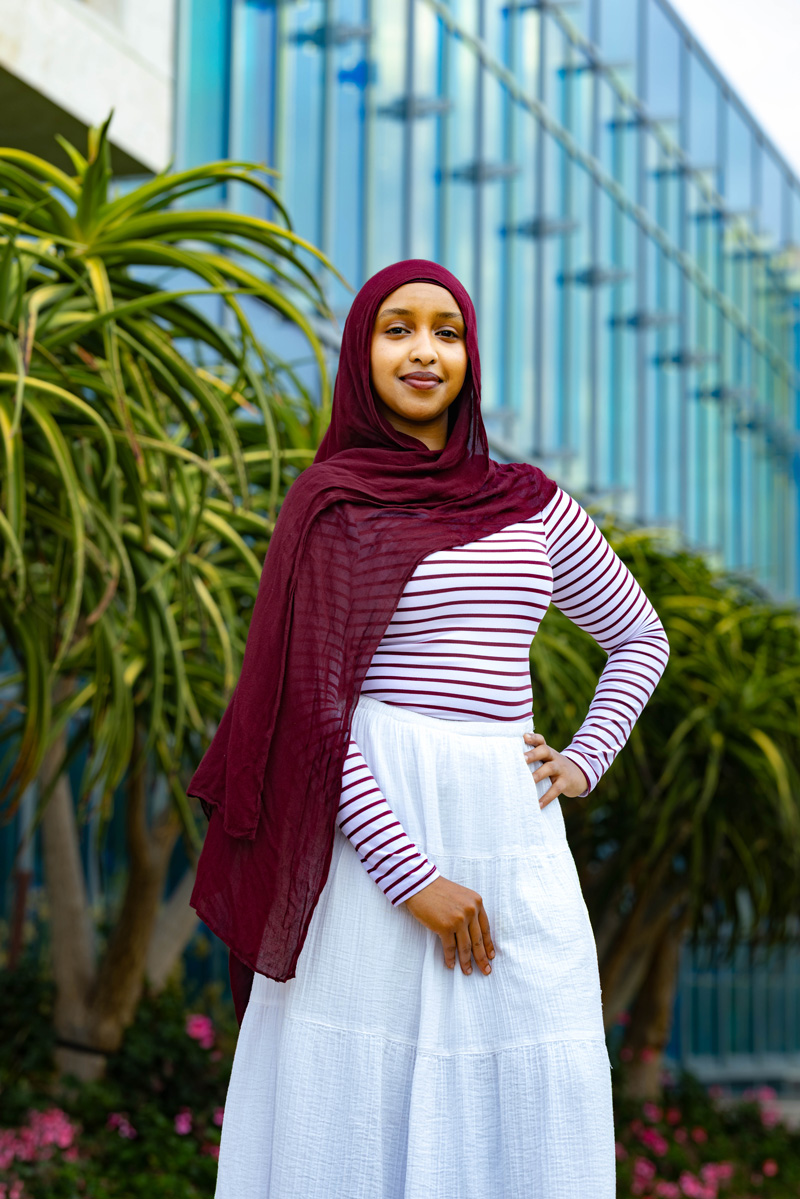
Sumaya Awies Ahmed ’28
Hometown: Nairobi, Kenya
Concentration: Social and Behavioral Sciences
I decided on my concentration at the beginning of my sophomore year when I took Professor of Political Science Peter Burns’ class on American government and politics. I really liked how the class helped me understand the political structures and systems that govern us. I came to understand that political power influences our everyday lives. It made me curious about the U.S. Constitution and how much the legal field can challenge or reinterpret amendments and rules that seem set in stone. This class also exposed me to a lot of readings in the political science field. I knew then I wanted to take more classes in this concentration. I also changed my academic advisor to Professor Burns, who helped me understand how I could connect my undergraduate studies to my grad school goals.
One piece of advice I wish I’d received earlier is to balance my classes. I wouldn’t want to take five heavy classes in the same semester. It can get overwhelming and lead to burnout. I would also advise a first- or second-year student to prioritize their classes. Talking to upperclass students helps. Decide which classes to take first, including ones offered only once a year, and which can wait because they are always available.

Andrew Magnuson ’28
Hometown: Las Vegas
Concentration: Environmental Studies
The combination of classes that I’ve taken showed me the earth is worth saving and that solutions are within reach. Looking at the way the world has been destroyed by human greed made me feel that something has to be done. Learning the ways that things can be done made me feel empowered.
When I was choosing my concentration, I wish I had known how broad the concentrations are. It can be scary to pick what you’re going to study, but I tell people the concentrations are very broad. Finding something niche that sticks out to you personally will help you decide which concentration to declare and make things less scary.
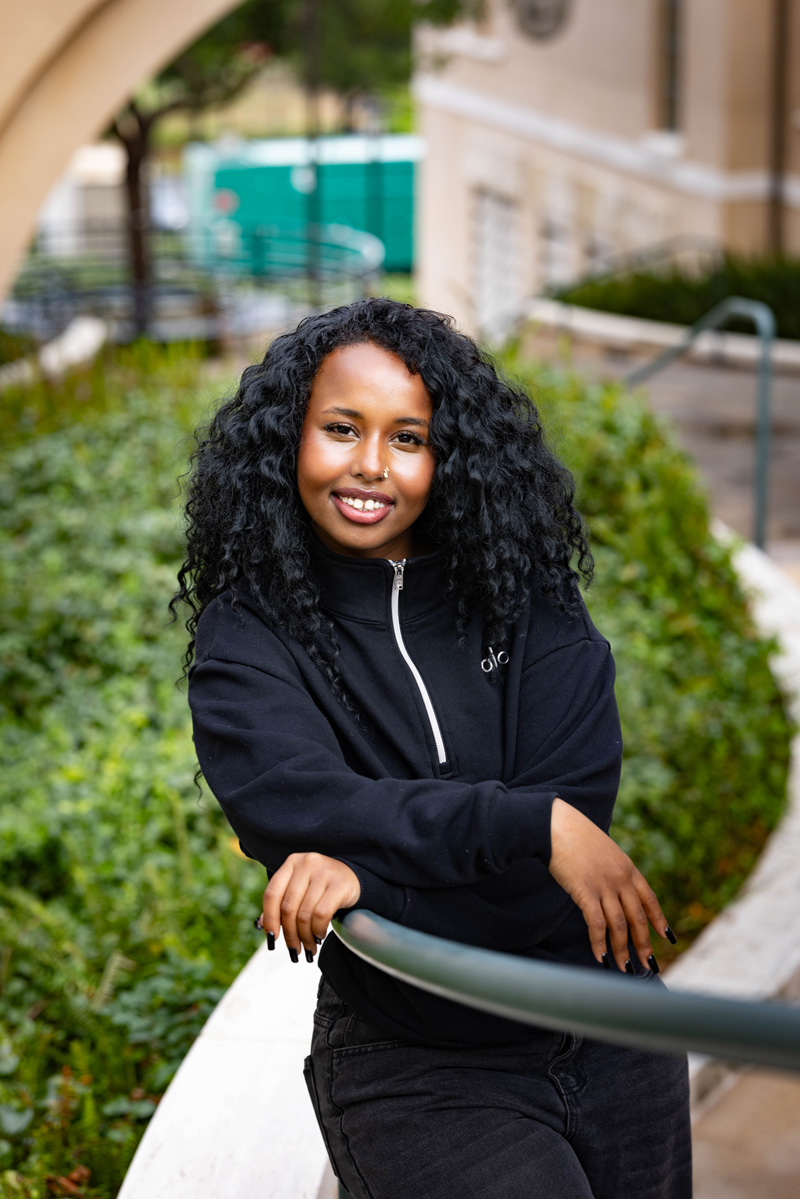
Hamdi Hussein ’28
Hometown: Hargeisa, Somaliland
Concentration: International Studies
When I first arrived at SUA, I was sure that I wanted to concentrate in Social and Behavioral Sciences. I excitedly enrolled in an economics class, but as I looked further into the economics courses I would have to take, I realized I wasn’t quite as interested in the field as I thought I was. At about the same time, I took a cross-concentration class, Intro to the Middle East, and I found myself drawn to that course, from the professor to the material to the discussions of history and politics.
My interest in the field only increased when I took Intro to Contemporary Africa and African Diaspora Studies. As an African student, it was very special to take classes that addressed many histories and cultures connected to my continent and its people. They were wonderful courses that opened up many more questions for me to explore. Now, a course called Humanitarian Law and Practice offers another avenue for inquiry into these same interests and has been equally stimulating. Every class I have taken in this concentration has covered new territory and left me eager to dive deeper into new areas of knowledge. Looking back, I think it was through exploring these different subjects that I found the concentration that best reflected what I want out of my education.
I wish I had realized at the beginning how expansive International Studies was. Before I began, I had a narrow image of what the concentration would look like, and I had no idea how many other directions I could take it in. There is so much to explore within International Studies, from regional studies, politics, international law, public policy, and governance to genocide prevention, humanitarianism, global health, and the historical and social dimensions of international issues.
For example, I took the class Plagues and People, and although I’m not particularly drawn to the medical sciences, I learned so much from examining how disease and public health intersect with history, politics, society, and global affairs. It showed me that even subjects I wouldn’t normally gravitate toward can offer perspectives that deepen my understanding of international issues.
My biggest suggestion is to take a variety of courses in different disciplines within the concentration. Even a class you take just out of curiosity might turn out to be more influential on your academic and career interests than the one you had in mind when selecting a concentration. Do not limit yourself!
Considering SUA, or already here and still choosing a concentration? Explore our five concentrations: Environmental Studies, Humanities, International Studies, Life Sciences, and Social and Behavioral Sciences.