Follow your curiosity, shape your future.

SUA’s five concentrations are designed to push your thinking beyond the boundaries of any single subject and prepare you to contribute meaningfully to the world. 

With a lighter credit requirement than a traditional major, they give you the flexibility to explore widely across disciplines or dig deep into your focus area, complementing the general education curriculum that runs through all four years of your liberal arts degree. 

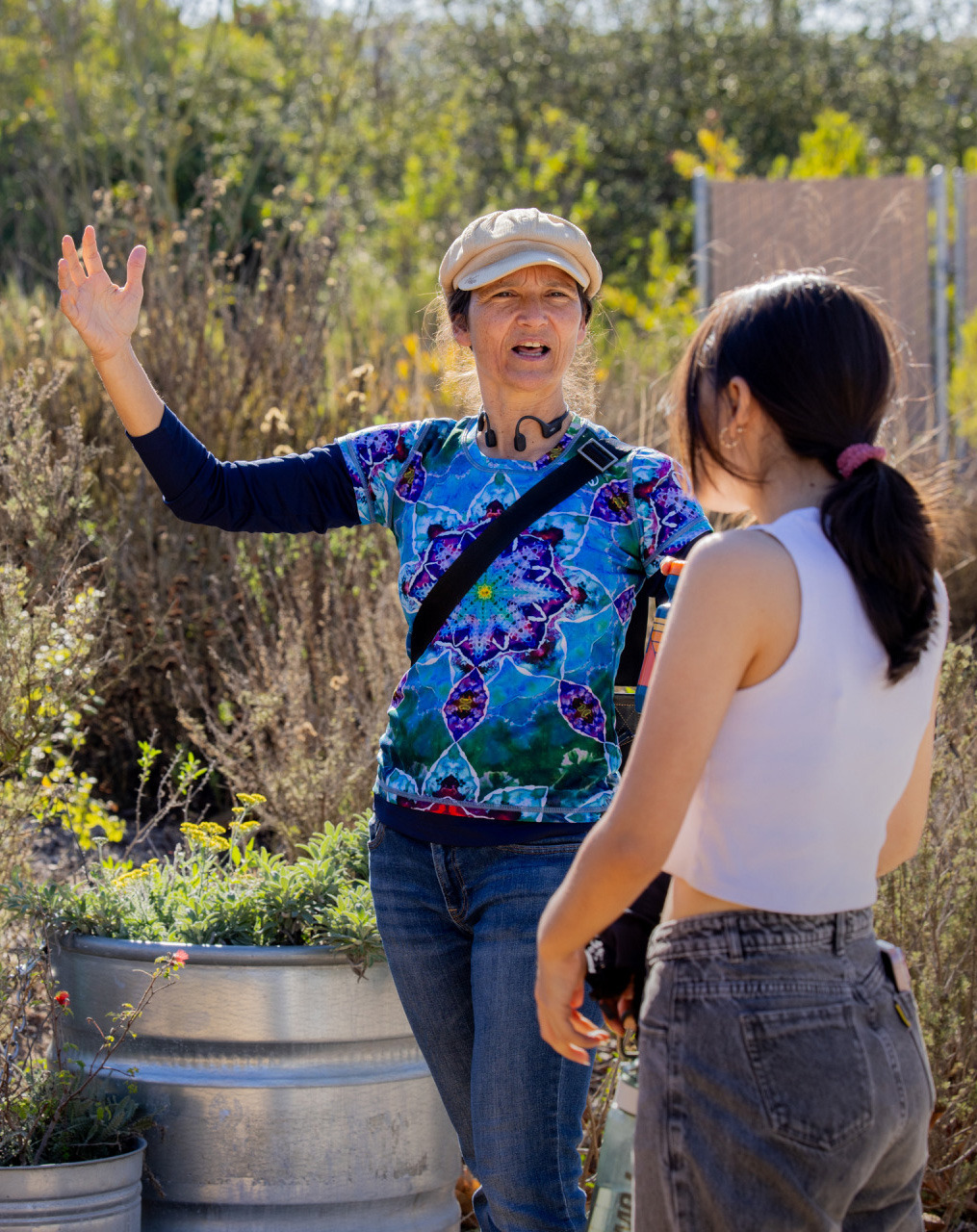
Soka University Professor Dr. Deike Peters gestures while speaking to a student during a field trip at Ballona Discovery Park, standing next to an educational park map sign.

Environmental Studies

Explore the relationship between people and the planet in a program designed to foster leadership for the creative coexistence of nature and humanity.

Soka’s Environmental Studies Concentration blends ecology, environmental management and policy, urban planning, and physical geography in a hands-on curriculum that prepares students for careers in sustainability, public health, and environmental education, advocacy, and policy.

Learn More

Environmental studies students examine questions that don’t fit neatly into one field — from managing water resources to designing sustainable cities, responding to natural disasters, and applying traditional ecological knowledge to protect biodiversity. 


“If you’re motivated by environmental justice, this is the concentration for you.” — MacKenzie Kemoade ’19

Potential Job Titles
  • Conservation field biologist
  • Environmental lawyer
  • Environmental policy advisor
  • GIS technician/Geospatial analyst
  • Marine ecologist
  • Municipal sustainability coordinator
  • Public health researcher
  • Urban planner
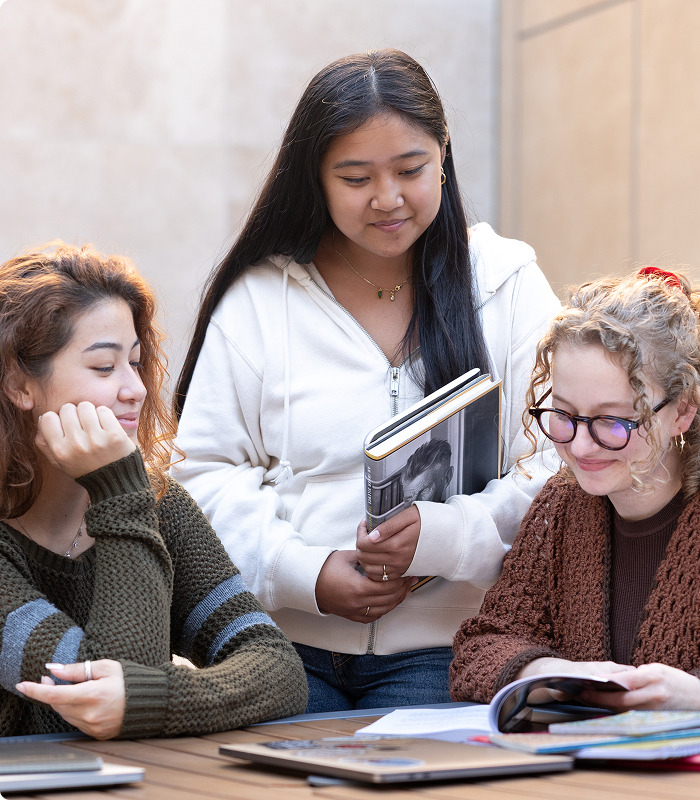
Students looking at books

Humanities

Trace the threads of human experience across cultures, centuries, and disciplines — from ancient philosophy to contemporary cinema, from indigenous North America to the courts of feudal Japan.

The Humanities Concentration weaves together history, literature, philosophy, art history, and music history into a curriculum where students develop the analytical precision, cultural insight, and communication skills that translate across any career that demands creative thinking.

Learn More

Humanities students are invited to slow down — to read closely, think carefully, and engage seriously with the ideas and art forms that have shaped how human beings understand themselves and each other. 


“I never imagined how much joy there could be in engaging in dialogue with thinkers and authors across different times, cultures, and languages.” — Natsuha Kataoka ’23

Potential Job Titles
  • Art conservator
  • Filmmaker
  • Journalist
  • Historian
  • Museum curator
  • Translator
  • Video game designer
  • Writer
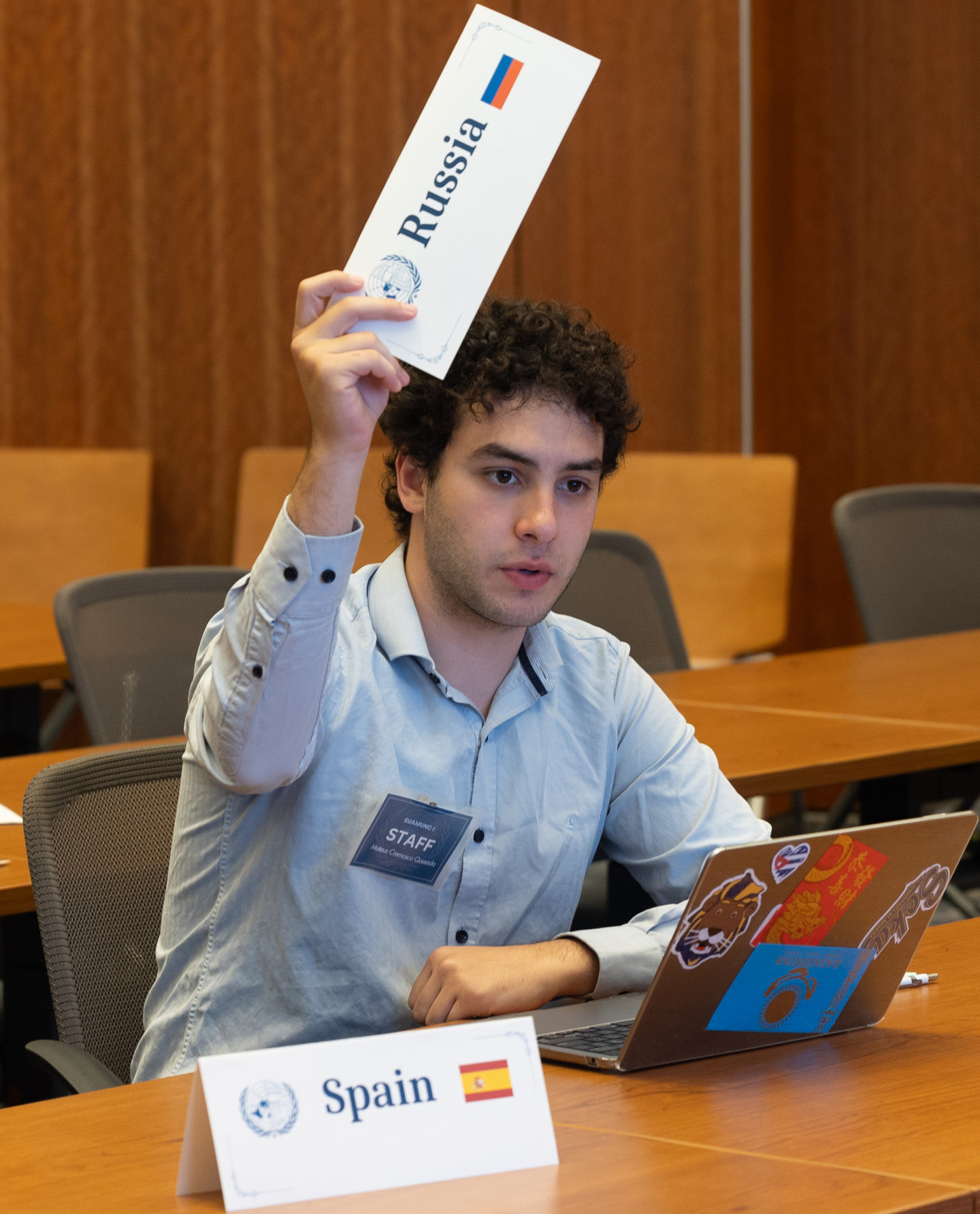
A Soka University Model United Nations team member with curly hair sits at a conference table with a laptop, raising a placard that reads "Russia" while a placard for "Spain" sits on the table in front of him.

International Studies

Examine the multifaceted issues shaping cultures and conflicts, elections and economies, peace and power across our interconnected world.

SUA’s International Studies Concentration integrates political science, history, economics, anthropology, and international relations, building the disciplinary range and cultural competence students need to pursue careers in diplomacy, public health, journalism, international development, and beyond.

Learn More

International Studies students are trained to look past headlines and surface narratives, developing the analytical depth to understand not just what is happening in the world, but why — and what it might take to change it. 


“What I love most about my International Studies classes is the ability to engage in meaningful discussions with professors and peers … I have the opportunity to ask questions, debate global issues, and refine my perspectives every day.” — Viki Lohk ’26

Potential Job Titles
  • Attorney
  • Diplomat
  • Educator
  • Entrepreneur
  • Policy analyst
  • Public servant
  • Nonprofit project developer
  • U.N. program officer
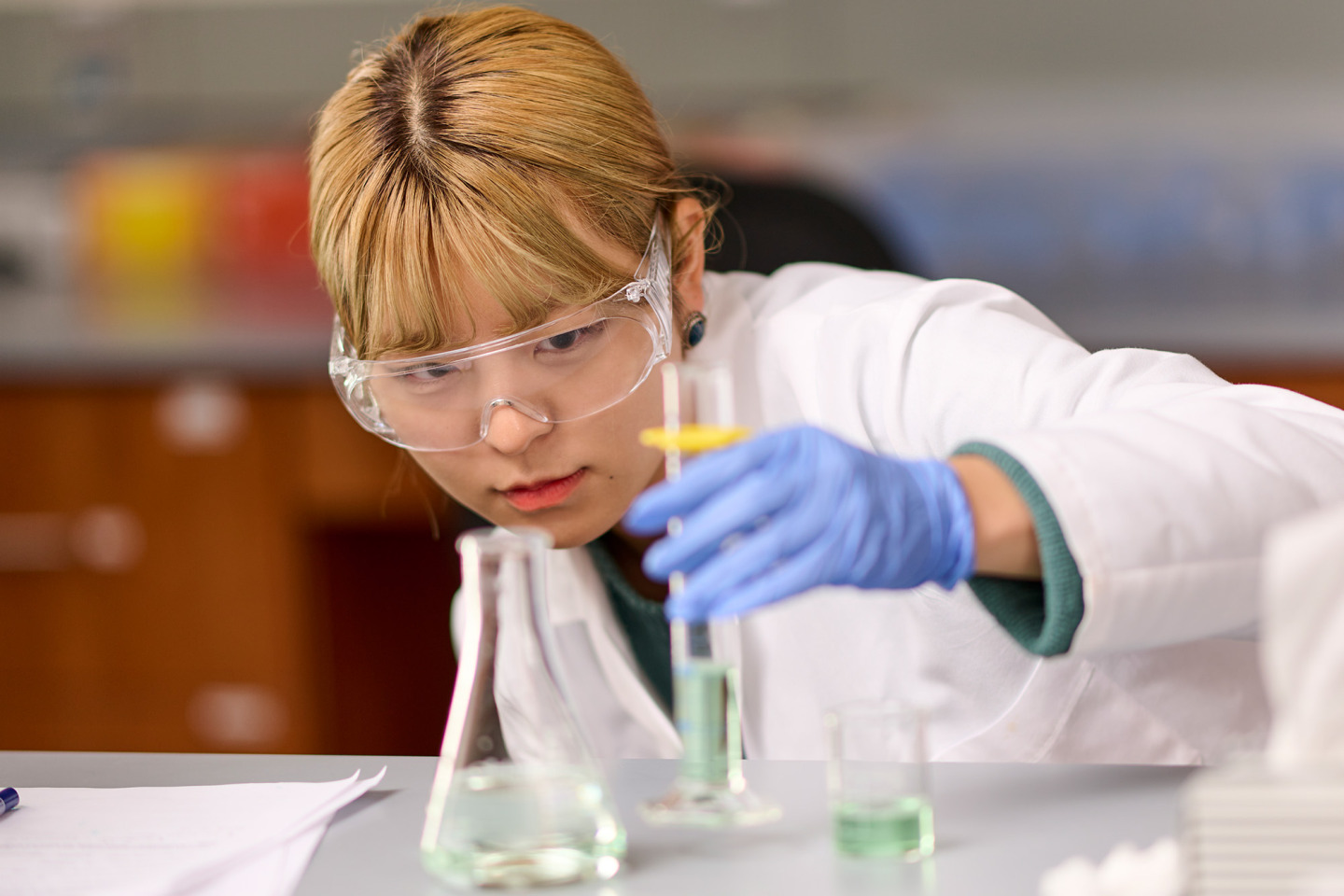
Three people wearing white lab coats and blue gloves perform an experiment in a lab.

Life Sciences

Investigate the biological systems and chemical processes that sustain life, and discover how this knowledge can contribute to human health and the public good.

Soka’s Life Sciences Concentration spans biology, chemistry, biochemistry, and pre-health to prepare students for medical school, science graduate programs, and careers in health, biotechnology, and laboratory research.

Learn More

Life sciences students learn in professional-grade facilities, contributing to ongoing faculty research and developing the laboratory skills and creative thinking that define working scientists. 


“Here, professors know who you are and want to see you succeed. If they see you putting in the work, they’ll offer you opportunities to develop. It feels like everyone is looking out for your future.” — Maria Akenkou ’25

Potential Job Titles
  • Bioinformatician
  • Clinical research coordinator
  • Dentist
  • Genetic counselor
  • Laboratory technician
  • Nurse
  • Pharmacologist
  • Physician
  • Public health analyst
Students shaking hands

Social and Behavioral Sciences

Decode the patterns of human behavior and the social, cultural, economic, and political dynamics that shape how we live together.

The Social and Behavioral Sciences Concentration draws on anthropology, economics, political science, psychology, and sociology to build the analytical depth students need for graduate programs and careers ranging from public policy and clinical psychology to finance, law, and community organizing.

Learn More

Social and Behavioral Sciences students are trained not just to understand the world, but to question it, developing the critical instincts and scholarly rigor to think independently and act with purpose. 


“We learned a lot about research methods and evaluating sources, which is useful for academic research and for understanding the news in our daily lives. It’s increasingly important in the age of online misinformation and AI.” — Mira Peregud ’26

Potential Job Titles
  • Anthropologist
  • Archivist
  • Development coordinator
  • Investment analyst
  • Political consultant
  • Political science researcher
  • Psychologist
  • Social worker

How you'll learn

Whatever concentration you choose, you’ll learn to think across disciplines in seminar-style classes with faculty who guide your intellectual growth, and you’ll apply your skills in an independent research project during your final year.

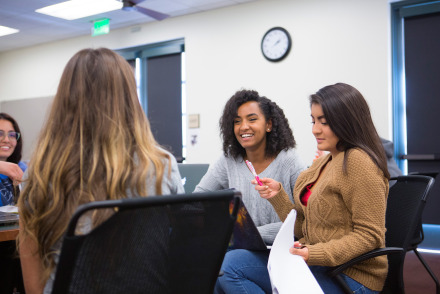
A group of female students sits around a table in a brightly lit classroom, engaged in a discussion. One student with long blonde hair faces away from the camera, while two other students opposite her listen and smile, with one holding a pink pen and papers.

Small classes

An average class size of 12 students means that your questions shape the discussion and faculty can give your development their genuine attention. You’ll have daily opportunities to practice articulating your ideas in a supportive setting that challenges you to sharpen your thinking and grow more confident in your own voice.

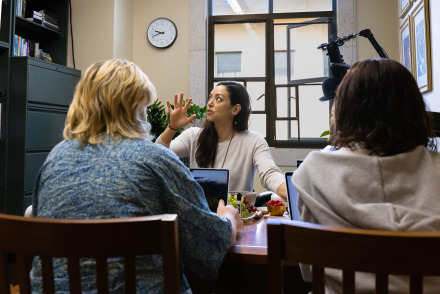
A female professor gestures while mentoring two students at a desk with laptops and fruit.

Faculty mentorship

With a 7:1 student-to-faculty ratio, faculty at Soka don’t just know your work — they give you detailed feedback, remain accessible outside of class, and often invite students to work as research assistants and contribute directly to their ongoing scholarly research.

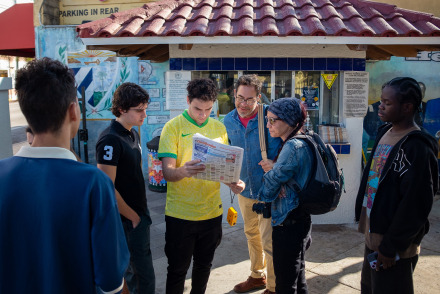
A small group of people gathers outdoors in front of a building with a red-tiled roof, looking at a printed newspaper or map held by a young man in a yellow jersey.

Interdisciplinary inquiry

Drawing connections across disciplines is at the heart of every Soka concentration. No matter what field you pursue, thinking across subjects builds the rigor, imagination, and adaptability to navigate our world's complex problems.

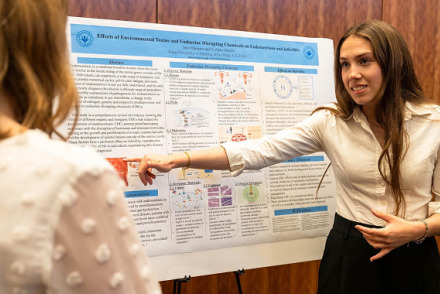
Student giving a presentation

Senior Capstone project

In your final year, you’ll complete an independent research project on a topic within your concentration. Working one-on-one with a faculty mentor, you’ll formulate an original research question and answer it with the full range of skills and knowledge you've developed across four years.

How you'll learn

Whatever concentration you choose, you’ll learn to think across disciplines in seminar-style classes with faculty who guide your intellectual growth, and you’ll apply your skills in an independent research project during your final year.

Small classes

An average class size of 12 students means that your questions shape the discussion and faculty can give your development their genuine attention. You’ll have daily opportunities to practice articulating your ideas in a supportive setting that challenges you to sharpen your thinking and grow more confident in your own voice.

Faculty mentorship

With a 7:1 student-to-faculty ratio, faculty at Soka don’t just know your work — they give you detailed feedback, remain accessible outside of class, and often invite students to work as research assistants and contribute directly to their ongoing scholarly research.

Interdisciplinary inquiry

Drawing connections across disciplines is at the heart of every Soka concentration. No matter what field you pursue, thinking across subjects builds the rigor, imagination, and adaptability to navigate our world's complex problems.

Senior Capstone project

In your final year, you’ll complete an independent research project on a topic within your concentration. Working one-on-one with a faculty mentor, you’ll formulate an original research question and answer it with the full range of skills and knowledge you've developed across four years.