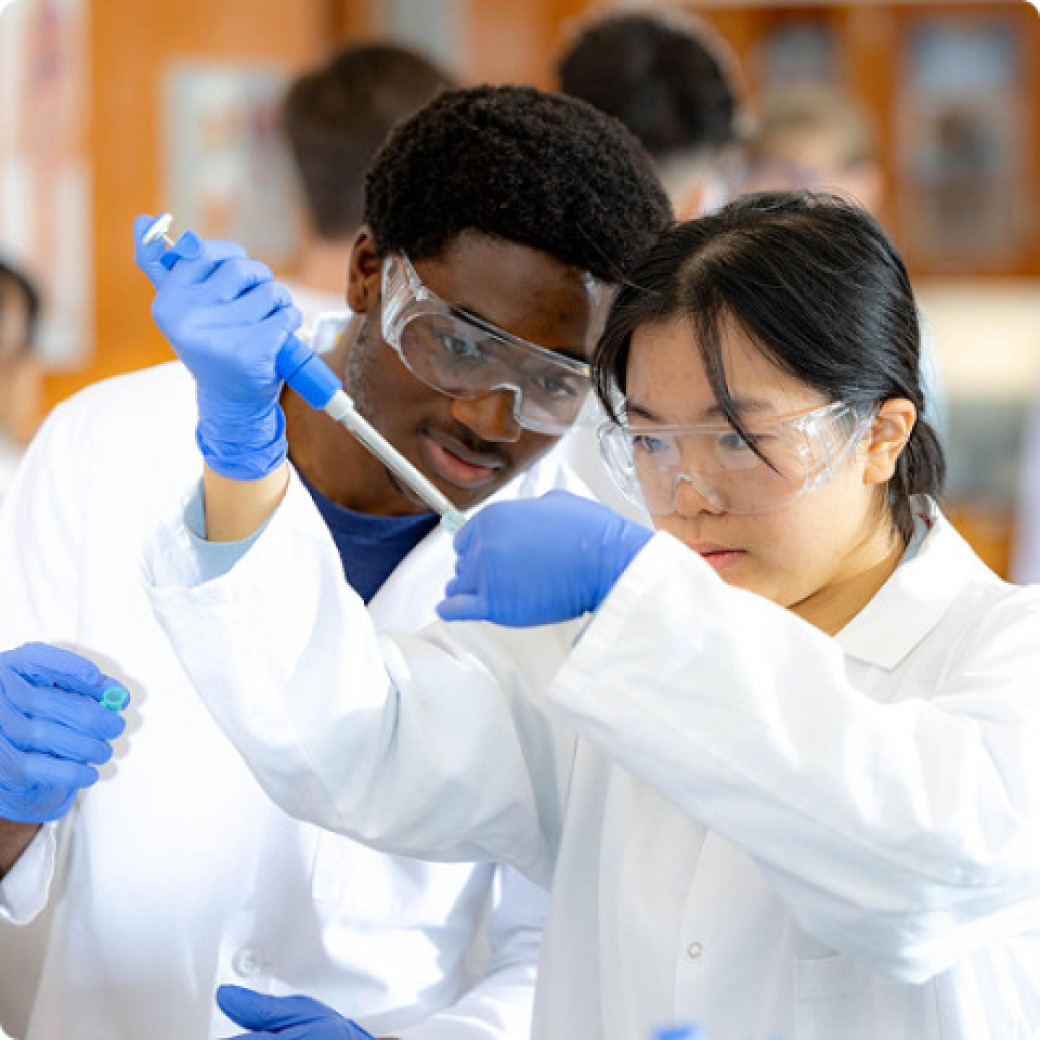
Two students working in a lab
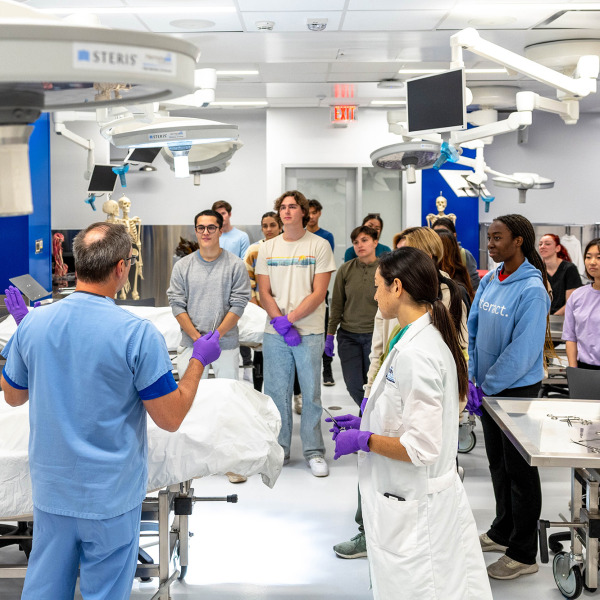
A group of students stands in a modern anatomy lab or surgical training facility, listening to an instructor in blue scrubs. Several lab stations with covered tables, medical lighting, and surgical tools are visible around the bright, sterile room.

Where scientific curiosity meets human purpose

At Soka, science begins with a question: How will you use what you discover?

Through rigorous study in biology and chemistry, you’ll build the foundation for medical school, graduate programs, or careers in biotechnology, pharmaceutical research, or bioinformatics. 

But the lab is only the starting point. You’ll also learn to ask whether a new drug is accessible to the communities that need it, or how evolutionary changes in an animal species impact its survival — the kinds of questions that apply scientific knowledge to real world problems.

In small seminars where professors know your name and your classmates come from around the world, you’ll gain the skills to question, analyze, and collaborate like a scientist, making contributions to current research and the broader scientific community. 


What is a concentration?

A concentration differs from a traditional major. At SUA, concentrations let you explore subjects broadly or go deep into areas that interest you most — all within a liberal arts degree.


What you’ll learn

  • Fundamentals of chemistry and biology at different scales, from molecules and cells to organisms and ecosystems
  • How to design and carry out experiments that contribute to real, ongoing research
  • Data analysis, scientific writing, and how to present your findings
  • Advanced topics in evolutionary biology, clinical human anatomy, drug design, and more


Areas of focus

  • Biology
  • Biochemistry
  • Chemistry
  • Pre-Health

Curriculum overview

The BA in Liberal Arts with a concentration in Life Sciences at Soka University of America engages students in the dynamic fields of biology, biochemistry, and chemistry as well as provides a pathway towards various science careers, including medicine, research, and education, among many others. The Life Sciences Concentration features inquiry-based courses that train students in experimental design, data collection and analysis, and presentation of experimental results. The concentration features an interdisciplinary curriculum that provides a solid foundation in the sciences and enables students to apply their knowledge and skill set to address real world challenges.

Catalog: View Life Sciences Course Descriptions

  • Integrated Biology and Chemistry is an interdisciplinary course that is co-taught by a biologist and a chemist and it focuses on the molecular biology of cancer and the underlying chemistry of cell biology. Students learn how proteins are encoded and the impact of genomic instability on protein structure and function; alterations of normal metabolism in cancer cells; and basic pathways of cell division and death.
  • Introductory Physics I/II are interdisciplinary courses that cover the usual introductory physics topics but reordered to follow the timeline of the universe: evolution of the cosmos, evolution of life on earth, and evolution of human social reality. Computer labs promote modeling and simulation skills using Python. Biological, chemical, medical, or health-related contexts or applications are used where suitable as are connections to enduring questions of humanity or modes of inquiry.
  • There are multiple project-based labs (PBLs) that students can take that span a variety of topics in biology, biochemistry, and chemistry. These 3-unit upper-level laboratory courses utilize inquiry-based learning and actively invite students into a faculty member’s research laboratory, in contrast to the typical one-unit laboratory course. Students work independently on a semester-long project where they interpret scientific literature, design experiments, collect data, analyze results, and present their work. These project-based labs offer authentic research opportunities that significantly expand students’ repertoire of science skills.
  • Foundations of Chemistry Laboratory (CHEM 150L) is a course-based undergraduate research experience (CURE) based on Foundation of Chemistry (CHEM 150) course content. The CURE project is designed to challenge students to frame “real-life” practical research questions and design viable approaches to acquire meaningful data. This is a student-centered, inquiry-based research project where the outcome is unknown to both the students and the instructor.
  • Once our students complete foundational courses in biology and chemistry (typically during their first year), they can choose from a variety of upper-level science courses that fit their unique career goals. We offer students the flexibility to follow different pathways through Life Sciences. Some students have specific post-graduate plans such as medical school or graduate school in biology or chemistry while others may simply want to experience a variety of LS courses to help them decide what they are most passionate about. Since SUA students major in liberal arts, rather than the sciences, they receive a well-rounded education that prepares them to tackle global challenges with a cross-disciplinary skillset.

The Senior Capstone

Your senior year, you’ll work with a faculty mentor to design and carry out a substantial, original research project — applying experimental method, analysis, and scientific communication to a question you’ve chosen to pursue.
Recent capstone projects:

  • Synthesizing and testing potential cancer drugs 
  • Assembling and annotating carnivorous fish genomes to compare digestive genes with herbivorous species 
  • Measuring invasive marine species population changes in Southern California harbors 
  • Investigating artificial sweetener impacts on type 2 diabetes risk 
  • Studying reflectin protein dynamics in cephalopods for biomedical applications
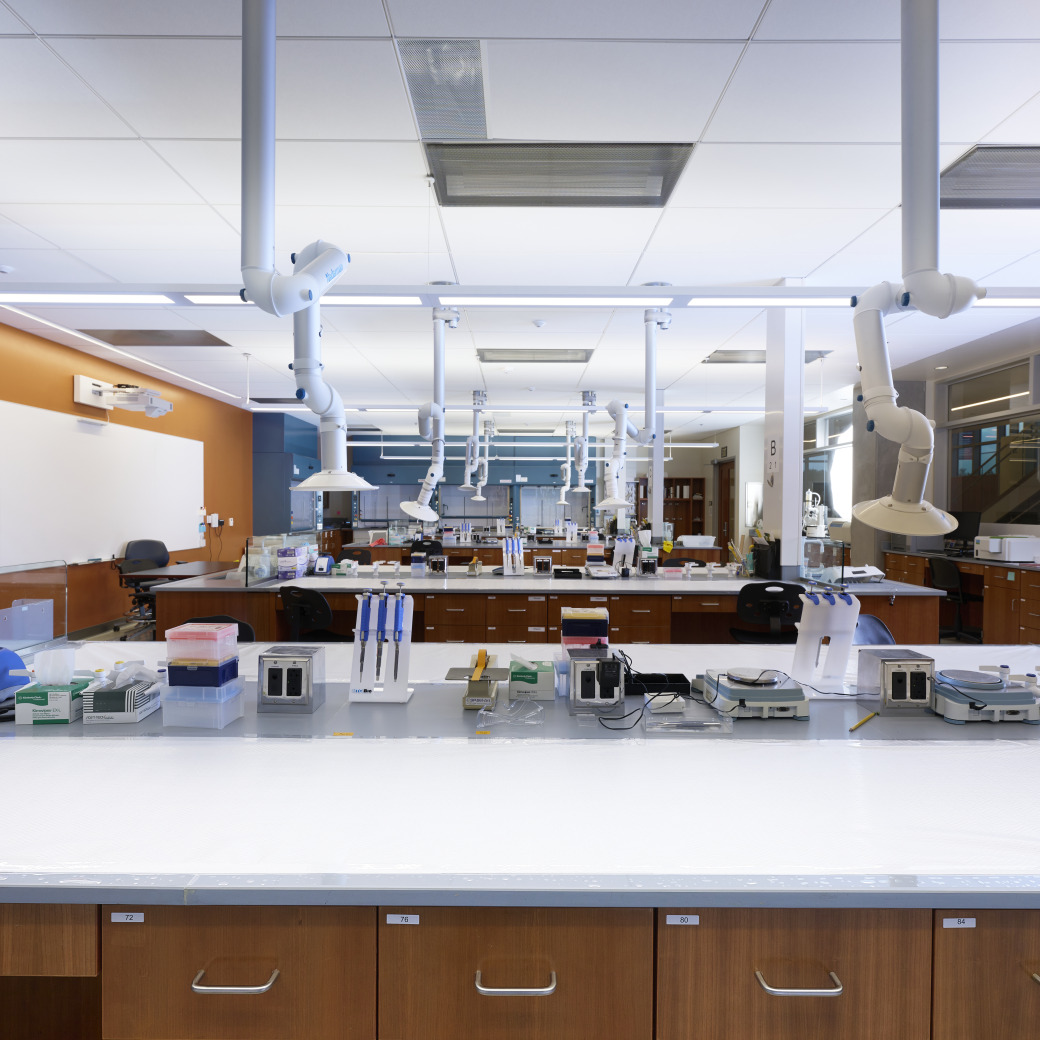
Lab equipment sits idly in an empty lab classroom.
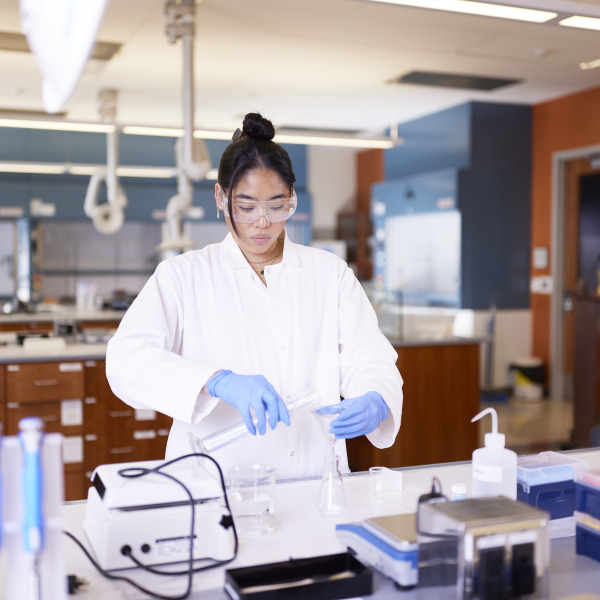
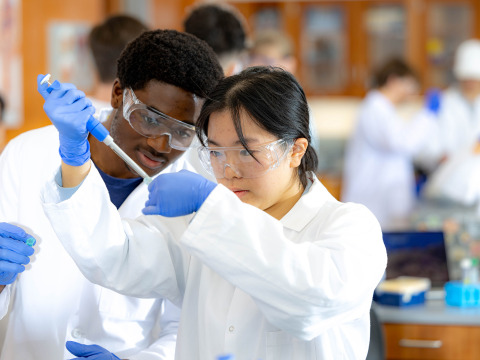
A female student with black tied-back hair wears a white lab coat, safety glasses, and blue gloves as she performs science experiments in a lab.

Where you'll learn

Your classes and lab work happen in Marie and Pierre Curie Hall, a 91,000-square-foot science facility with five teaching labs and 14 research labs — equipment and space on par with professional research settings.

Small class sizes mean you’ll work closely with faculty and classmates throughout your time at Soka, from introductory courses to senior capstone research.

World-changing futures

Life Sciences graduates have pursued paths from medicine and nursing to HIV research to pharmaceutical R&D, taking their scientific training into careers where they can contribute to human health and technological innovation.
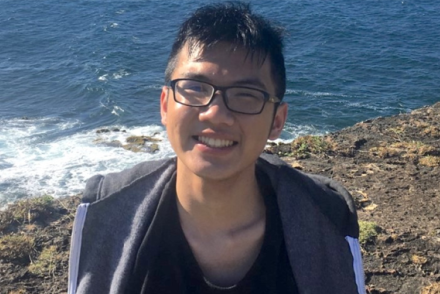
A man with short black hair and black eyeglasses smiles while standing on a cliffside overlooking the ocean

Ninh Le '22

"The Life Sciences Concentration cultivated my curiosity and love for research by extensively incorporating project-based learning in the curriculum. Thanks to the low student-to-faculty ratio, I received a lot of personalized mentorship from my professors." 

Ninh's Role After Soka: Ph.D. Candidate in Bioinformatics at the Georgia Institute of Technology
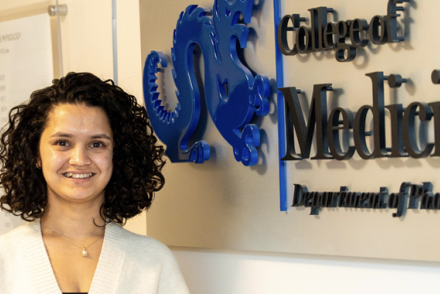
Aarohee Bhattarai has short curly dark brown hair and is wearing a white shirt. She is standing to the side of wall sign that says "College of Medicine"

Aarohee Bhattarai '22

"Paired with Soka's interdisciplinary curriculum, the Life Sciences Concentration shaped my ability to think critically, learn independently, and integrate diverse perspectives into my scientific work."

Aarohee's Role After Soka: Ph.D. Candidate in Pharmacology and Physiology at Drexel University
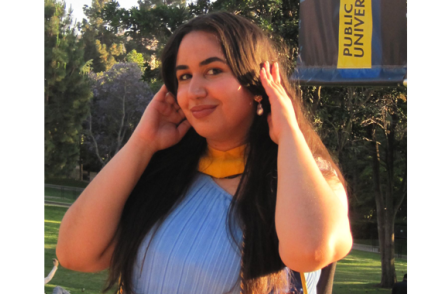
A woman wearing a light blue dress runs her hands through her long brown hair while looking at the camera.

Manal Atty '23

"The Life Sciences Concentration helped me realize that chemistry wasn't just a set of technical skills, but a creative and powerful tool for social good, especially in the context of healthcare and innovation."

Manal's Role After Soka: Ph.D. Candidate in Chemistry at the University of Virginia
World-changing futures

Life Sciences graduates have pursued paths from medicine and nursing to HIV research to pharmaceutical R&D, taking their scientific training into careers where they can contribute to human health and technological innovation.

Ninh Le '22

"The Life Sciences Concentration cultivated my curiosity and love for research by extensively incorporating project-based learning in the curriculum. Thanks to the low student-to-faculty ratio, I received a lot of personalized mentorship from my professors." 

Ninh's Role After Soka: Ph.D. Candidate in Bioinformatics at the Georgia Institute of Technology

Aarohee Bhattarai '22

"Paired with Soka's interdisciplinary curriculum, the Life Sciences Concentration shaped my ability to think critically, learn independently, and integrate diverse perspectives into my scientific work."

Aarohee's Role After Soka: Ph.D. Candidate in Pharmacology and Physiology at Drexel University

Manal Atty '23

"The Life Sciences Concentration helped me realize that chemistry wasn't just a set of technical skills, but a creative and powerful tool for social good, especially in the context of healthcare and innovation."

Manal's Role After Soka: Ph.D. Candidate in Chemistry at the University of Virginia
Learning beyond the classroom

Life Sciences students regularly take their work outside Soka, presenting at national conferences, interning at research institutions, and building the professional network that comes from doing real science alongside faculty.

Life Sciences students have:

  • Presented original research at the American Society of Cell Biology and American Chemical Society conferences
  • Worked as summer research assistants at SUA and other universities
  • Interned  in fields including vaccine research and bioinformatics
     

Potential job titles

Bioinformatician Clinical research coordinator Dentist Genetic counselor Journalist Laboratory technician Nurse Pharmacologist Physician Policy Advisor Public health analyst Bioinformatician Clinical research coordinator Dentist Genetic counselor Journalist Laboratory technician Nurse Pharmacologist Physician Policy Advisor Public health analyst
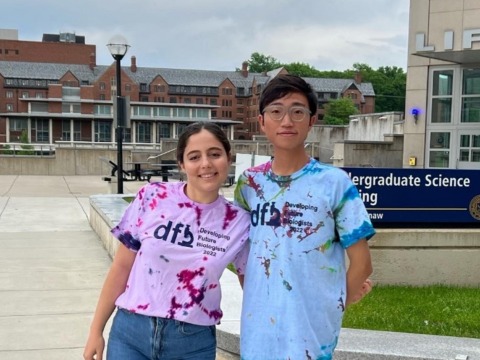
Life Sciences thumbnail showing two students talking on campus

Concentration news