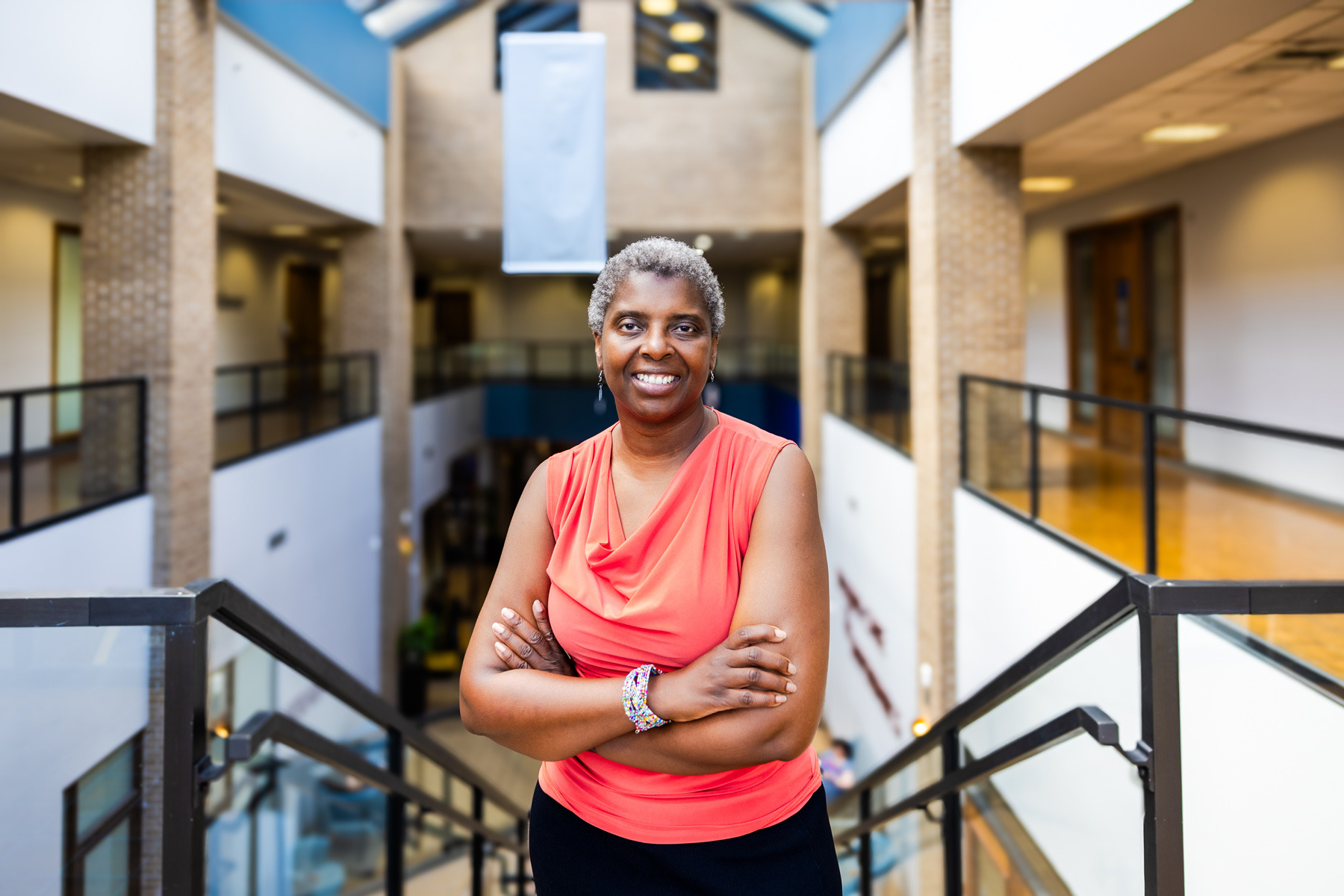
In medical school, Dr. Victoria Smith sat through lectures on conditions like shock. The professor would explain that a patient in shock turns pale, then show a slide of a white patient.
“I would raise my hand and say, ‘What would that look like in someone like me?’” Smith recalled. “And the professor often hadn’t even thought about it.”
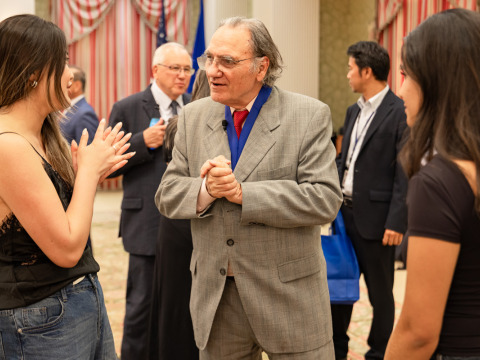
Now the associate medical director for primary care at Ochsner Health, a nonprofit healthcare provider in Louisiana, Mississippi, and across the Gulf South, Smith was the first guest speaker in the new Humanism and Health Speaker Series at Soka University of America. The series connects students with medical professionals who strive to make patient care and healthcare systems more compassionate, equitable, and empowering for patients and healthcare workers. Co-hosted with the World Health Organization Collaborating Centre for Healthy Cities and Urban Policy Research at the Institute of Science Tokyo, the series examines how clinicians, health leaders, policymakers, and researchers bring humanistic values into their work.
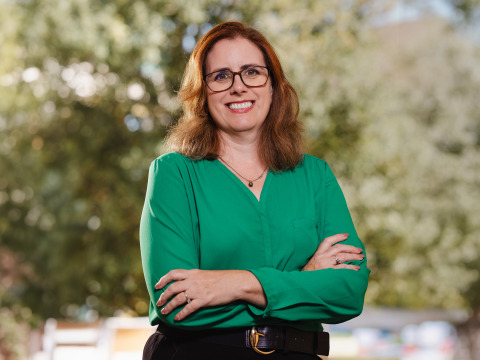
“Our conversations explore not only what humanism means,” said Dr. Jacqueline Mills, assistant teaching professor of global health and health professions advisor at SUA, “but how it shapes guest speakers’ decisions, relationships, organizational systems, and the way that they operate on a daily basis in an effort to improve health and well-being.”
Mills organized the series with Dr. Takeo Fujiwara at the Institute of Science Tokyo and Kiarra Hoes ’27, humanism and health student fellow at SUA.
“I hope the speaker series shows how a Soka education can lay the foundation for a future in healthcare rooted in wisdom, courage, and compassion,” Hoes said. “Each of us has a responsibility to put those values into practice and help build systems that reflect them.”
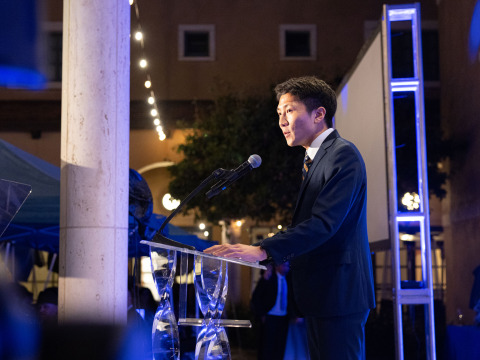
Hoes facilitated the conversation with Smith during the inaugural Humanism and Health event in October. They met when Hoes shadowed Smith’s primary care practice during SUA’s summer clinical preceptorship in 2024 and 2025. Hoes now plans to become a family medicine physician with a focus on maternal and child health, and she credits Smith with helping her understand her own purpose in pursuing medicine.
“What stood out to me most,” Hoes said, reflecting on her conversation with Smith at last month’s event, “was her unwavering hope for humanity and her belief in her patients’ capacity to take ownership of their health. She described herself as a coach and the patient as the owner of the team, a perspective that emphasizes collaboration and shared decision-making.”
Smith expanded on those ideas in a follow-up conversation, discussing the role of education in shaping compassionate medical professionals and sharing advice for Soka students interested in medical careers.
How would you define humanistic patient care and healthcare systems?
I think humanistic healthcare is healthcare that centers itself on the empowerment of the individual patient. It’s based on respect for the dignity of each person’s life and a belief in each person’s potential to attain the best health for them. Humanistic health systems are systems that recognize, appreciate, and treasure the dignity of the individual and are set up to empower people to have the best health possible for them.
What is the role of higher education in fostering humanistic physicians and medical professionals?
One role is fostering curiosity and humility. On my first day of medical school, the dean said, “There’s a lot that we’re going to teach you over the next four years. And actually, 50% of it is wrong. We don’t know what 50% is wrong, so you’ve got to learn it all.” You have to maintain your curiosity and a sense of continuous learning, because the science is going to change. What we understand is going to change. And so at institutions of higher learning, it’s important that we’re fostering curiosity and humility.
Fostering empathy is important, too. In talking about what it means to be a global citizen, SUA’s founder, Daisaku Ikeda, described empathy as imaginative — the ability to think about and feel what might be happening to others without it having to happen directly to you.
Institutions of higher learning also have to help people understand the difference between knowledge and wisdom. You can attain knowledge from reading a book. But having wisdom means to think about that knowledge, reflect on it, and not take it wholeheartedly without some reflection or understanding of what bias might be there or whose voice might be missing.
I think institutions of higher learning should foster a sense of compassion and a sense of responsibility. Why are you developing this knowledge or wisdom? What are you going to do with it? There should always be that sense of responsibility, of giving back with what you’ve learned.
Did you have educators or mentors who shaped your humanistic approach to patient care?
I’ve had many. All throughout my life, I’ve had great teachers. Sally Weil, my first-grade teacher, recognized the spirit of an educator in me. When I was in third grade, she and my third-grade teacher, Eleanor Holliday, allowed me to go back once a week to my first-grade teacher’s classroom to teach. She gave me a desk, and I would work with learners in her first-grade class who were struggling with reading. She really taught me about peer learning and the belief that everyone has something to offer.
And that has been something that has driven me in life — everybody is valuable, everybody has something to offer, and everyone has something to teach. That humility is part of being a healthcare provider and working with patients. I’m teaching and offering things to patients, but they’re offering insights to me as well, sometimes in terms of how I can help the next patient. I think that’s been key.
What would be your advice to Soka students who are interested in building careers in medicine with a humanistic approach, even if they end up working in a system that may not be conducive to that approach?
I think it’s always important to go back to your “why.” If you’re committed to humanism as a healthcare provider, then even if you end up in a place that may not be as humanistic as you would like it to be, humanism means believing in your own potential to impact change. It means not just complaining about things, but being part of the solution. Believe in your power to effect change from a positive approach.
I work at a large health system that has always served a multicultural group of patients and has a rainbow of people working there, too. When I first came back to working in this system after years in private practice, I noticed many of their marketing materials depicted predominantly white people. And when I saw those marketing materials, I would say, “This does not reflect who we are or who we take care of.” It took courage to say that multiple times. And now, I don’t feel I have to say it, because people are already thinking about it.
In our system, we take care of a large number of Spanish-speaking and Vietnamese-speaking patients. Many times I would be in rooms where we were discussing a great program or campaign. And thinking of all the people we serve and trying to reduce barriers, I’d say, “Is this going to be in Spanish and Vietnamese?” I’m gratified that now when I sit in meetings, I don’t have to be the one asking that.
I use these examples because sometimes a place, an institution, or a situation is not where we want it to be at the beginning. It is our role to fight to change it, to have a vision of what it should be, and to care enough to give feedback in a positive way — not just take a potshot and say, “How come you’re not doing this?” When you care about an institution being the best that it can be, then you have to have the courage and perseverance to continue to speak up about how it can be more humanistic.
Be the person who’s willing to take the time to be creative and offer to co-create solutions with others, not just identify the problem. Sometimes you may need to say, “Okay, we can agree there’s an issue. How can we work together?” And you can pull in other people to solve this together. You have to care enough to make it the best place to receive care and the best place to work. Because humanism in healthcare is not just about patients, but the folks who work in health systems, too.