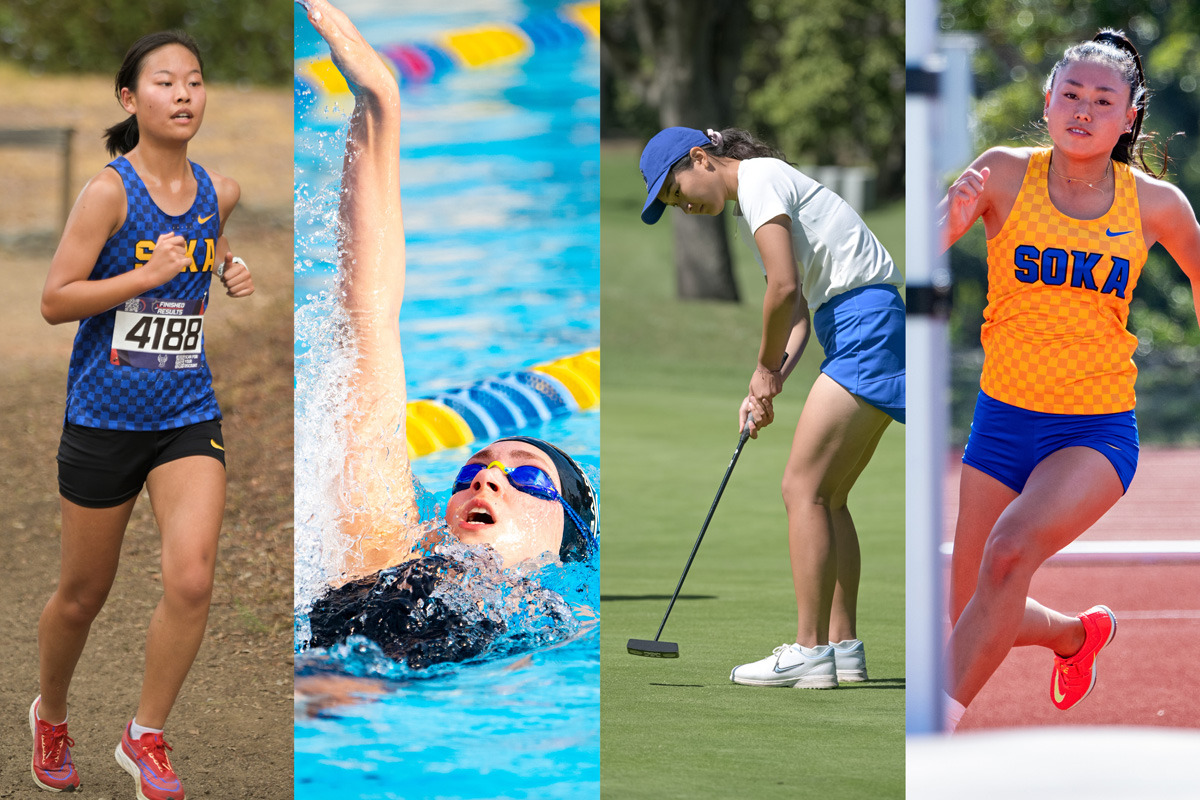
Team practices may have paused over the summer, but for SUA student-athletes, the season offered a different kind of training ground. High jumper Mili Fukada ’28 interned at U.S. Bank and taught ballet. Swimmer Nicole Skrzypek ’27 gained a deeper understanding of teamwork while working mornings at a warehouse and evenings as a swim instructor. As counselors at the Soka All-Sports Camp, cross-country runner Yuko Hashimoto ’27 and golfer Beini Tang ’27 tapped into the lessons they’ve learned in each of their sports to create a fun and supportive environment for campers. For all four student-athletes, this summer became a time of personal and professional development, reflection, and preparation for the coming academic year.
Mili Fukada: Leaping Into Professional Environments
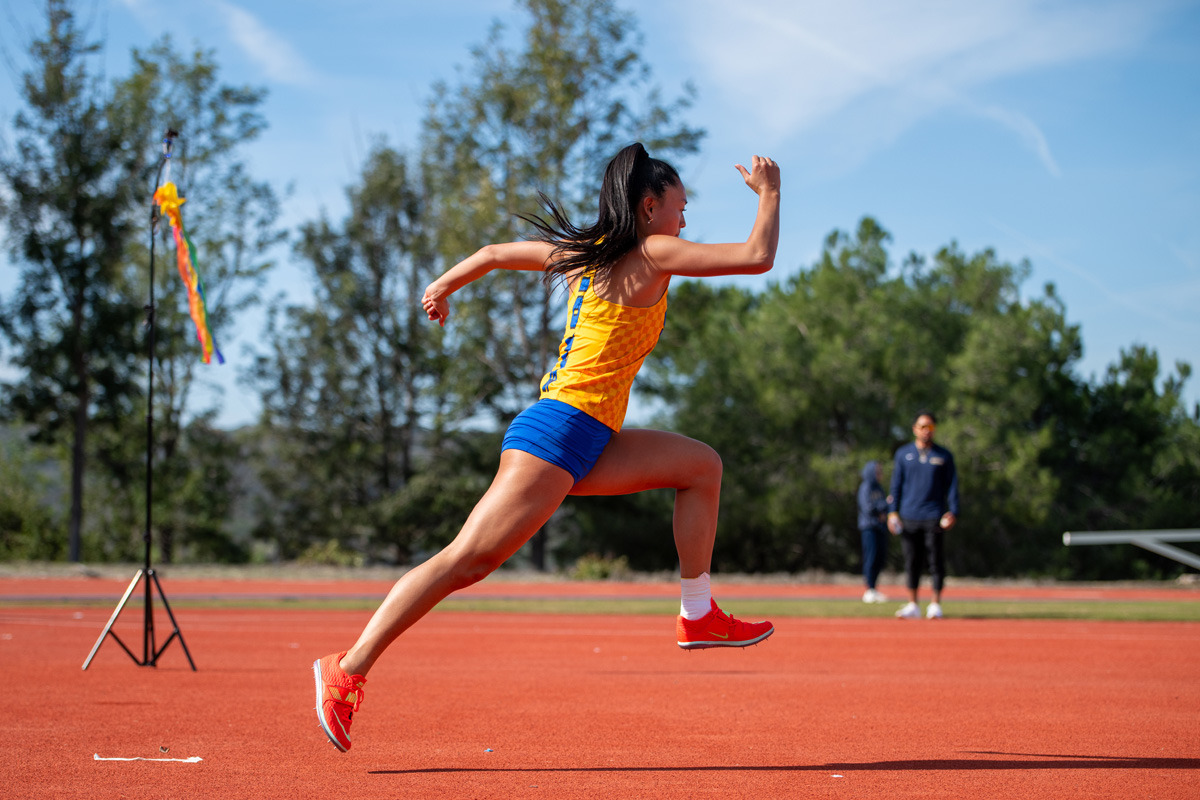
A member of the women’s track and field team, third-year student-athlete Mili Fukada worked at U.S. Bank this summer as part of the Japanese Language Internship Program. In her role, she learned how to serve the bank’s Japanese clients, many of whom were relatively new customers; several years ago, U.S. Bank merged with Union Bank, which had historically been associated with Mitsubishi Bank of Tokyo.
“I’m incredibly grateful and excited to leverage my Japanese culture and background in a professional setting,” said Fukada. She hails from both Kauai, Hawaii, and Scarsdale, New York, but this summer she was based in Newport Beach, California, where she maintained a rigorous weekly workout routine.
“Mondays are reserved for sprinting and heavy lifting,” she said, “while Tuesdays are dedicated to a mile run and core exercises.” Wednesdays were rest days. Thursdays, reformer Pilates. Fridays, sprints and lower-body lifting. For Fukada, this kind of discipline went hand-in-hand with performing well at work.
“Track and field has honed my mental toughness, which has been instrumental to thriving in a professional environment,” she said. Her sport has also given her a lot of practice in receiving feedback, adapting quickly, and working as part of a team.
Fukada started participating in track and field in the ninth grade after making the difficult decision to step away from her ballet training at the American Ballet Theatre in New York City. Although she was shifting her main focus from ballet to academics, she still wanted an athletic challenge. And jumping, she said, turned out to be “an ideal fit,” allowing her to use the core strength and flexibility she had developed as a dancer.
Fukada put her classical dance background to use this summer, teaching ballet to young dancers on weekends. She created a nurturing environment by regularly celebrating students’ small victories — an approach she attributes to Ryan Sanders, assistant coach of cross country and track and field at Soka.
“He demonstrated that coaching goes beyond merely pushing athletes to excel,” she said. “It encompasses genuine care for their well-being and health.”
This academic year, she is aiming to clear 1.55 meters in the high jump, her favorite track and field event because of how challenging (and rewarding) it is. She also plans to expand the Soka Pre-Law Society to 30 members, organize more LSAT study sessions, and start a new job at a law firm. But first, she will immerse herself in another language and culture nearly 6,000 miles away from SUA: This fall, she’s studying abroad in Spain.
Nicole Skrzypek: Getting Ready to Go ‘All In’
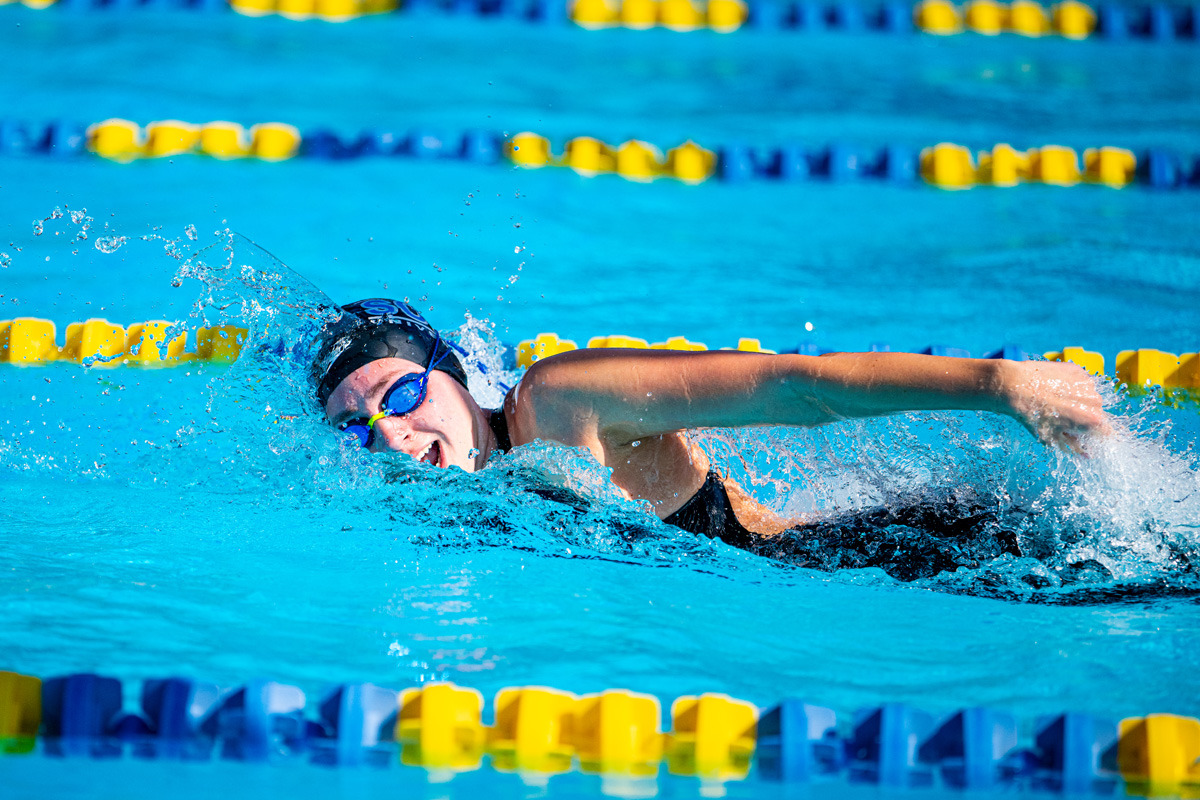
Most summers, SUA senior Nicole Skrzypek of DeKalb, Illinois, would spend mornings in the pool with her club team to stay in shape before her next season with the women’s swimming and diving team at SUA. This year, she took a new approach, using the summer break as a time to recharge while also maintaining her strength with two highly physical jobs.
Based in her hometown this summer, she spent weekdays working in the warehouse at School Tool Box, a company that packs and ships school supplies. Her hours conflicted with the time she would normally practice swimming, but that didn’t mean she wasn’t getting a workout.
“We have plenty of heavy boxes and other items to pick up, carry, and move around,” Skrzypek said. “I use this to my advantage by treating it as weightlifting. I practice proper form and use any opportunity I can to keep working on my strength.”
Something she learned on the job was how crucial it is to build good relationships with coworkers — not unlike the way genuine connection and trust among student-athletes boosts performance.
“Being able to work together with your teammates not only helps with communication, productivity, and accuracy,” she said, “but it also helps make the environment more enjoyable.”
In the evenings, Skrzypek worked for the local park district as a swim lesson manager and instructor. As someone who started swimming competitively at 5 years old, teaching beginners challenged her to cultivate deeper reserves of patience and compassion.
“When I’m confronted with a group of kids who don’t have the first clue about how to float, it helps remind me of where I was when I first started,” she said. “It has not only taught me to be patient with myself and others, but also to be supportive. Nobody gets anywhere without some support.”
And Skrzypek can personally attest to the way a supportive environment can make a world of difference. After years of swimming, she was facing burnout at the start of college — until the Soka team reignited her passion for the sport. Friendly competition with teammates offered new challenges, and she quickly bonded with her fellow student-athletes.
“We all get up before the sun rises together in the morning to hop in some nice, cold water and swim our hearts out,” she said. “We’ve all felt the stress of needing to complete assignments during long trips while we’re gone on swim meets. Yet we still find the time to hang out together and connect.”
Skrzypek’s favorite stroke is freestyle, and she feels most confident in the 50-yard event. Finding new ways to stay active this summer while also taking a break from her regular intensive training, she said, was exactly the change of pace she needed to start her senior year with renewed energy and determination.
“That way, when I’m back, I’m all in,” she said.
And this academic year, she’s setting ambitious goals. She hopes not only to qualify for nationals but also to make a final or place in the top eight at a competition. She’s also aiming to break both of her current school records for the 50- and 100-yard freestyle by completing the 50 in 23 seconds and the 100 in 52 seconds or less.
Yuko Hashimoto and Beini Tang: Shaping Young Athletes on the Lions’ Home Turf
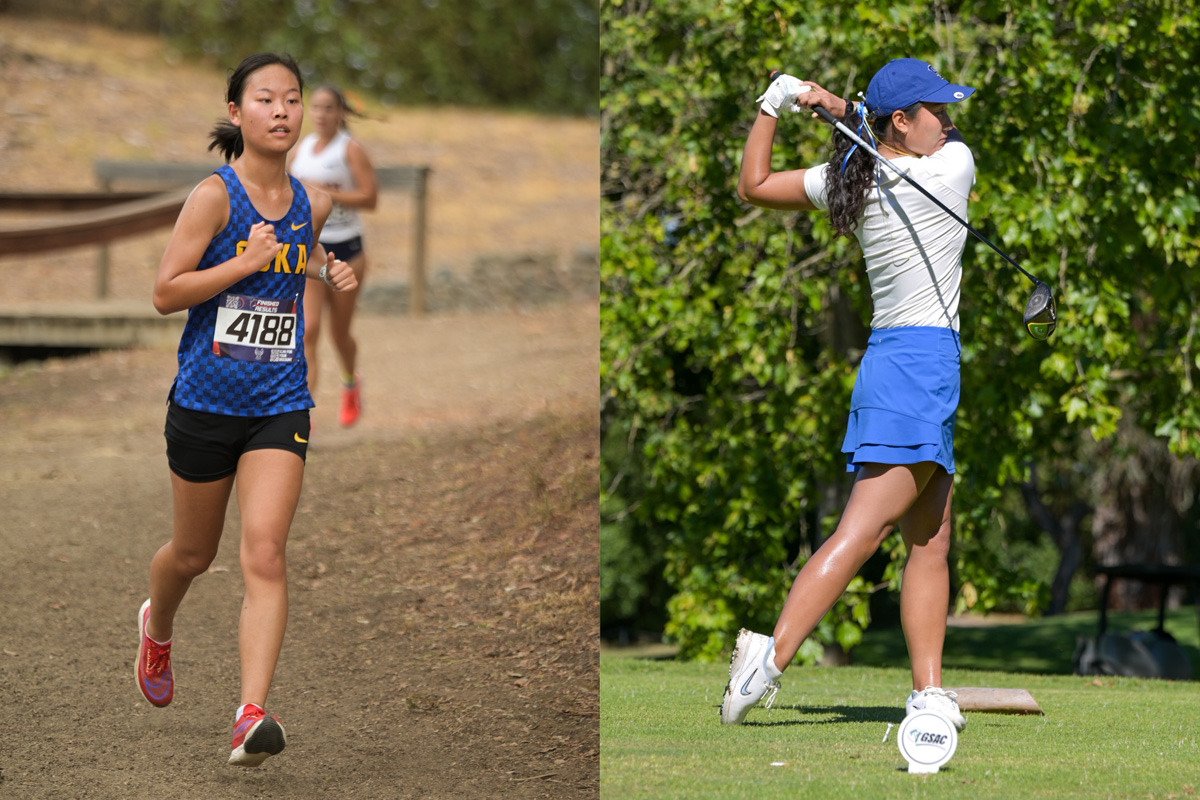
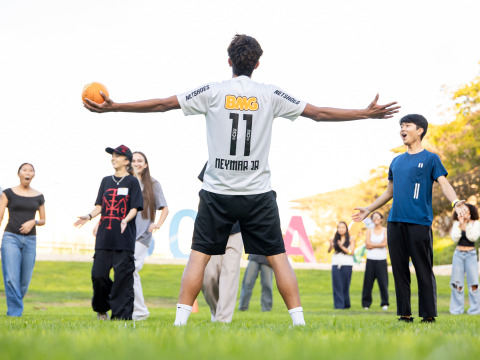
Some student-athletes flexed their professional skills this summer with positions on SUA’s campus. For fourth-year student Yuko Hashimoto, a runner on the women’s cross country team, working as a camp counselor for children ages 6 to 12 at the Soka All-Sports Camp challenged and rewarded her in ways that reminded her of cross country training.
“Being in the sun almost all day, every day with energetic kids for six weeks takes a special kind of endurance,” said Hashimoto, who is from Toronto, Canada. “But similar to cross country, there’s a lot of fulfillment that comes from the work you put in every day and the connections you make with others.”
Along with five other counselors, she guided campers through different sports and activities throughout the day, from tennis to volleyball, basketball, and swimming. She strove to instill in them the same growth mindset that she has developed over years of persistent effort.
“Cross country has taught me that success isn’t about being better than others, but about being the best version of yourself,” she said.
And Hashimoto is no stranger to the dedication it takes to improve athletic performance. This summer, she got up at 6 a.m. every day to run before work, following a mileage plan that her coach at SUA developed for her. In mid-July, she also began incorporating higher-intensity workouts twice a week, in addition to doing strength training whenever she could.
“In cross country, there are no shortcuts to doing well in a race,” she said. “It is a direct reflection of one’s consistent efforts and a strong sense of one’s goals. You get exactly what you put in.”
Hashimoto ran her first cross country race in the second grade. This early passion for the sport may be one of the reasons she could empathize so well when emotions at camp ran high.
“Kids can get very competitive and upset with each other,” she said. “When this happens, I try to remind them that they’re trying to beat their own ‘records,’ not those of others. I also try to teach them that regardless of who wins or loses, those who do so with humility and good sportsmanship are the true winners.”
Fellow SUA senior and camp counselor Beini Tang, who plays on the Soka women’s golf team, also drew on her personal experiences as a student-athlete to support campers through difficult moments.
“I understand how fast frustration can rise when a sport is not going as expected,” she said, “which helps me understand and prevent conflict between the kids, and of course encourage them to continue [playing].”
Tang, who is from Shenzhen, China, said she felt especially proud when a camper tried a new sport. She had actually never played golf prior to joining the team at SUA.
“I heard that Soka golf was recruiting, and it’s such a cool sport,” Tang said. “So I reached out to the coach and started from zero!”
Her favorite aspect of golf is the way every round is unique.
“After every swing, I can find something to work on,” she said. “The skills I take most pride in are my mental game and patience. Golf has taught me how to stay calm under pressure, recover from mistakes, and focus on the next shot instead of dwelling on the previous one.”
These skills have boosted her confidence and proved useful in campus leadership roles. She also credits golf with honing her sense of accountability, communication skills, and time-management skills — all of which will come in handy in her new position as a resident assistant in the SUA residence halls this fall.
“I believe these qualities will help me build trust with residents and work effectively with my colleagues,” she said. Her goal in this new job is to “create a safe, welcoming, and inclusive community,” and she looks forward to welcoming new students and returning classmates alike.
On Their Marks and Set for 2026–27
Whether they were serving bank clients, hauling boxes of school supplies, or coaching 6-year-olds through a game of kickball, all four student-athletes found that the discipline, patience, and teamwork they’ve honed in their sports can help them take new challenges in stride. They acquired hands-on experience as leaders and mentors, learning important lessons about what it means to serve others while leaving space for self-care and personal growth. Whatever this year holds — athletic competitions, a senior capstone, a new job, a semester abroad — they’re ready to meet it.