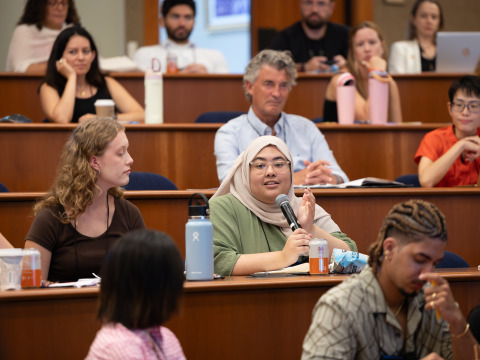
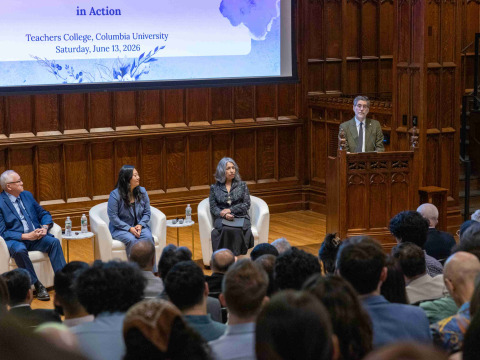
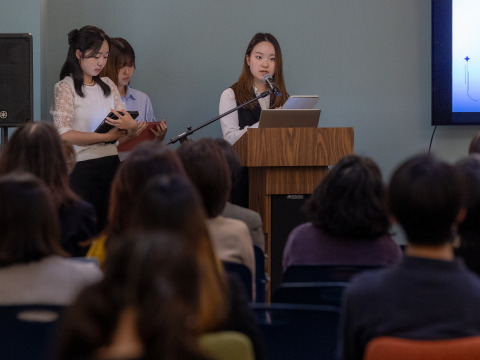
SUA students spent part of the summer in New York City and the Amazon rainforest, exploring how their education can address global challenges. The Luis and Linda Nieves Family Foundation funded both trips. Its support has long expanded experiential learning at SUA through Learning Clusters, summer research, and United Nations study tours.
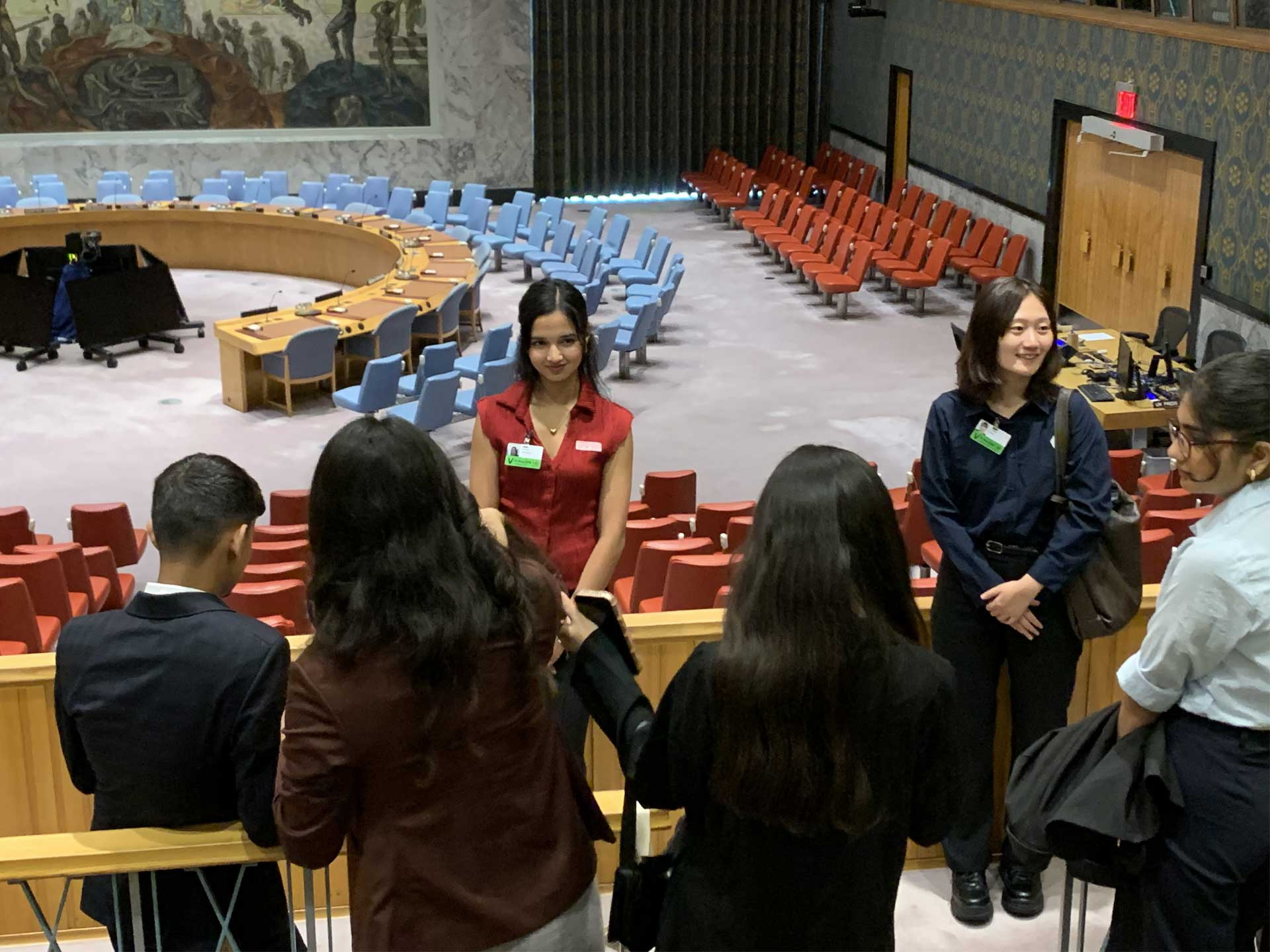
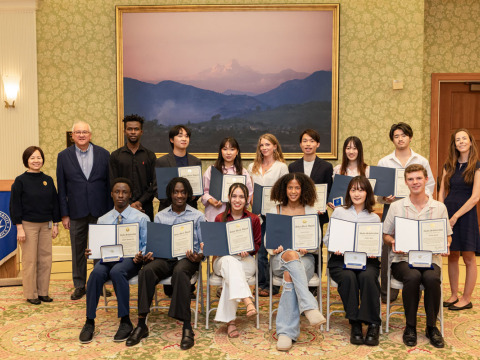
SUA students visit the United Nations Security Council Chamber in New York City during the Nieves United Nations and World Affairs Career Exploration Program.
Exploring Careers Across the United Nations System
Twelve students traveled to New York City from Aug. 30 to Sept. 5 for the Nieves United Nations and World Affairs Career Exploration Program, a joint initiative of Student Affairs and the Career Development Office.
Students met with professionals across the U.N. system and partner organizations to learn about their roles, career paths, and expertise. The itinerary, developed by Associate Professor of International Studies Lisa MacLeod, included meetings with offices focused on disarmament, climate action, international development, peace and dialogue, safety and security, and women’s empowerment.
“This trip did not give me one definitive career answer, and I think that is one of its most valuable outcomes,” said Megha Prasai ’28. “Instead, it gave me a clearer sense of the questions I want to keep exploring and the kind of work I hope to contribute to in the future.”
The group toured U.N. headquarters, attended a briefing on peacekeeping operations, and received clearance to observe a morning session of the Meeting on Victim Assistance and Environmental Remediation in the Economic and Social Council Chamber. Speaking directly with professionals across a range of organizations and fields gave students a clearer understanding of careers available in international affairs after graduation.
Several meetings connected students with SUA alumni working in the U.N. system, including Anna Casals Fernandez ’18 at the United Nations Capital Development Fund, Swann Jinn ’20 at the Office for Disarmament Affairs, and Miwako Hirota ’12 at UN Women. Director of Alumni Relations Margaret Kasahara also hosted a reception where students met about 30 alumni from the greater New York area.
“It was an amazing opportunity to glimpse the career possibilities that my Soka degree and future academic pursuits could lead me toward,” said Shreya Dhungana ’28. “More importantly, it allowed me to move beyond my general interest in international affairs, foreign policy, and law and begin thinking more concretely about what a career in these fields could look like.”
Learning From Communities and Ecosystems in the Amazon
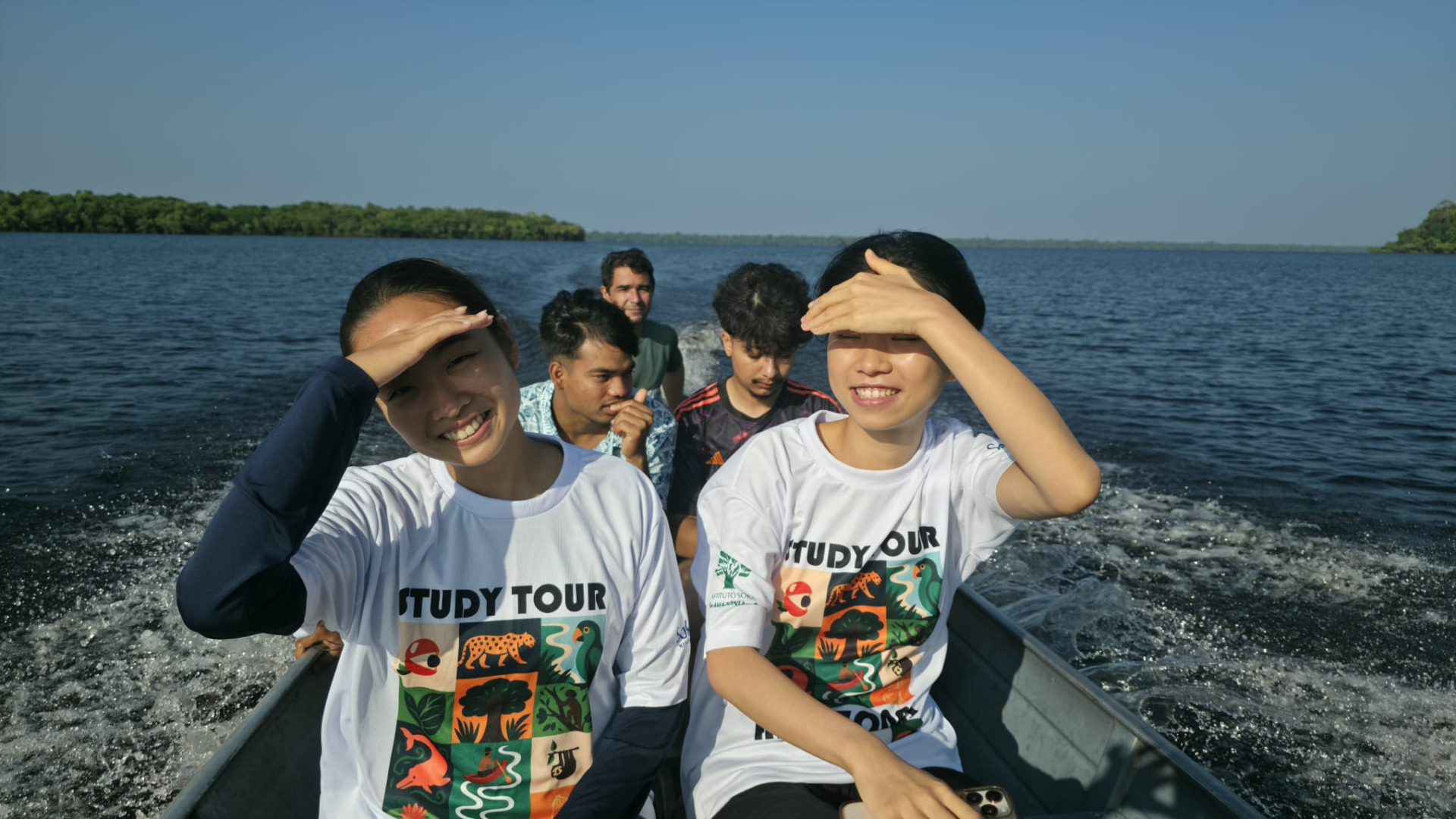
Outside Manaus, Brazil, the Rio Negro and the Solimões River run side by side for miles without mixing before finally merging to form the Amazon. Locals call it the “meeting of waters.” In late summer, 14 SUA students traveled there to study how human and natural life connect in the world’s largest rainforest.
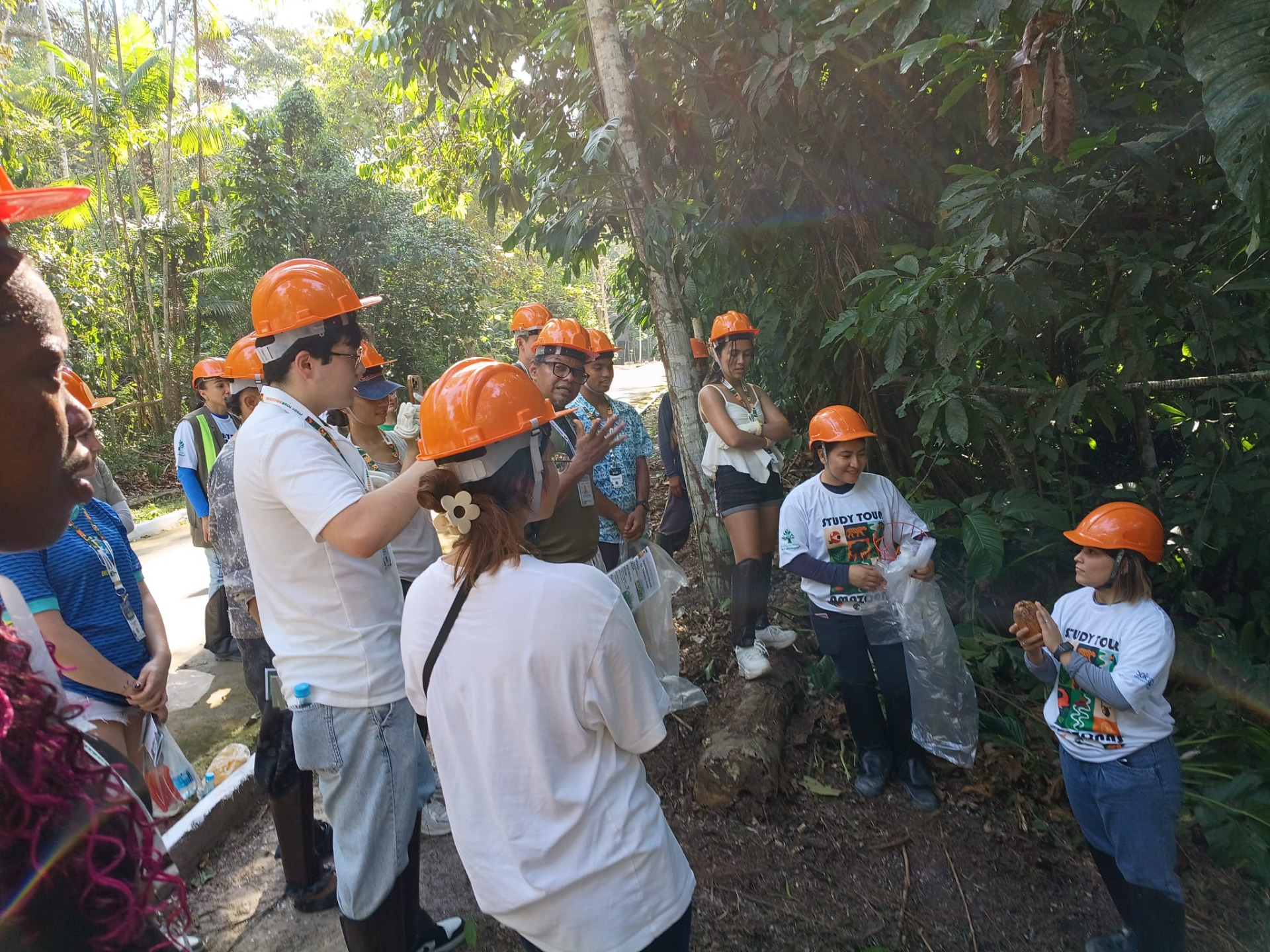
The second fully funded Soka Amazon Sustainability Study Tour ran Aug. 26 to Sept. 4, through a partnership between the Soka Institute for Global Solutions (SIGS) and the Soka Amazon Institute in Manaus. Ian Olivio Read, professor of Latin American studies and SIGS senior research fellow, led the group in Manaus and to local Indigenous communities accessible by boat.
At the Dr. Daisaku Ikeda Private Natural Heritage Reserve, the Soka Amazon Institute’s field site, students harvested açaí and cacao alongside researchers working on biodiversity restoration, genetic variability studies, and a native seed nursery. A local educator who plants trees in schools across the region described his work as being about more than ecology. “While planting a tree,” he told the students, “we plant a culture in our heart.”
In Manaus, a visit to the Amazonas Theatre, built during the rubber boom in the 19th century, sparked discussion about how colonial-era wealth shaped the city. Meetings with students and faculty at the Federal University of Amazonas and Amazonas State University also raised another question: How connected do residents of a major city at the rainforest’s edge feel to the ecosystem around them?
Two days with the Kambeba Indigenous community brought colonialism, cultural survival, and ecological change into sharper focus. Students learned about land loss and the effects of colonialism. They also took part in traditional dances, language lessons and skin painting, and made bracelets from açaí pits.
A youth summit brought SUA students together with university students from Manaus, young Brazilians working on environmental and community projects, and speakers from Earth Charter International. Reflecting the Earth Charter’s emphasis on involving, empowering, and educating participants, the summit paired Soka students with local peers to explore how sustainability can become personal and how environmental protections can outlast changes in political leadership.
On the final day, students reflected in a shared journal on what they had learned about biodiversity, regional and cultural heritage, and sustainability. Many said the experience changed how they think about the environment. Luiza Callipo ’27 said she gained new insight into “how the Amazon contributes to the functionality of ecosystems not only in Brazil but all over the world.” Sarzan Tulendiyar ’29 said the experience sparked an interest in pursuing a career using science to address environmental problems.
The Campus Green was buzzing on Sept. 23 as students, faculty, and staff gathered for SUA’s annual Welcome Back Community Event, an afternoon of food, games, and friendly competition to kick off the n...
Soka University of America has named this year’s top scholars — recipients of the Ikeda Scholarship, the John D. Montgomery Scholarship, the Soka Merit Award, and the Academic Excellence awards. Presi...
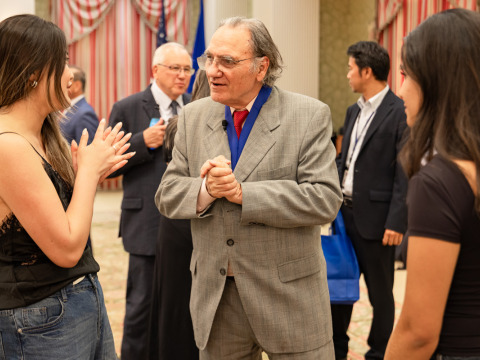
“If you believe in global citizenship education,” said eminent education scholar Carlos Alberto Torres during his lecture after receiving the 2026 Soka Global Citizen Award, “find a social movement an...
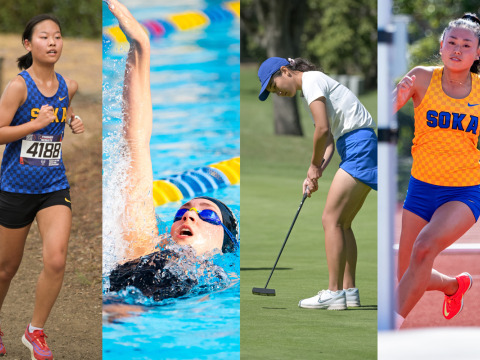
Team practices may have paused over the summer, but for SUA student-athletes, the season offered a different kind of training ground. High jumper Mili Fukada ’28 interned at U.S. Bank and taught balle...
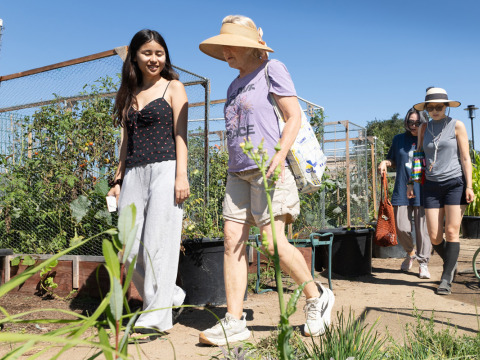
When local residents Steve and Carol Theiss signed up for a community gardening program on SUA’s campus this summer, they expected to learn about growing organic produce and pick up a few tips for eco...
Nearly five decades apart, two institutions of higher learning were founded on a shared conviction — that education can help move the world toward peace and intercultural understanding.The Monterey In...
Dear Soka Community,I'm writing today to share a significant expansion of the Soka Opportunity Plan, made possible in part by the strength of our donor community.Beginning with the 2027–2028 academic ...
Dear Soka Community,After completing our negotiations with Middlebury College, I am pleased to announce that Soka University of America will establish a second campus in Monterey, California, continui...
Soka University of America (SUA) has named Carlos Alberto Torres the recipient of the 2026 Soka Global Citizen Award in recognition of his lifelong contributions to the intellectual foundations of glo...
“There is a beautiful lesson from nature that we can draw from,” said Mirian Vilela, executive director of Earth Charter International and recipient of the 2024 Soka Global Citizen Award, addressing 1...
"The world is not healed by cynicism,” said SUA Board of Trustees member Andrea Bartoli, addressing a packed house in Milbank Chapel at Teachers College, Columbia University, on June 13. “The world is...
In a region shaped by war, colonialism, and contested memory, what does genuine reconciliation require?The Soka Institute for Global Solutions (SIGS) continued exploring this question at the third and...