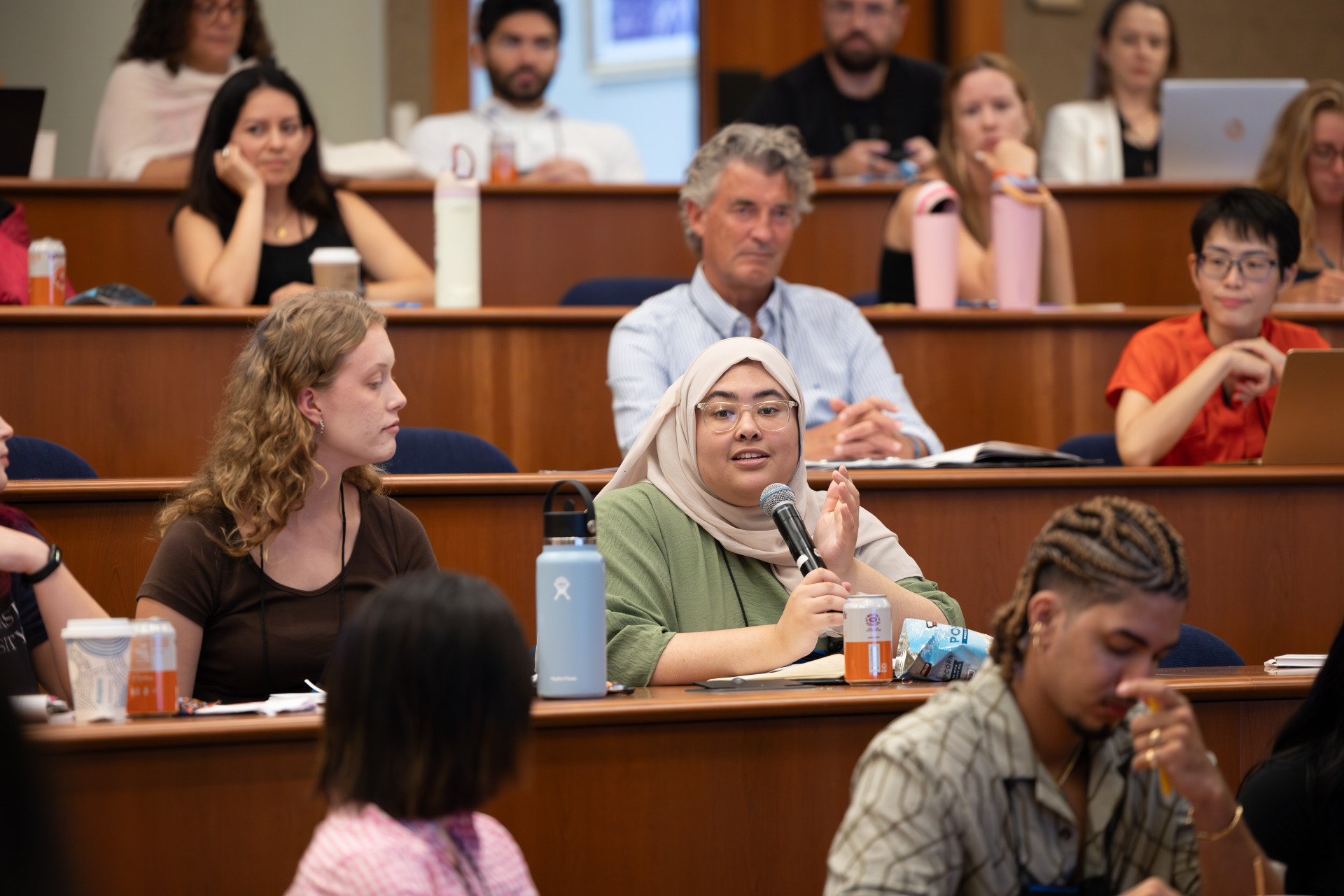
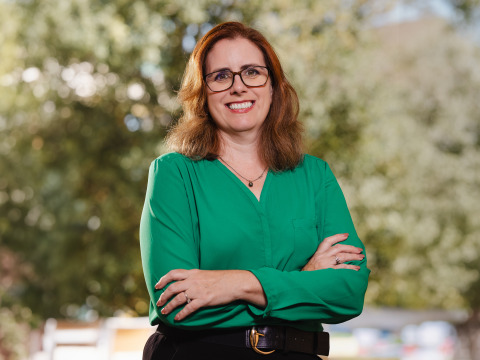
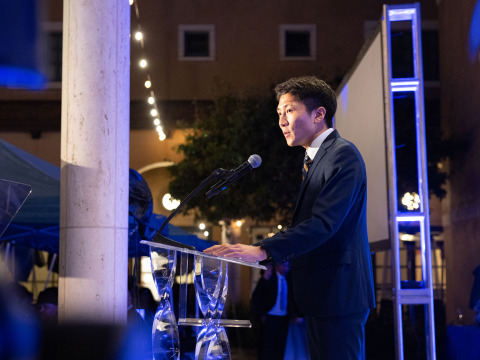
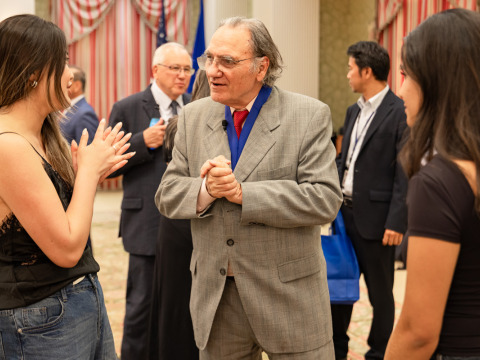
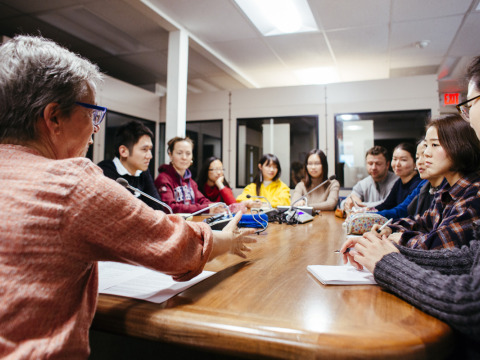
La’eeqa Martin, ambassador coordinator for the African Climate Alliance, shares thoughts during a conference session.
July 31, 2026
8 Min Read
'Our Futures Depend on It': Young People Lead the Way at the Earth Charter Youth Summit
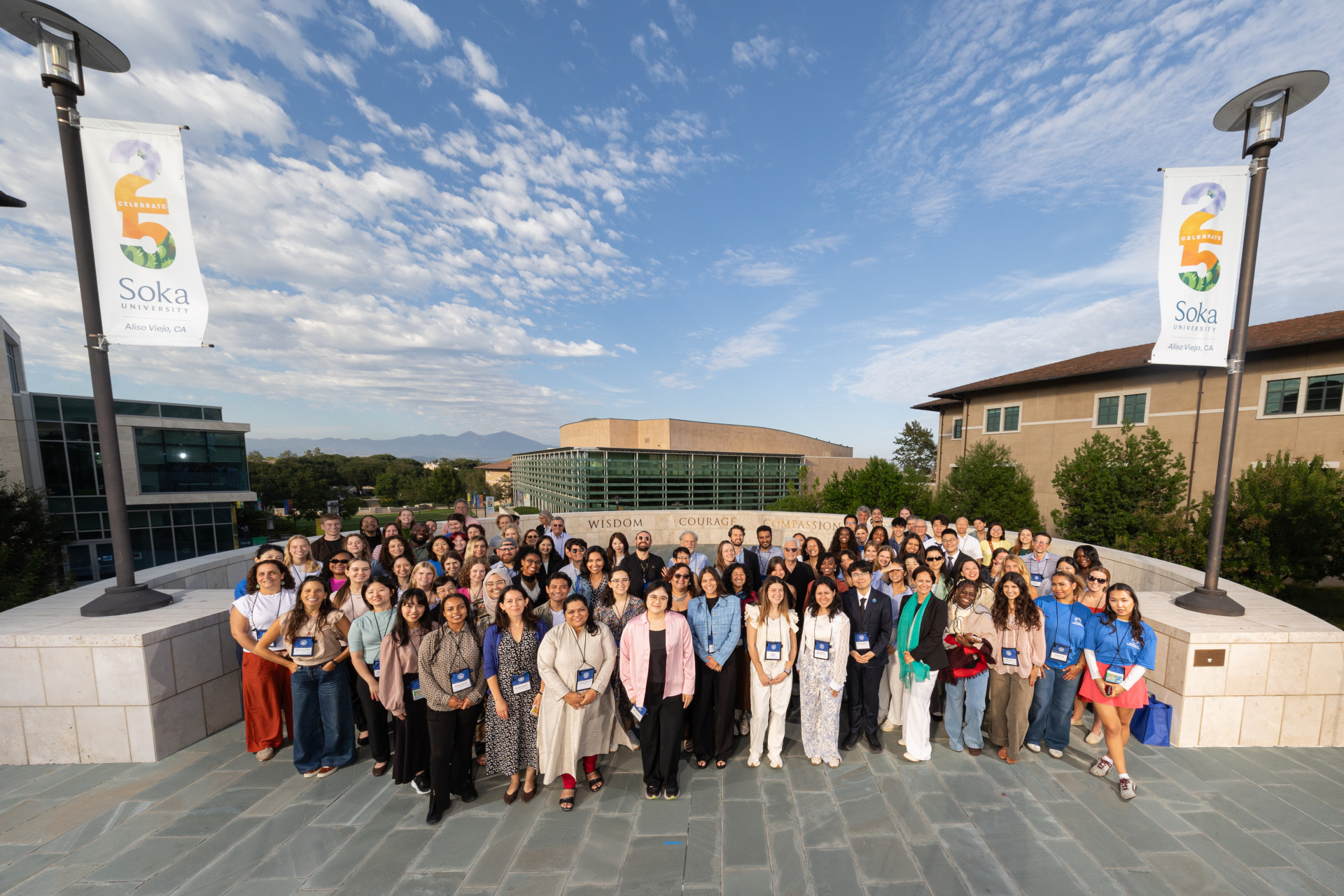
“There is a beautiful lesson from nature that we can draw from,” said Mirian Vilela, executive director of Earth Charter International and recipient of the 2024 Soka Global Citizen Award, addressing 104 youth participants from 29 countries at the Earth Charter Youth Summit in July at SUA. “It is often in the boundaries between ecosystems that the greatest richness of life emerges. In the same way, when different generations, cultures, perspectives, and experiences come together, new ideas, relationships, and possibilities emerge.”
The spirit of cross-cultural dialogue and collaboration that Vilela described infused every session across the three-day event, which brought together young climate activists, environmental scholars, and leaders in sustainability from around the world. The goal: empower young people to co-create solutions for a more just, peaceful, and sustainable world using the Earth Charter, a landmark international declaration on ecological responsibility, as a guiding framework.
Co-convened by Earth Charter International, UNESCO, and the Soka Institute for Global Solutions, the conference ranged across sustainability issues, with panel discussions on ethical leadership and the future of education alongside workshops on policy advocacy, regenerative food systems, and the role of art in the climate movement. Over a dozen sponsors and partner organizations, including the Luis and Linda Nieves Family Foundation, made the event possible.
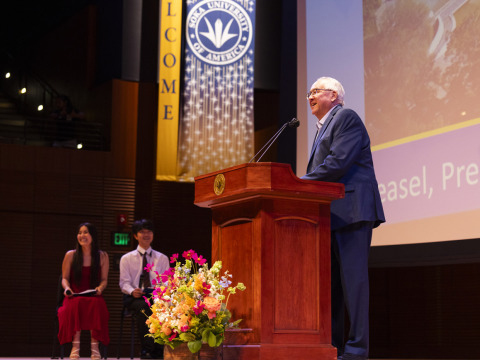
The idea for this youth summit — and for hosting it at SUA — came about last year when a delegation from SUA traveled to The Hague, Netherlands, to attend the 25th anniversary celebration of the Earth Charter. In his opening remarks, SUA President Edward M. Feasel highlighted the deep alignment between SUA’s mission to foster global citizens and the Earth Charter’s four main pillars: respect and care for the community of life; ecological integrity; social and economic justice; and democracy, nonviolence, and peace. He also noted SUA founder Daisaku Ikeda’s early support for the Earth Charter as a people-centered framework for moving from concern about global crises to action rooted in solidarity.
“We are truly honored to be hosts for such an auspicious event and undertaking,” President Feasel said. “I hope that you find the encouragement, inspiration, and nourishment necessary for the important work we all have ahead.”
For conference participants, the summit provided not only three days of intensive learning, but also a chance to expand their networks and build meaningful connections with sustainability leaders working across six continents.
SUA alumna Vitória Robles ’25, now a master’s student in environmental policy and sustainability management at The New School, applied to participate in the youth summit because it was “an incredible opportunity to meet others who not only support the Earth Charter, but also take action based on its principles.”
Likewise, La’eeqa Martin of Cape Town, South Africa, “wanted to experience the opportunity to interact with young people who share core values of empathy, changemaking, and justice in this multicultural space.” An ambassador coordinator for the African Climate Alliance, Martin led a workshop at the summit on using art to foster dialogue and solidarity in the climate movement. She has been an advocate for the Earth Charter’s principles since taking the organization’s online course on leadership, sustainability, and ethics in 2021.
Young people have always played a crucial role in the Earth Charter movement, a point that Vilela stressed in her opening remarks. Several of Earth Charter International’s earliest young leaders — now roughly 20 years into their journeys as sustainability advocates — were in the room and shared their stories at the summit, modeling how to shape a career that adapts the Earth Charter to different cultural contexts. Summit participants took this call to action to heart, recognizing the fundamental role youth play in creating positive change.
“The global sustainability movement extends beyond just saving the natural planet to transforming unjust systems that have perpetuated planetary and socioeconomic dysfunction,” Martin said. “Young people have become the bearers of the world’s injustices that lead us away from sustainable futures. This has now made it our responsibility to not perpetuate cycles of war, inequity, profit-centered systems, and more, as our futures depend on it.”
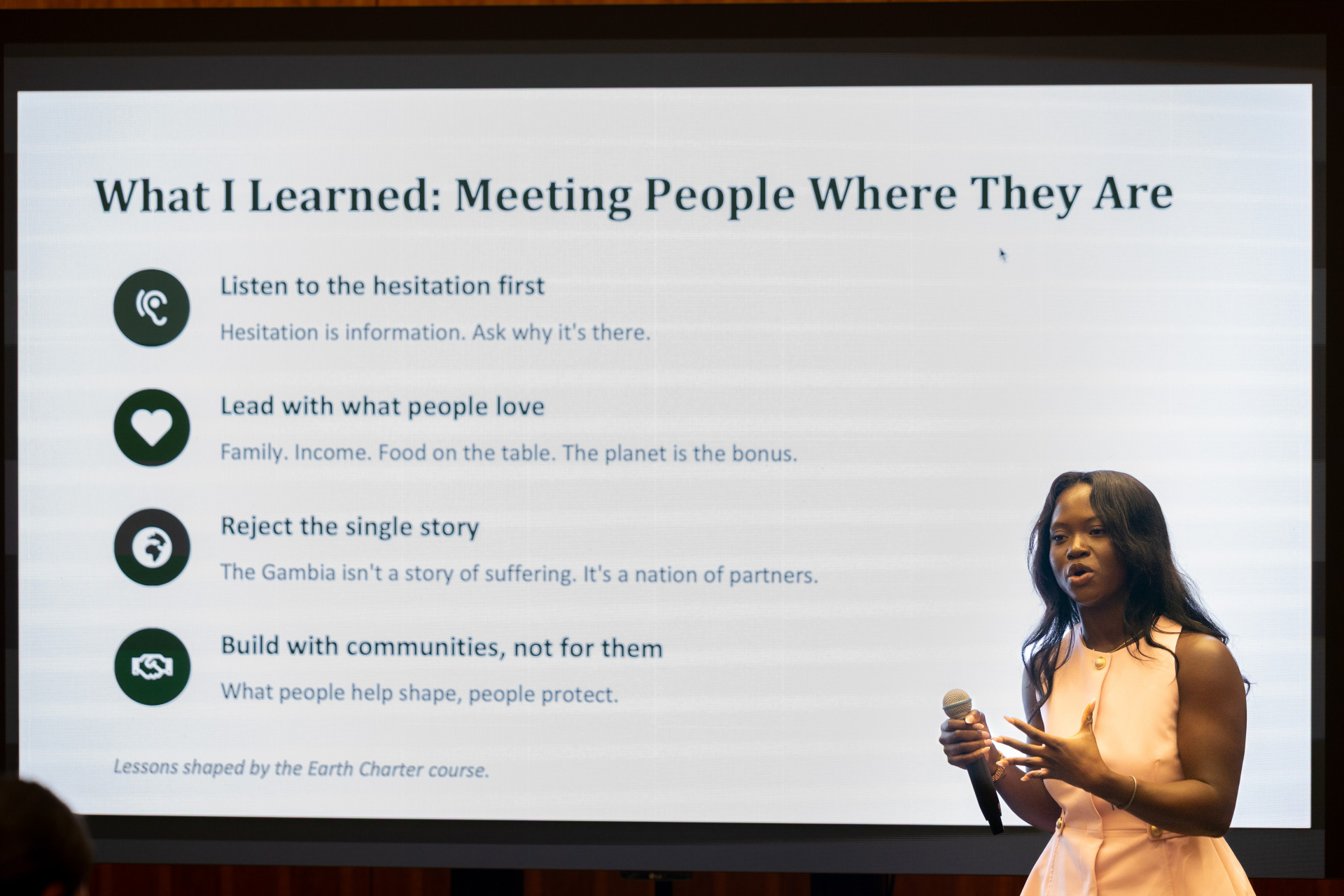
Awa Drummeh, a business student at Zuyd University of Applied Sciences in the Netherlands, gives a presentation on business, communication, and ethical leadership.
Amplifying Youth Voices in Sustainability
One of the most powerful aspects of the summit was the platform it gave youth to share their own knowledge and expertise as sustainability leaders. Brigitta Maria Andrea Gunawan, founder of the conservation movement 30x30 Indonesia and the ocean literacy program Diverseas, presented as part of a panel on the self-reflection and internal work that help leaders effect meaningful social change.
“I highlighted the importance of discovering our ‘why,’” Gunawan said. “Why are we passionate about protecting our planet? Why do we do what we do?” Originally from Jakarta, Indonesia, she is currently based in Melbourne, Australia, where she completed a bachelor’s in ecology and conservation biology last year and is pursuing a master’s degree. “I shared about my personal journey and how I turned passion into impact,” she said.
Gunawan also led a session titled “Decoding Policy,” in which she highlighted best practices for mobilizing youth to advocate for global environmental policies. She used examples from real policy campaigns, like the 30x30 initiative to conserve 30% of the Earth’s land and oceans by 2030 and the U.N. High Seas Treaty to protect biodiversity in international waters.
Recent SUA alumni were well represented among the conference panelists and presenters. During a session on leadership and cultural identity, Robles presented her senior capstone research on Kaddù Yaraax, a theater group in Hann Bay, Senegal, where Robles interned while studying abroad. She shared the history and impact of the group’s participatory theater techniques, which have engaged the community with issues related to pollution in the bay. In the same session, Quetza Ramirez M.A. ’23 discussed Indigenous-led rights of nature, a legal and philosophical school of thought that emphasizes the interconnectedness of the natural world and human rights and well-being. Among other concepts, Ramirez touched on reframing environmental language (e.g., “sources of life” rather than “natural resources”) and raising awareness about false solutions like carbon markets, extractive technologies, and greenwashing.
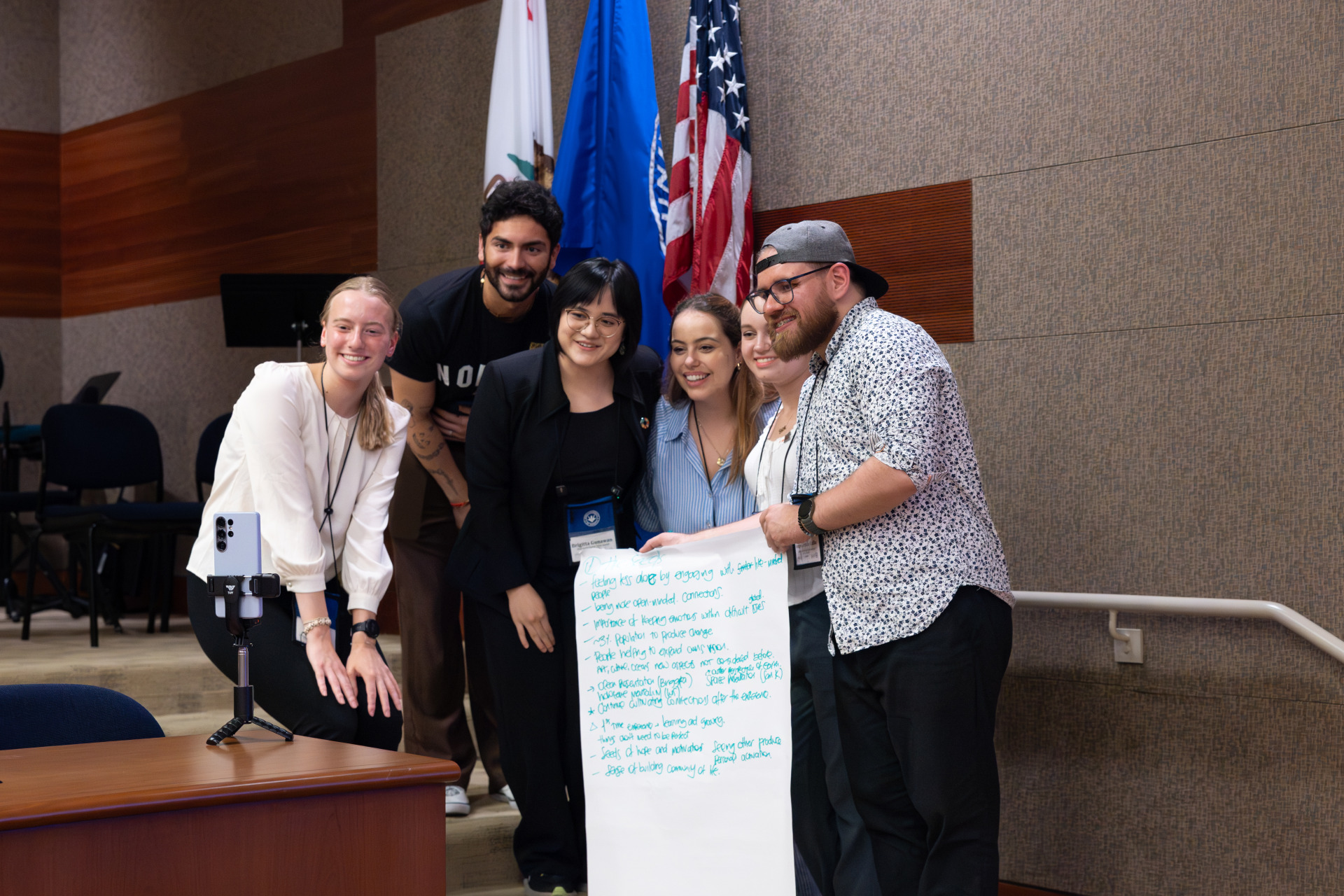
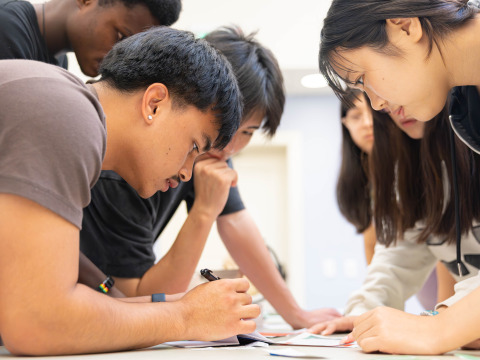
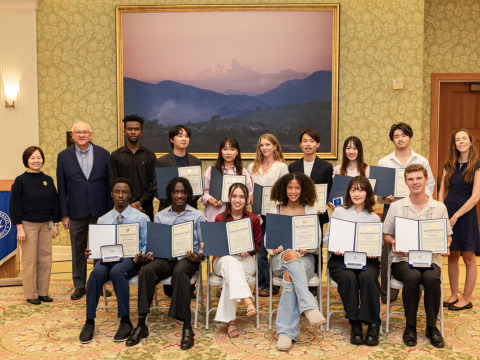
Summit participants pose for a photo after completing a group activity.
Panels and sessions across the summit engaged with the complexities of environmental issues and the need for solutions that include local communities in crucial decision-making. For example, current SUA student Aayusha Prasain ’29 of Kathmandu, Nepal, presented her research on Nepal’s Sunkoshi-2 Hydropower Project, a dam that would displace thousands while exporting the electricity it produces abroad. She explored the broader global pattern of projects that ignore human costs in the name of sustainable development, noting who benefits and whose voices are often left out of the conversation.
“At its core, my presentation asked one question,” Prasain said. “If a climate solution reduces carbon emissions but destroys an Indigenous community’s connection to land, culture, and identity, can it still be called sustainable?”
Her question echoed the themes Ian Read, associate dean of faculty and professor of Latin American studies at SUA, examined in his talk during a panel on the future of sustainability education.
“Before asking people to change their lives,” Read said, “we must first ask how we can change our own lives and understand the lives of the people who may change with us. That does not mean abandoning scientific truth. It means recognizing that science alone does not decide how every policy should be implemented, who should bear its costs, or which sacrifices are reasonable.”
Describing the impactful lessons he and his students learned from the local community during a Learning Cluster trip to Brazil, he outlined practical methods for education to foster empathy, humility, and responsibility — qualities that are essential to building truly sustainable solutions.
“Education becomes most transformative when learners do not simply receive knowledge, but help construct it through dialogue, experience, reflection, and relationship,” he said. “It should also prepare us to recognize injustice so as to create more equitable ways of living together.”
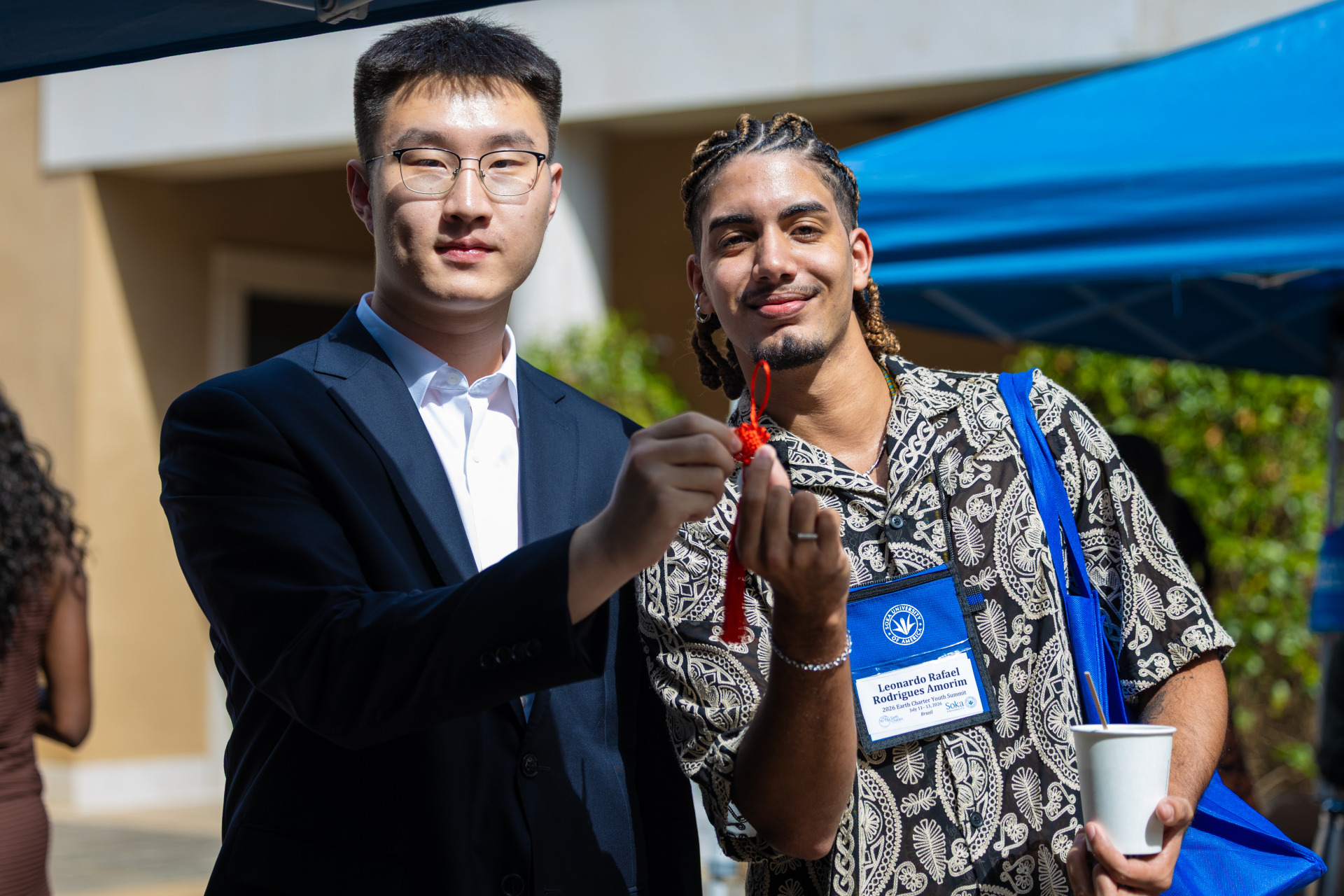
Jiaxing Liu, a translation student at Liaoning University in China, with Leonardo Amorim, co-founder and CEO of BlackGround Hub, an organization based in Maceió, Brazil.
For many participants, the summit itself created this kind of transformative educational space by giving young people from vastly different corners of the world an opportunity to come together and learn from each other.
“From the start, the summit prioritized deep connection and care among all participants,” Robles said. “The emphasis on the importance of care above all was not only transmitted through the informational presentations, but also through the participants’ actions and the friendships that emerged from inspiring conversations.”
Martin said the summit exceeded her expectations, and she hopes other young people who dream of making positive change will participate in this event in the future.
“To be in a room where intergenerational exchange is meaningful and balanced,” she said, “where young people are experts in their own right and provided with a platform to showcase this, where connection with one another is effortless, and where it is impossible to doubt your ability to be great because everyone believes in you — this is what the Earth Charter Youth Summit embodied and made a reality.”
Kate Selfe ’27 of Plettenberg Bay, South Africa, signed up for the Emerging Leaders Program because it felt complementary to the work she was already doing at her campus job. At the time, she was a fi...
Soka University of America President Edward M. Feasel and Tetsushi Ogata, managing director of the Soka Institute for Global Solutions, spent two days in September at the Hazel Henderson Center in St....
What can education do for students, communities, and entire societies worldwide? Karen Moran Jackson often facilitates discussions around this question with graduate students. She directs the M.A. in ...
“Our students are striving to become global citizens who contribute to the world,” Soka University of America President Edward M. Feasel said in his remarks to donors at the 22nd annual Peace Gala on ...
SUA students spent part of the summer in New York City and the Amazon rainforest, exploring how their education can address global challenges. The Luis and Linda Nieves Family Foundation funded both t...
The Campus Green was buzzing on Sept. 23 as students, faculty, and staff gathered for SUA’s annual Welcome Back Community Event, an afternoon of food, games, and friendly competition to kick off the n...
Soka University of America has named this year’s top scholars — recipients of the Ikeda Scholarship, the John D. Montgomery Scholarship, the Soka Merit Award, and the Academic Excellence awards. Presi...
“If you believe in global citizenship education,” said eminent education scholar Carlos Alberto Torres during his lecture after receiving the 2026 Soka Global Citizen Award, “find a social movement an...
Team practices may have paused over the summer, but for SUA student-athletes, the season offered a different kind of training ground. High jumper Mili Fukada ’28 interned at U.S. Bank and taught balle...
When local residents Steve and Carol Theiss signed up for a community gardening program on SUA’s campus this summer, they expected to learn about growing organic produce and pick up a few tips for eco...
Nearly five decades apart, two institutions of higher learning were founded on a shared conviction — that education can help move the world toward peace and intercultural understanding.The Monterey In...
Dear Soka Community,I'm writing today to share a significant expansion of the Soka Opportunity Plan, made possible in part by the strength of our donor community.Beginning with the 2027–2028 academic ...
Kate Selfe ’27 of Plettenberg Bay, South Africa, signed up for the Emerging Leaders Program because it felt complementary to the work she was already doing at her campus job. At the time, she was a fi...
Soka University of America President Edward M. Feasel and Tetsushi Ogata, managing director of the Soka Institute for Global Solutions, spent two days in September at the Hazel Henderson Center in St....
What can education do for students, communities, and entire societies worldwide? Karen Moran Jackson often facilitates discussions around this question with graduate students. She directs the M.A. in ...
“Our students are striving to become global citizens who contribute to the world,” Soka University of America President Edward M. Feasel said in his remarks to donors at the 22nd annual Peace Gala on ...
SUA students spent part of the summer in New York City and the Amazon rainforest, exploring how their education can address global challenges. The Luis and Linda Nieves Family Foundation funded both t...
The Campus Green was buzzing on Sept. 23 as students, faculty, and staff gathered for SUA’s annual Welcome Back Community Event, an afternoon of food, games, and friendly competition to kick off the n...
Soka University of America has named this year’s top scholars — recipients of the Ikeda Scholarship, the John D. Montgomery Scholarship, the Soka Merit Award, and the Academic Excellence awards. Presi...
“If you believe in global citizenship education,” said eminent education scholar Carlos Alberto Torres during his lecture after receiving the 2026 Soka Global Citizen Award, “find a social movement an...
Team practices may have paused over the summer, but for SUA student-athletes, the season offered a different kind of training ground. High jumper Mili Fukada ’28 interned at U.S. Bank and taught balle...
When local residents Steve and Carol Theiss signed up for a community gardening program on SUA’s campus this summer, they expected to learn about growing organic produce and pick up a few tips for eco...
Nearly five decades apart, two institutions of higher learning were founded on a shared conviction — that education can help move the world toward peace and intercultural understanding.The Monterey In...
Dear Soka Community,I'm writing today to share a significant expansion of the Soka Opportunity Plan, made possible in part by the strength of our donor community.Beginning with the 2027–2028 academic ...