Is This Career Right for Me?
| This career may be a good fit if you… | You may prefer another health profession if you… |
|---|---|
|
|
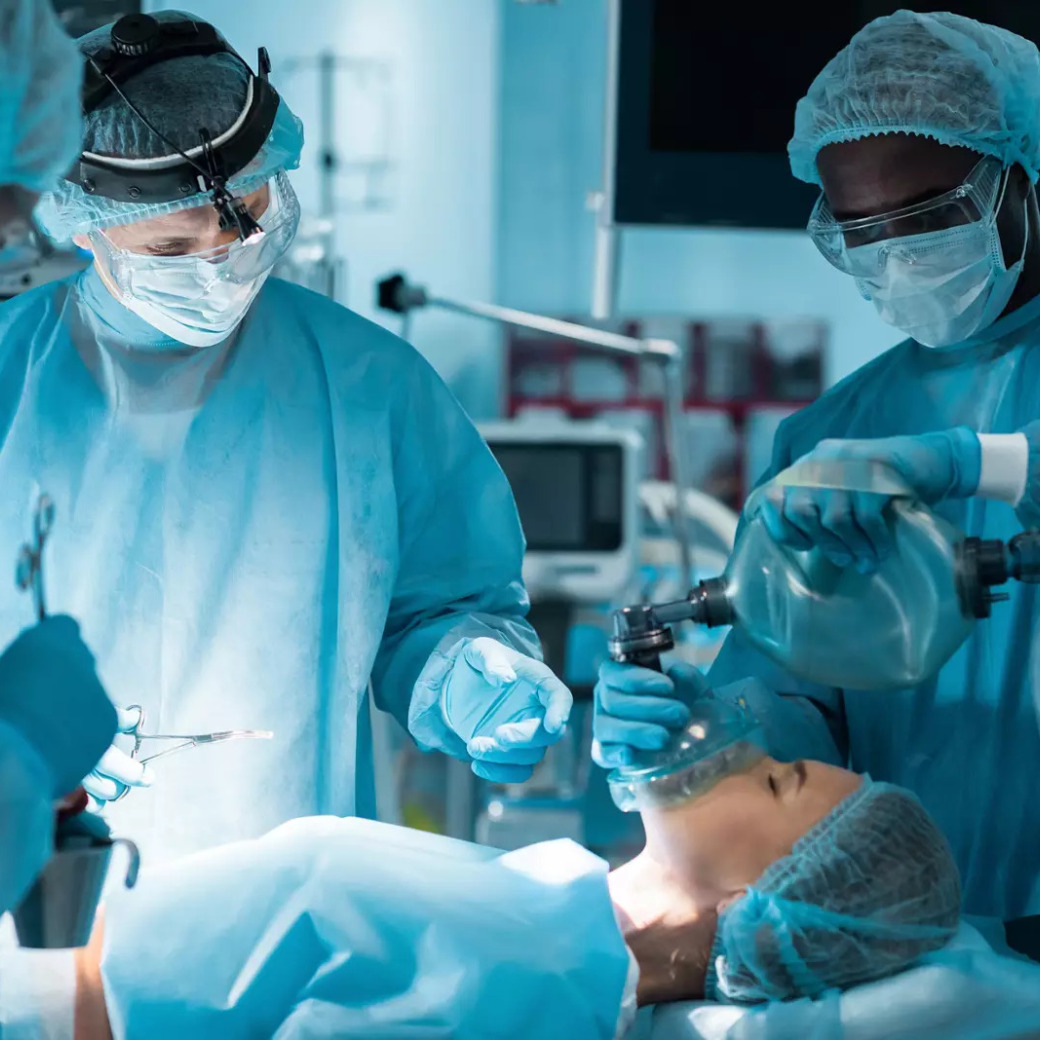
Certified Anesthesiologist Assistants (CAAs) are highly trained healthcare professionals who work as part of the anesthesia care team to provide anesthesia before, during, and after surgical and medical procedures. Under the direction of a physician anesthesiologist, CAAs help evaluate patients, develop anesthesia plans, administer anesthetic medications, monitor patients throughout procedures, and assist with recovery following anesthesia. CAAs work in hospitals, ambulatory surgery centers, and specialty surgical facilities. They care for patients of all ages undergoing a wide variety of surgical procedures, from routine outpatient operations to complex cardiac, neurosurgical, pediatric, and trauma cases. The profession combines physiology, pharmacology, critical care, and advanced technology in a fast-paced, team-oriented environment.
| This career may be a good fit if you… | You may prefer another health profession if you… |
|---|---|
|
|
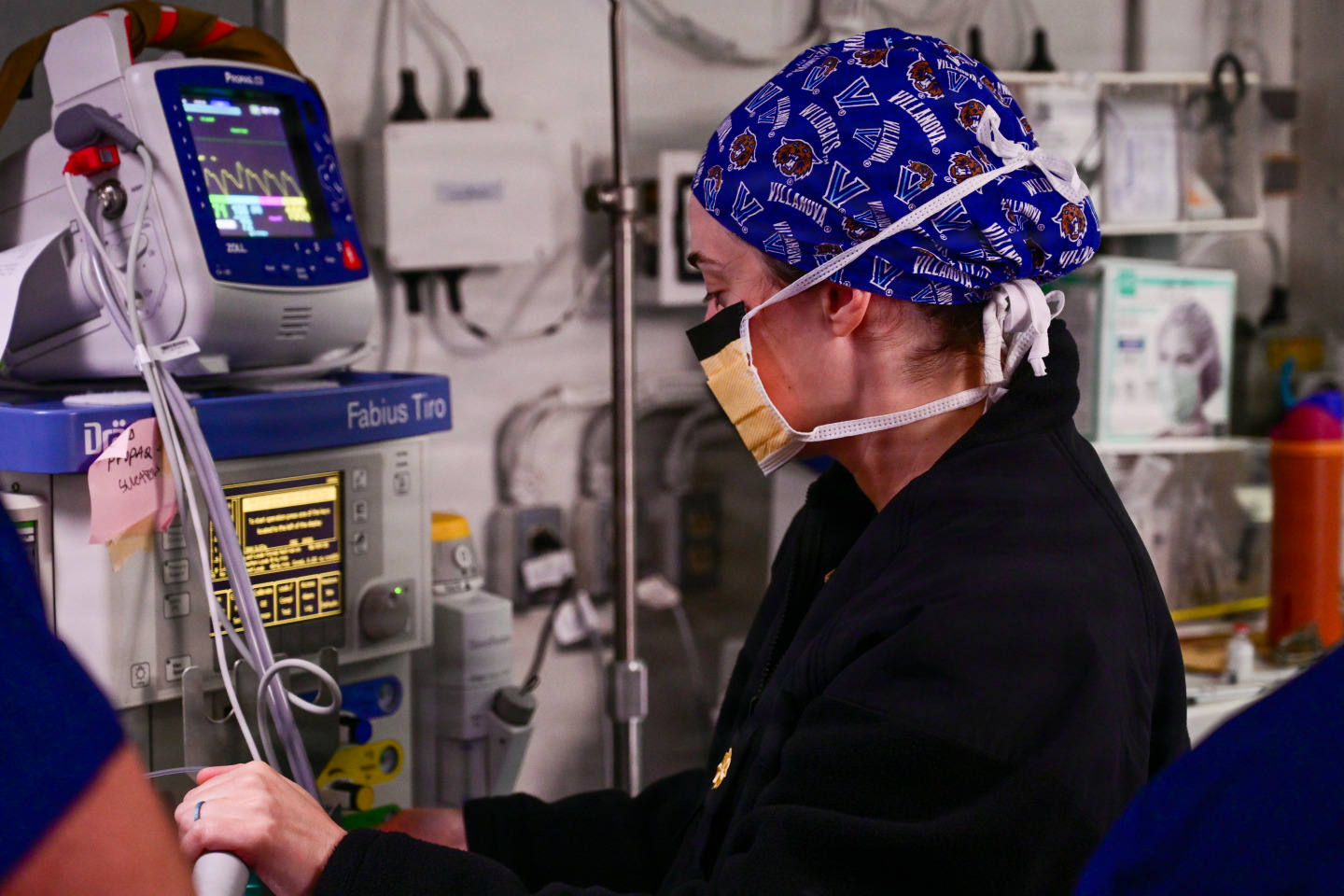
Most CAAs spend their day in operating rooms and procedural suites. Before surgery, they review patients’ medical histories, perform pre-anesthesia assessments, and help develop anesthesia plans with the supervising anesthesiologist. During procedures, they induce and maintain anesthesia, continuously monitor vital signs, manage airways, administer medications and fluids, and respond to changes in a patient’s condition.
CAAs may care for several patients during a shift depending on the complexity of procedures. They work closely with anesthesiologists, surgeons, nurse anesthetists, nurses, surgical technologists, and recovery room staff to ensure safe, effective anesthesia care.
Professional Degree
Master of Science in Anesthesia (MSA), Master of Medical Science (MMSc), or equivalent master’s degree.
Length of Professional School
Typically 24 to 28 months after completing a bachelor’s degree.
Admissions Exam
Most programs require the MCAT or GRE.
Application Process
Most programs participate in the Centralized Application Service for Anesthesiologist Assistants (CASAA).
Certification
Graduates must pass the National Commission for Certification of Anesthesiologist Assistants (NCCAA) Certifying Examination and maintain certification through continuing education and periodic examination.
Practice Authority
CAAs practice as members of the Anesthesia Care Team under the medical direction of physician anesthesiologists. State laws determine where CAAs are authorized to practice.
Bachelor’s Degree
Complete prerequisite coursework, gain healthcare exposure, shadow anesthesiologists or CAAs, and participate in clinical, volunteer, or research experiences.
Apply to Professional School
Complete prerequisite courses, prepare for the MCAT or GRE if required, obtain letters of recommendation, and apply through CASAA.
Professional School (24-28 months)
Complete intensive coursework in anatomy, physiology, pharmacology, anesthesiology, and critical care while gaining extensive supervised clinical experience in a variety of surgical specialties.
Certification
Pass the NCCAA Certifying Examination and obtain state authorization to practice where applicable.
Practice
Begin practicing as a Certified Anesthesiologist Assistant in hospitals, ambulatory surgery centers, or specialty surgical facilities.
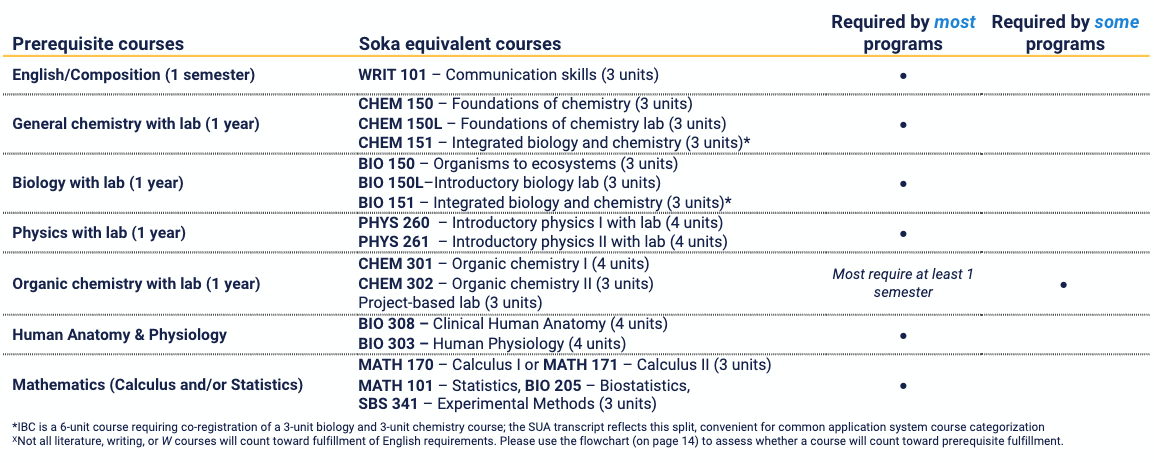
| Prerequisite courses | Soka equivalent courses | Required by most programs | Required by some programs |
|---|---|---|---|
| English/Composition (1 semester) | WRIT 101 – Communication skills (3 units) | ● | |
| General chemistry with lab (1 year) | CHEM 150 – Foundations of chemistry (3 units) CHEM 150L – Foundations of chemistry lab (3 units) CHEM 151 – Integrated biology and chemistry (3 units)* | ● | |
| Biology with lab (1 year) | BIO 150 – Organisms to ecosystems (3 units) BIO 150L–Introductory biology lab (3 units) BIO 151 – Integrated biology and chemistry (3 units)* | ● | |
| Physics with lab (1 year) | PHYS 260 – Introductory physics I with lab (4 units) PHYS 261 – Introductory physics II with lab (4 units) | ● | |
| Organic chemistry with lab (1 year) | CHEM 301 – Organic chemistry I (4 units) CHEM 302 – Organic chemistry II (3 units) Project-based lab (3 units) | Most require at least 1 semester | ● |
| Human Anatomy & Physiology | BIO 308 – Clinical Human Anatomy (4 units) BIO 303 – Human Physiology (4 units) | ● | |
| Mathematics (Calculus and/or Statistics) | MATH 170 – Calculus I or MATH 171 – Calculus II (3 units) MATH 101 – Statistics, BIO 205 – Biostatistics SBS 341 – Experimental Methods (3 units) | ● |
* IBC is a 6-unit course requiring co-registration of a 3-unit biology and 3-unit chemistry course; the SUA transcript reflects this split, convenient for common application system course categorization
x Not all literature, writing, or W courses will count toward fulfillment of English requirements. Please use the flowchart (on HPA handbook page 14) to assess whether a course will count toward prerequisite fulfillment.
Competitive applicants typically demonstrate:
Unlike physician assistant programs, extensive direct patient care hours are generally not required, although meaningful healthcare experience and shadowing are strongly recommended.
Demand for anesthesia providers continues to grow as surgical volume increases and healthcare systems expand access to perioperative care. CAAs enjoy strong employment opportunities in states where the profession is authorized to practice. Most graduates work in hospitals or large physician anesthesia groups and often enjoy competitive salaries and opportunities for specialization within surgical anesthesia. Because state laws govern CAA practice, geographic flexibility depends on whether a state licenses or recognizes the profession.
Certified Anesthesiologist Assistants may provide anesthesia for patients undergoing procedures in:
Students interested in anesthesiology may also wish to explore: