Is This Career Right for Me?
| This career may be a good fit if you… | You may prefer another health profession if you… |
|---|---|
|
|
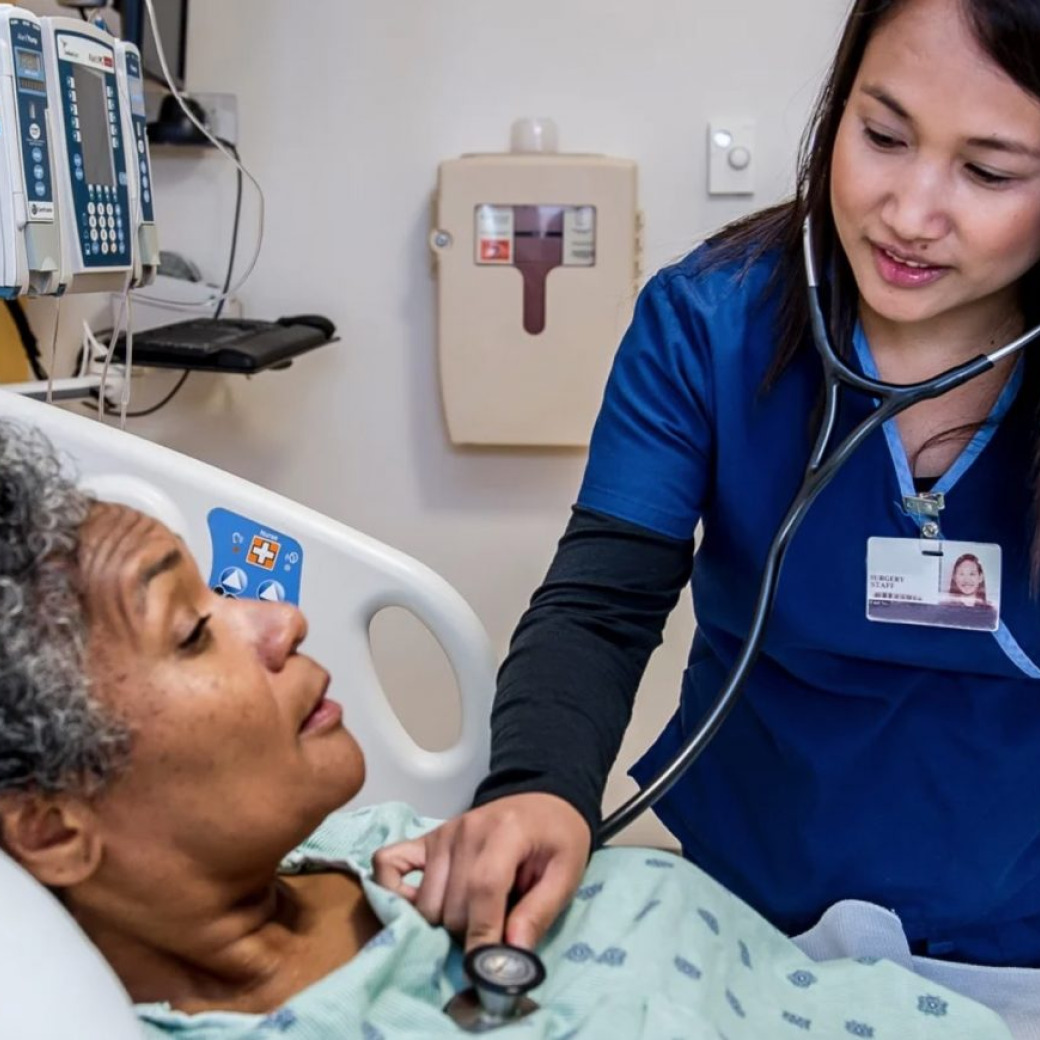
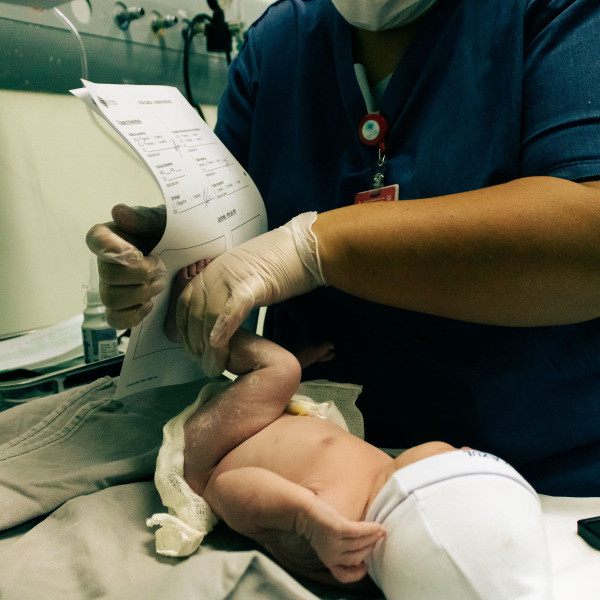
Nurses are healthcare professionals who promote health, prevent disease, and care for individuals, families, and communities across the lifespan. They assess patients, administer medications and treatments, educate patients and families, coordinate care, advocate for patients, and collaborate with physicians and other members of the healthcare team. Nursing offers one of the broadest and most flexible careers in healthcare, with opportunities in nearly every medical specialty and practice setting.
Registered nurses (RNs) work in hospitals, clinics, primary care practices, schools, public health departments, community organizations, home health agencies, research institutions, government agencies, and many other settings. Nurses may care for newborns in intensive care units, assist patients recovering from surgery, support individuals living with chronic disease, lead public health initiatives, conduct research, or advance into leadership, education, or advanced practice roles.
At Soka University, most students pursue Master of Science in Nursing (MSN) or Master of Entry into Nursing Practice
(MENP/MDE) programs designed for students who hold a bachelor’s degree in another field. These graduate-entry programs allow students to become registered nurses without completing a second bachelor’s degree. Some graduates later pursue advanced practice roles such as nurse practitioner, nurse anesthetist, nurse midwife, nurse educator, or nurse executive.
| This career may be a good fit if you… | You may prefer another health profession if you… |
|---|---|
|
|
A registered nurse's day varies depending on the practice setting and specialty. Nurses assess patients, administer medications, monitor changes in health status, educate patients and families, coordinate care, document clinical information, and collaborate with physicians, therapists, pharmacists, and other healthcare professionals.
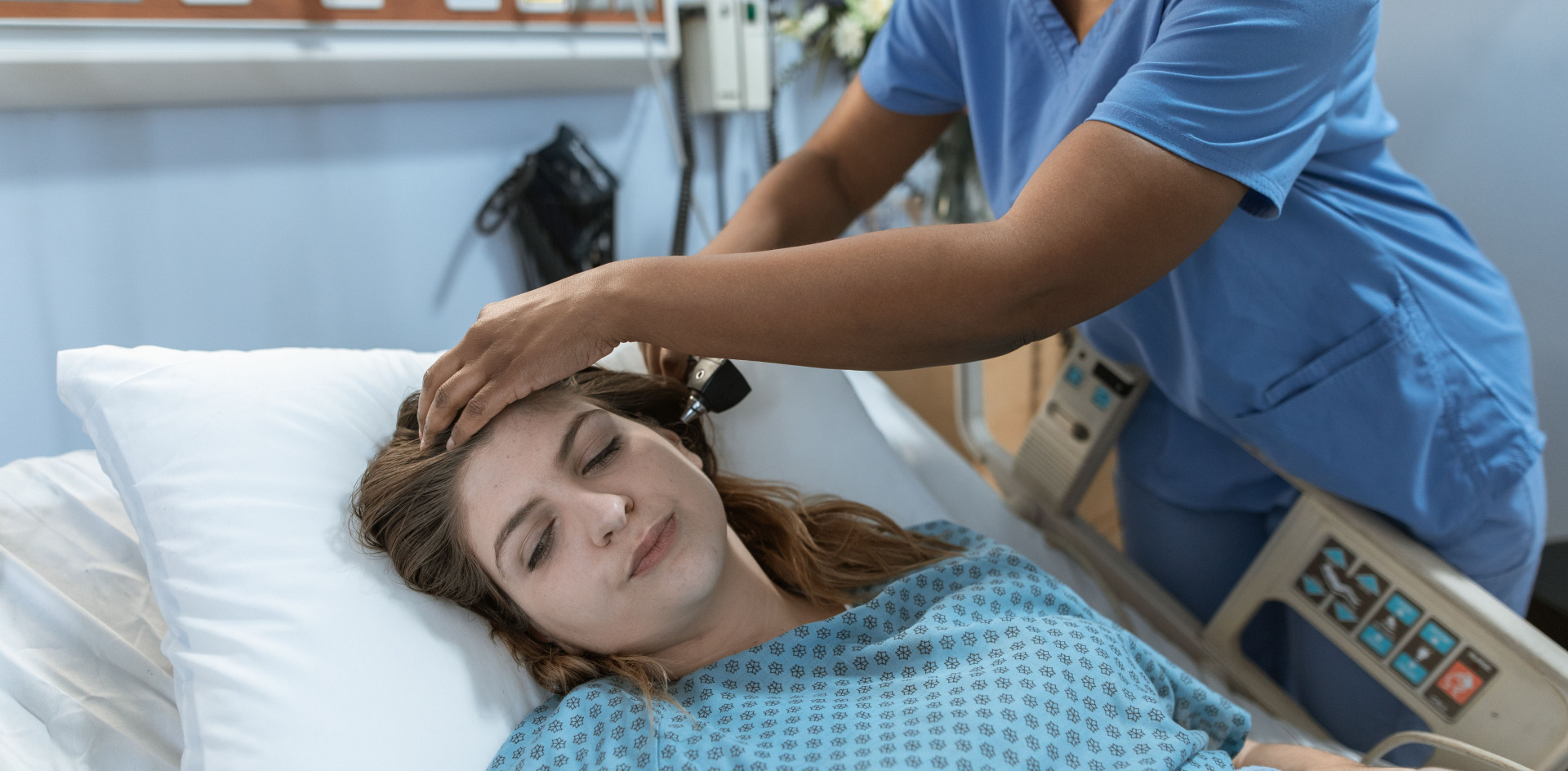
Hospital nurses often care for several patients during a shift and may work days, nights, weekends, or holidays. Nurses in outpatient clinics, schools, community health, research, or public health settings may have more predictable schedules. Regardless of the setting, nurses play a central role in delivering safe, compassionate, evidence-based care.
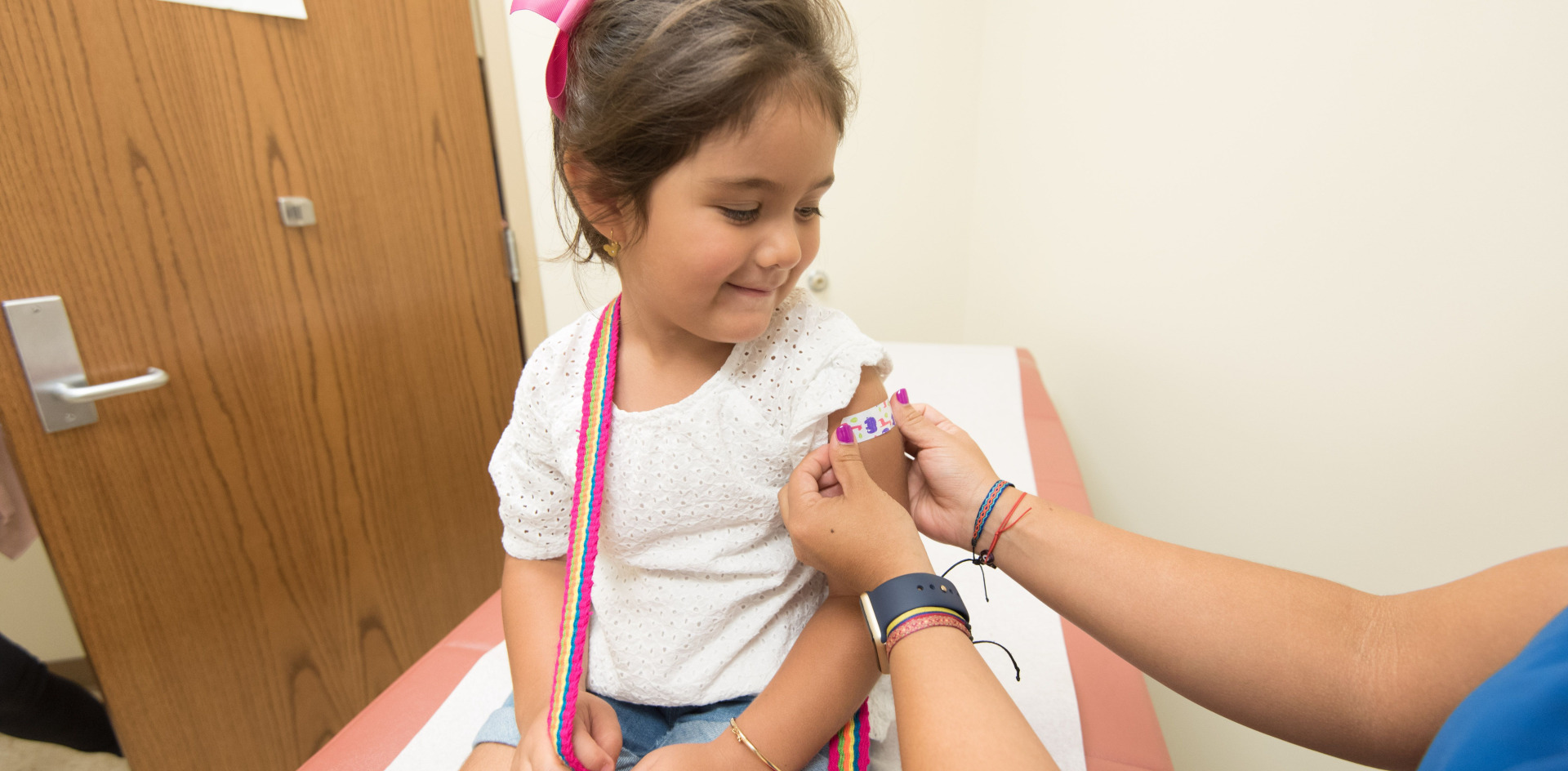
Professional Degree
Most Soka students pursue a Master of Science in Nursing (MSN), Master of Entry into Nursing Practice (MENP), or Master of Entry in Nursing (MDE). Some students may choose an Accelerated Bachelor of Science in Nursing (ABSN) program.
Length of Professional School
Typically 2 to 3 years for graduate-entry master’s programs after completing a bachelor’s degree.
Admissions Exam
Most nursing programs do not require a standardized admissions exam, although requirements vary by school.
Application Process
Most programs participate in NursingCAS, while some accept applications directly.
Licensure
Graduates become registered nurses after passing the National Council Licensure Examination (NCLEX-RN).
Bachelor’s Degree
Complete prerequisite coursework, gain healthcare exposure through volunteering, employment, or shadowing, and explore different areas of nursing.
Apply to Nursing School
Complete prerequisite courses, obtain letters of recommendation, and apply through NursingCAS or directly to schools.
Professional School (2-3 years)
Complete coursework in nursing science, pharmacology, pathophysiology, health assessment, population health, leadership, and evidence-based practice while participating in extensive supervised clinical experiences.
Licensure
Pass the NCLEX-RN and obtain state licensure as a Registered Nurse.
Practice
Begin practicing as a Registered Nurse in hospitals, clinics, public health agencies, schools, community organizations, or other healthcare settings.
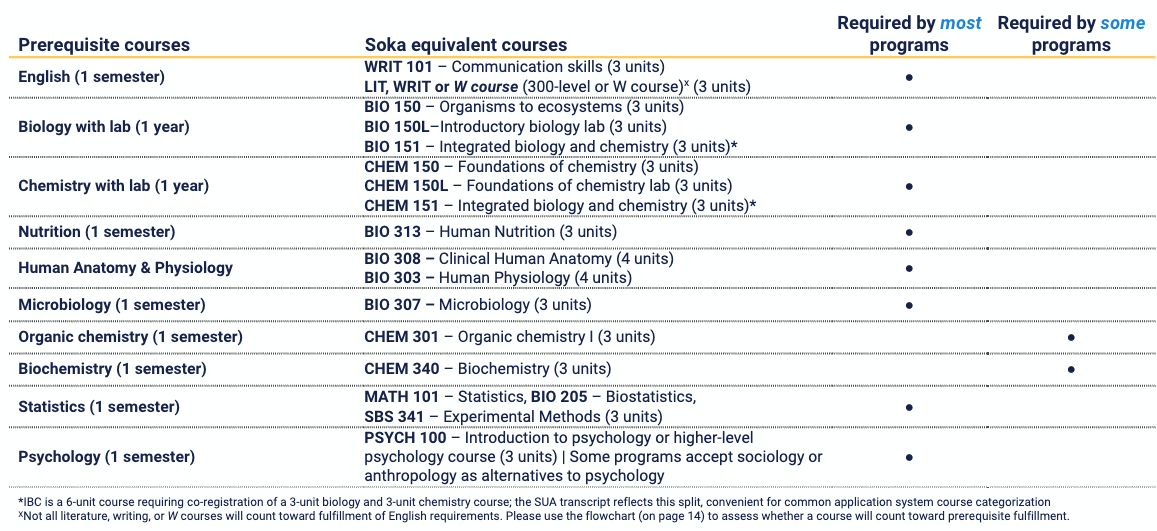
| Prerequisite courses | Soka equivalent courses | Required by most programs | Required by some programs |
| English (1 semester) | WRIT 101 – Communication skills (3 units) LIT, WRIT or W course (300-level or W course)x (3 units) | ● | |
| Biology with lab (1 year) | BIO 150 – Organisms to ecosystems (3 units) BIO 150L–Introductory biology lab (3 units) BIO 151 – Integrated biology and chemistry (3 units)* | ● | |
| Chemistry with lab (1 year) | CHEM 150 – Foundations of chemistry (3 units) CHEM 150L – Foundations of chemistry lab (3 units) CHEM 151 – Integrated biology and chemistry (3 units)* | ● | |
| Nutrition (1 semester) | BIO 313 – Human Nutrition (3 units) | ● | |
| Human Anatomy & Physiology | BIO 308 – Clinical Human Anatomy (4 units) BIO 303 – Human Physiology (4 units) | ● | |
| Microbiology (1 semester) | BIO 307 – Microbiology (3 units) | ● | |
| Organic chemistry (1 semester) | CHEM 301 – Organic chemistry I (3 units) | ● | |
| Biochemistry (1 semester) | CHEM 340 – Biochemistry (3 units) | ● | |
| Statistics (1 semester) | MATH 101 – Statistics, BIO 205 – Biostatistics, SBS 341 – Experimental Methods (3 units) | ● | |
| Psychology (1 semester) | PSYCH 100 – Introduction to psychology or higher-level psychology course (3 units) | Some programs accept sociology or anthropology as alternatives to psychology | ● |
* IBC is a 6-unit course requiring co-registration of a 3-unit biology and 3-unit chemistry course; the SUA transcript reflects this split, convenient for common application system course categorization
x Not all literature, writing, or W courses will count toward fulfillment of English requirements. Please use the flowchart (on HPA handbook page 14) to assess whether a course will count toward prerequisite fulfillment.
Competitive applicants typically demonstrate:
Many nursing programs value meaningful patient care, volunteer service, or healthcare experience, although extensive direct patient care hours are generally not required before admission.
One of nursing’s greatest strengths is the wide variety of opportunities for professional growth. After becoming a Registered Nurse, many nurses pursue advanced education and specialize further.
Common career pathways include:
Nursing remains one of the largest and most diverse healthcare professions. Demand continues to grow due to an aging population, increased access to healthcare, and expanding healthcare needs across hospitals, outpatient clinics, community health organizations, and public health systems.
The profession offers exceptional flexibility, with opportunities to change specialties, pursue advanced practice, engage in research or leadership, and work in nearly every community around the world.
Registered nurses may work in virtually every area of healthcare, including:
| Emergency Nursing | Critical Care (ICU) |
| Medical-Surgical Nursing | Neonatal Intensive Care (NICU) |
| Pediatrics | Labor and Delivery |
| Women's Health | Cardiology |
| Oncology | Perioperative Nursing |
| Psychiatry and Mental Health | Community and Public Health |
| School Nursing | Home Health and Hospice |
| Research | Informatics |
| Leadership and Administration | |
Students interested in nursing may also wish to explore: