Is This Career Right for Me?
| This career may be a good fit if you… | You may prefer another health profession if you… |
|---|---|
|
|
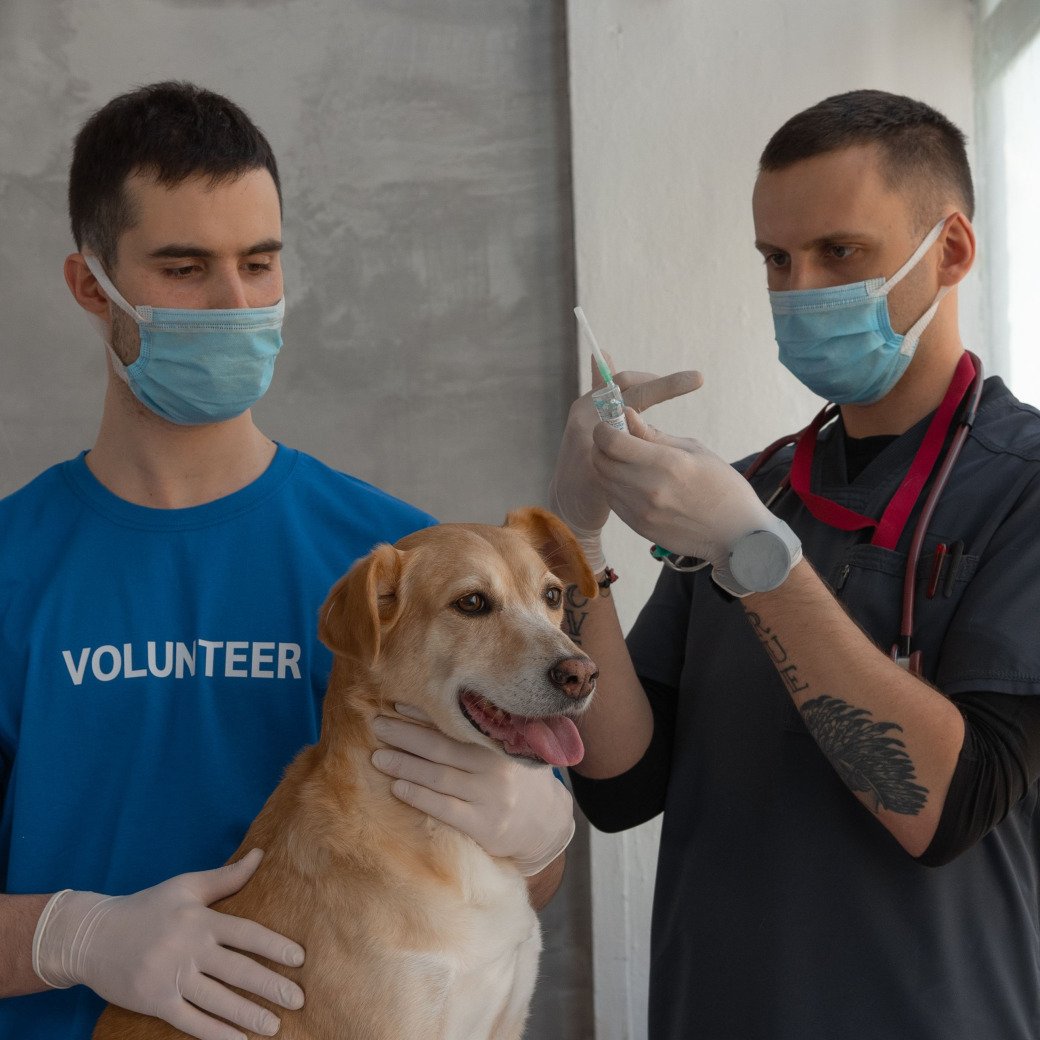
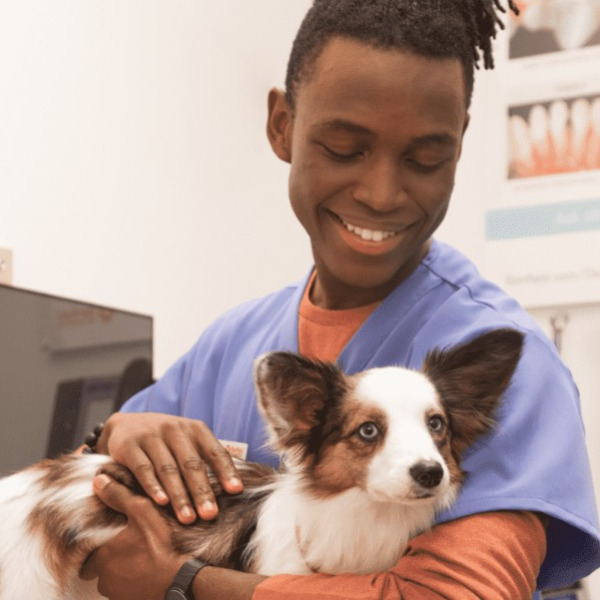
Veterinarians are physicians who diagnose, treat, and help prevent disease and injury in animals. They care for companion animals, livestock, horses, wildlife, zoo animals, laboratory animals, and aquatic species while also protecting public health through disease surveillance, food safety, research, and the prevention of zoonotic diseases that can spread between animals and humans.
Veterinarians work in private practices, specialty referral hospitals, emergency and critical care hospitals, farms, zoos, aquariums, wildlife rehabilitation centers, research institutions, government agencies, public health organizations, the military, and the pharmaceutical industry. The profession combines medicine, surgery, diagnostics, public health, animal welfare, and client communication while offering tremendous diversity in species and career paths.
| This career may be a good fit if you… | You may prefer another health profession if you… |
|---|---|
|
|
A veterinarian's day varies depending on the species they treat and their area of practice. They perform physical examinations, diagnose illnesses, interpret laboratory tests and imaging, prescribe medications, perform surgery, provide preventive care, educate animal owners, and coordinate treatment plans.
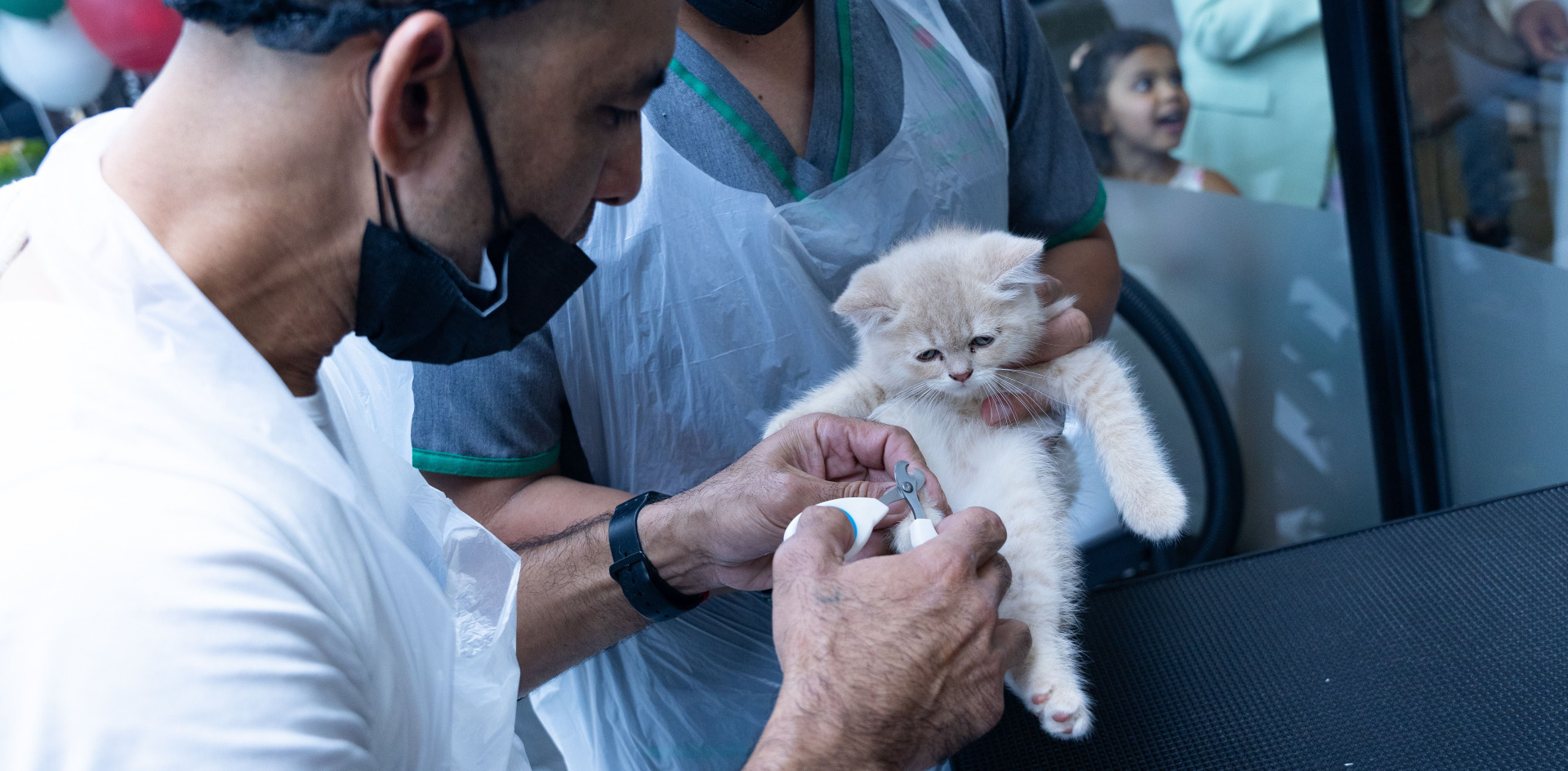
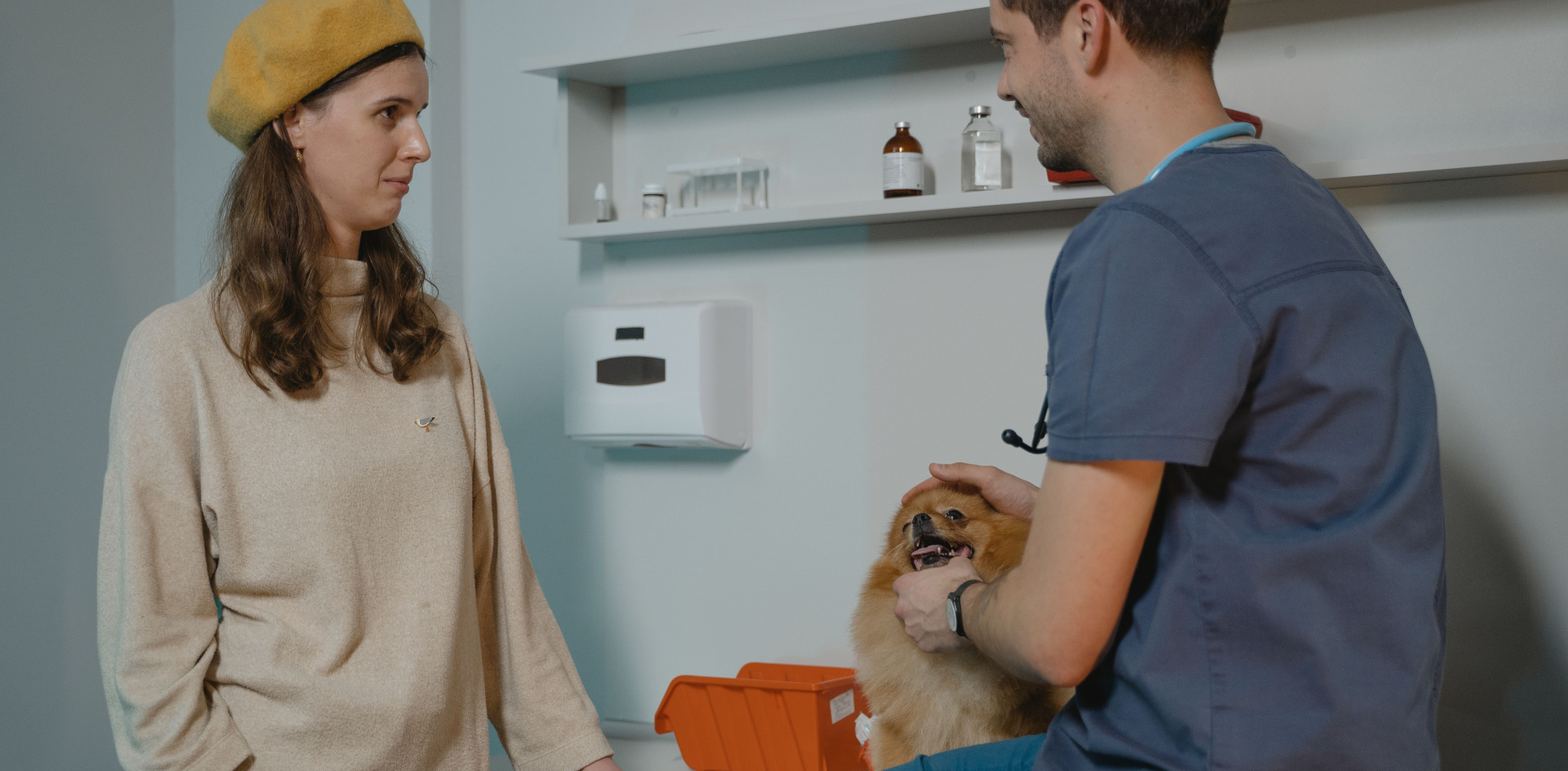
One veterinarian may spend the morning performing orthopedic surgery on a dog, while another vaccinates dairy cattle, examines an injured hawk, or treats a horse with colic. In addition to caring for animals, veterinarians spend significant time communicating with owners, discussing treatment options, and helping families make difficult medical decisions.
Professional Degree
Doctor of Veterinary Medicine (DVM or VMD)
Length of Professional School
Typically 4 years after completing a bachelor’s degree.
Admissions Exam
Most veterinary schools no longer require the Graduate Record Examination (GRE), although requirements vary by school.
Application Process
Most schools participate in the Veterinary Medical College Application Service (VMCAS).
Licensure
Graduates must pass the North American Veterinary Licensing Examination (NAVLE) and meet state licensure requirements.
Optional Internship and Residency
Graduates interested in specialty practice may complete a one-year internship followed by a three- to four-year residency in areas such as surgery, internal medicine, oncology, cardiology, emergency and critical care, zoological medicine, or pathology.
Bachelor’s Degree
Complete prerequisite coursework while gaining extensive experience working with animals under the supervision of veterinarians.
Explore a variety of veterinary settings through shadowing, volunteering, employment, research, and animal care experiences.
Veterinary & Animal Experience (Often 1–3+ Years)
Many successful applicants spend one or more years strengthening their applications before veterinary school. Competitive applicants often accumulate hundreds or thousands of hours working with veterinarians and caring for animals in settings such as small animal clinics, equine practices, farms, wildlife rehabilitation centers, zoos, research laboratories, shelters, or emergency hospitals. These experiences help applicants develop practical skills while confirming their understanding of the profession.
Apply to Professional School
Complete prerequisite courses, obtain letters of recommendation, document veterinary and animal experience, and apply through VMCAS.
Professional School (4 years)
Complete coursework in anatomy, physiology, pathology, pharmacology, surgery, diagnostic imaging, public health, and clinical medicine while participating in extensive clinical rotations involving multiple animal species.
Licensure
Pass the North American Veterinary Licensing Examination (NAVLE) and obtain state licensure.
Practice
Begin practicing in companion animal medicine, large animal medicine, mixed animal practice, specialty referral hospitals, emergency medicine, public health, research, industry, academia, wildlife medicine, or many other fields.
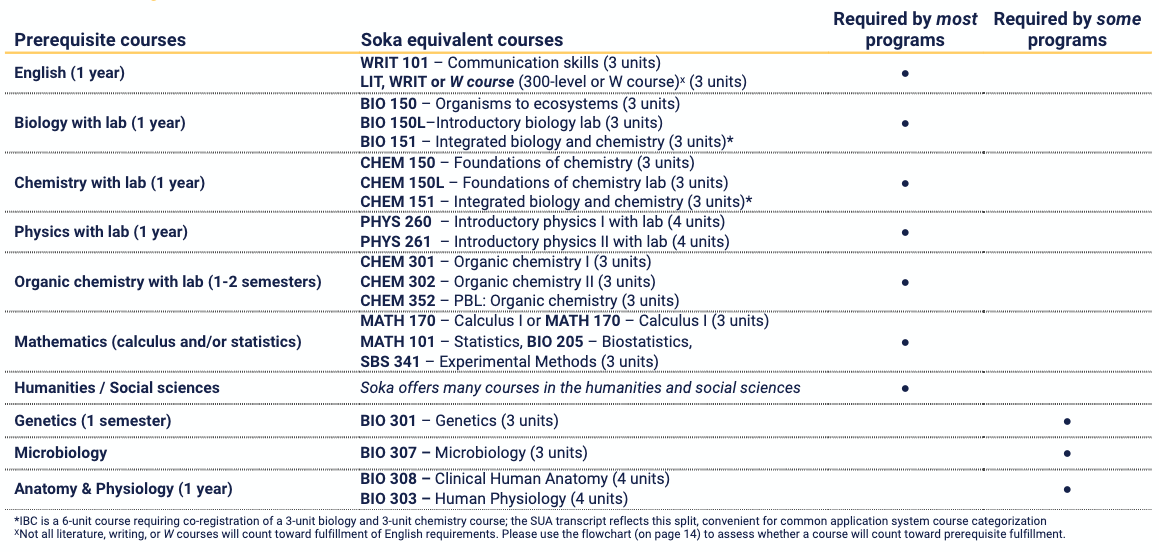
| Prerequisite courses | Soka equivalent courses | Required by most programs | Required by some programs |
| English (1 year) | WRIT 101 – Communication skills (3 units) LIT, WRIT or W course (300-level or W course)x (3 units) | ● | |
| Biology with lab (1 year) | BIO 150 – Organisms to ecosystems (3 units) BIO 150L–Introductory biology lab (3 units) BIO 151 – Integrated biology and chemistry (3 units)* | ● | |
| Chemistry with lab (1 year) | CHEM 150 – Foundations of chemistry (3 units) CHEM 150L – Foundations of chemistry lab (3 units) CHEM 151 – Integrated biology and chemistry (3 units)* | ● | |
| Physics with lab (1 year) | PHYS 260 – Introductory physics I with lab (4 units) PHYS 261 – Introductory physics II with lab (4 units) | ● | |
| Organic chemistry with lab (1-2 semesters) | CHEM 301 – Organic chemistry I (4 units) CHEM 302 – Organic chemistry II (3 units) CHEM 352 – PBL: Organic chemistry (3 units) | ● | |
| Mathematics (calculus and/or statistics) | MATH 170 – Calculus I or MATH 171 – Calculus II (3 units) MATH 101 – Statistics, BIO 205 – Biostatistics, SBS 341 – Experimental Methods (3 units) | ● | |
| Humanities / Social sciences | Soka offers many courses in the humanities and social sciences | ● | |
| Genetics (1 semester) | BIO 301 – Genetics (3 units) | ● | |
| Microbiology | BIO 307 – Microbiology (3 units) | ● | |
| Anatomy & Physiology (1 year) | BIO 308 – Clinical Human Anatomy (4 units) BIO 303 – Human Physiology (4 units) | ● |
* IBC is a 6-unit course requiring co-registration of a 3-unit biology and 3-unit chemistry course; the SUA transcript reflects this split, convenient for common application system course categorization
x Not all literature, writing, or W courses will count toward fulfillment of English requirements. Please use the flowchart (on HPA handbook page 14) to assess whether a course will count toward prerequisite fulfillment.
Competitive applicants typically demonstrate:
Unlike many other health professions, veterinary schools place substantial emphasis on both veterinary experience (working directly with veterinarians) and animal experience (working with animals in a variety of settings). Students should begin building these experiences early in college, and many successful applicants spend one or more years strengthening their applications before applying.
Demand for veterinarians continues to grow as companion animal ownership increases, livestock production evolves, and society recognizes the important role veterinarians play in public health, food safety, biomedical research, and disease prevention. Career opportunities extend far beyond private clinical practice into government, academia, industry, military service, wildlife conservation, and global health.
Veterinary medicine offers one of the broadest career landscapes in healthcare, allowing professionals to combine clinical medicine with research, education, conservation, public health, and policy.
Veterinarians may specialize in:
| Companion Animal Medicine | Large Animal Medicine |
| Equine Medicine | Food Animal Medicine |
| Emergency and Critical Care | Zoological Medicine |
| Internal Medicine | Oncology |
| Cardiology | Dermatology |
| Neurology | Exotic Animal Medicine |
| Surgery | Laboratory Animal Medicine |
| Wildlife Medicine | Shelter Medicine |
| Public Health | Research and Academia |
Students interested in veterinary medicine may also wish to explore: