Planning to Apply to Dental School?​

This page provides an overview of the dental profession and the pathway to becoming a dentist. For detailed guidance on prerequisite coursework, course planning, the Dental Admission Test (DAT), application timelines, committee letters, school selection, interviews, and admissions strategies, please refer to the Soka Health Professions Advising Handbook.

Declare Your Pre-Health Interest to receive personalized advising, the HPA Weekly Brief, and information about research, clinical, and leadership opportunities. ​

Download the HPA Handbook​ Declare Your Pre-Health Interest

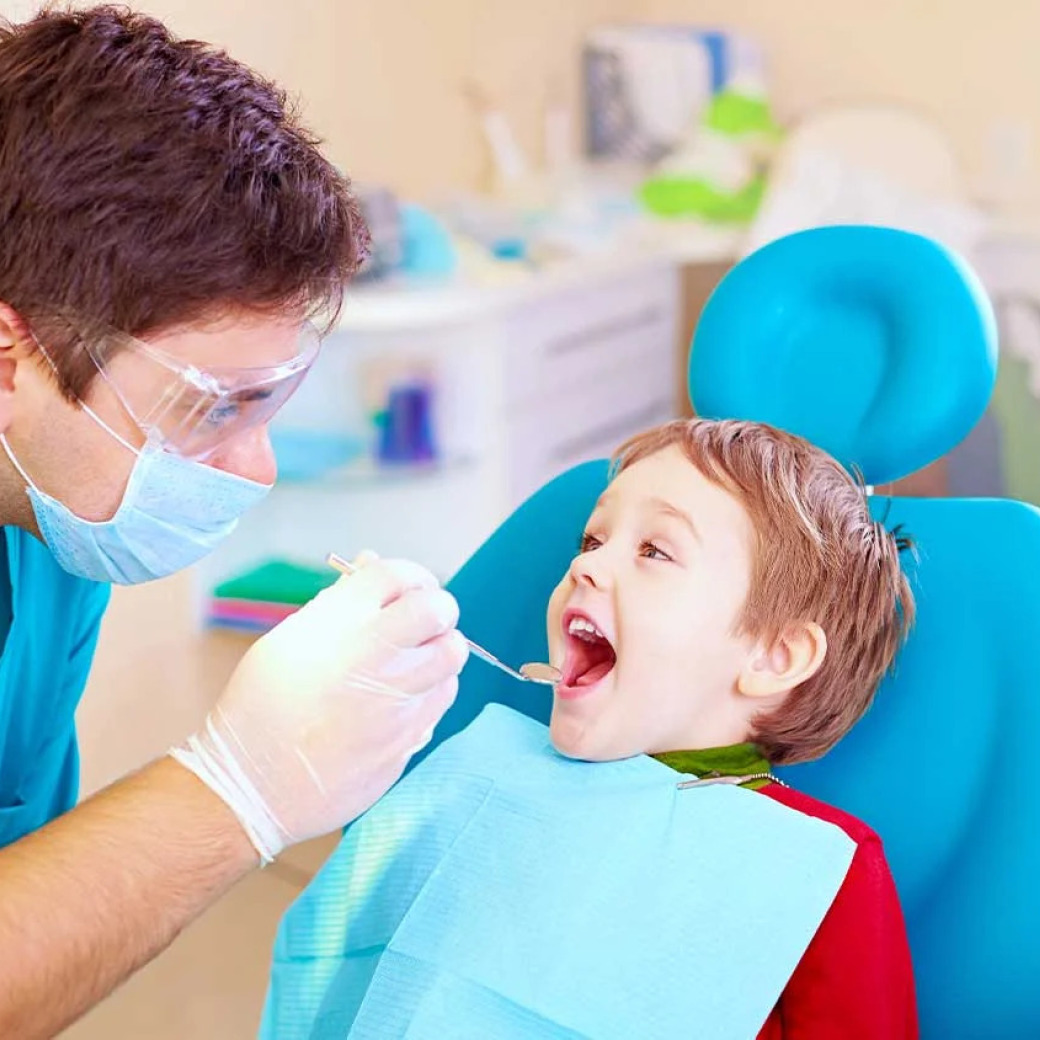
A dentist examining a kid's teeth
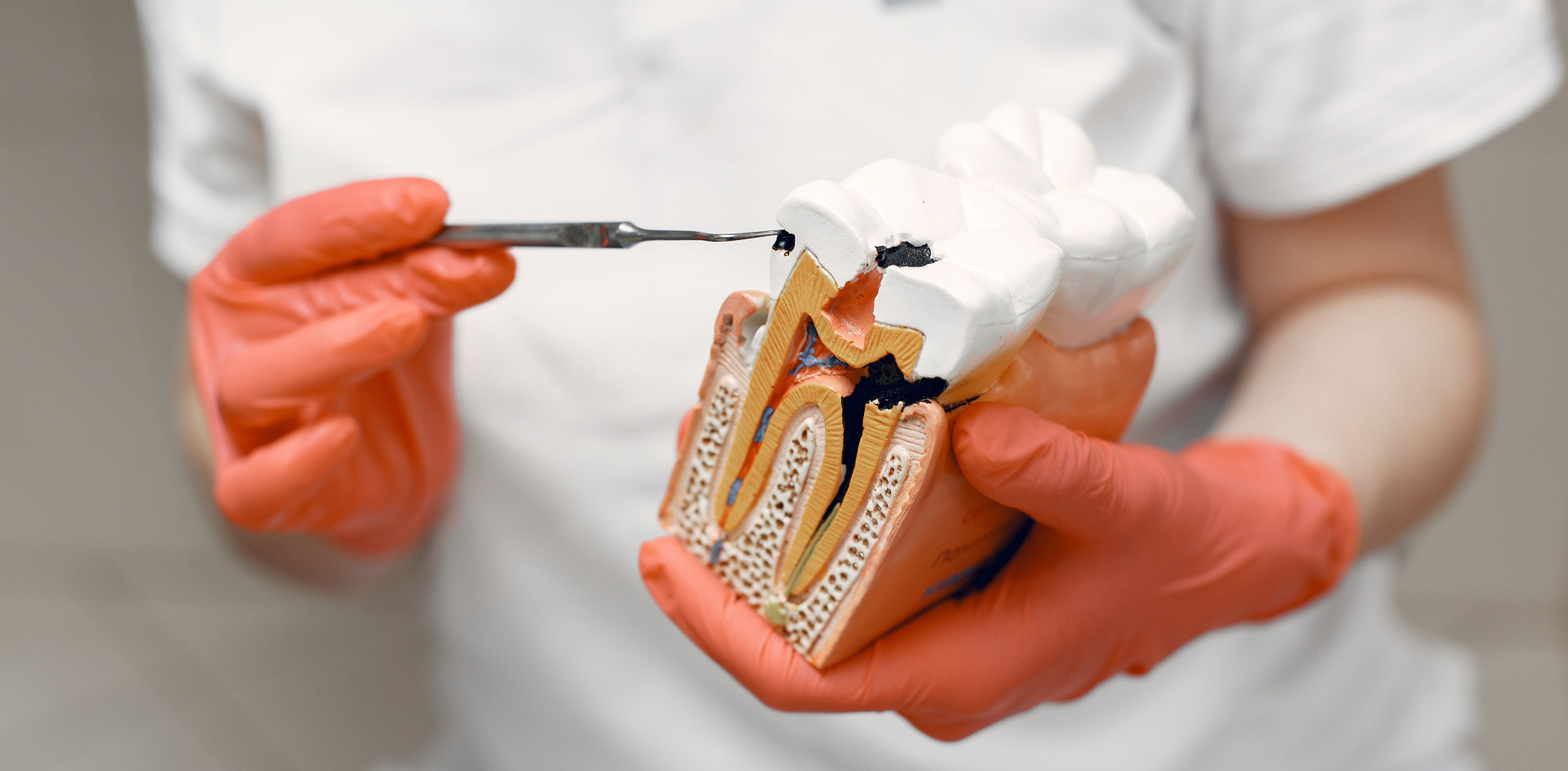
A set of stainless steel dental tools displayed on a blue surface in a clinic setting

Overview

Dentists are healthcare professionals who diagnose, prevent, and treat diseases and conditions affecting the teeth, mouth, jaws, and surrounding tissues. They restore oral health, relieve pain, improve function, and enhance patients’ quality of life through preventive care, restorative procedures, oral surgery, and patient education.​

Dentists care for patients across the lifespan, from young children receiving their first dental examination to older adults requiring complex restorative care. They work in private practices, community health centers, hospitals, academic medical centers, public health organizations, the military, and research settings. The profession combines medicine, surgery, engineering, artistry, precision, and long-term patient relationships while offering opportunities to specialize in numerous areas of oral healthcare.​

Is This Career Right for Me?​

This career may be a good fit if you…​You may prefer another health profession if you…​
  • Enjoy biology, anatomy, and biomedical science.​ ​ ​
  • Like working with your hands and developing technical skills.​
  • Appreciate precision and attention to detail.​
  • Enjoy solving problems while building long-term relationships with patients.​
  • Want to combine science, artistry, and patient care.​
  • Are interested in owning or leading a healthcare practice.​
  • Prefer caring for patients with a broad range of medical conditions.​
  • Want to work primarily in hospitals.​
  • Are uncomfortable performing procedures in confined spaces.​
  • Prefer indirect patient care or laboratory work.​
  • Are less interested in fine motor skills and procedural care.​

Header

Professional Degree​
Doctor of Dental Surgery (DDS) or Doctor of Dental Medicine (DMD)​

Length of Dental School​
Typically 4 years after completing a bachelor's degree.​

Admissions Exam​
Most U.S. dental schools require the Dental Admission Test (DAT). (Default)​

Application Process​
Most schools participate in the American Dental Education Association Associated American Dental Schools Application Service (ADEA AADSAS). Texas public dental schools participate in the Texas Medical and Dental Schools Application Service (TMDSAS). (Default)​

Optional Residency​
Many graduates enter practice immediately after dental school. Others complete one- to six-year residency programs or specialty training in areas such as orthodontics, pediatric dentistry, oral and maxillofacial surgery, periodontics, prosthodontics, endodontics, oral pathology, oral radiology, or dental public health.​

Licensure​
Graduates must successfully complete the National Board Dental Examination pathway and satisfy regional or state clinical licensing requirements to obtain state licensure.​

Bachelor's Degree (4 years)​
Complete prerequisite coursework while developing a strong academic foundation. Gain exposure to dentistry through shadowing, volunteering, leadership, community service, research, and involvement in organized dentistry.​

Dental Experience (Often 1+ Gap Years, Optional but Common)​
Many successful applicants apply directly from college, while others spend one or more years strengthening their applications. Common experiences include working as a dental assistant, dental laboratory technician, research assistant, public health professional, or pursuing service opportunities. These experiences deepen applicants' understanding of the profession and strengthen their clinical exposure.​

Apply to Dental School​
Complete prerequisite courses, prepare for the DAT, obtain letters of recommendation, and submit applications through ADEA AADSAS or TMDSAS.​

Dental School (4 years)​
Complete foundational biomedical science coursework followed by extensive clinical education in restorative dentistry, oral surgery, pediatric dentistry, periodontics, prosthodontics, endodontics, oral pathology, radiology, and comprehensive patient care.​

Optional Residency (1-6 years)​
Complete advanced clinical training if pursuing a specialty or hospital-based practice.​

Practice​
Begin practicing in private practice, community health centers, hospitals, academic dentistry, public health, military service, or research.​​

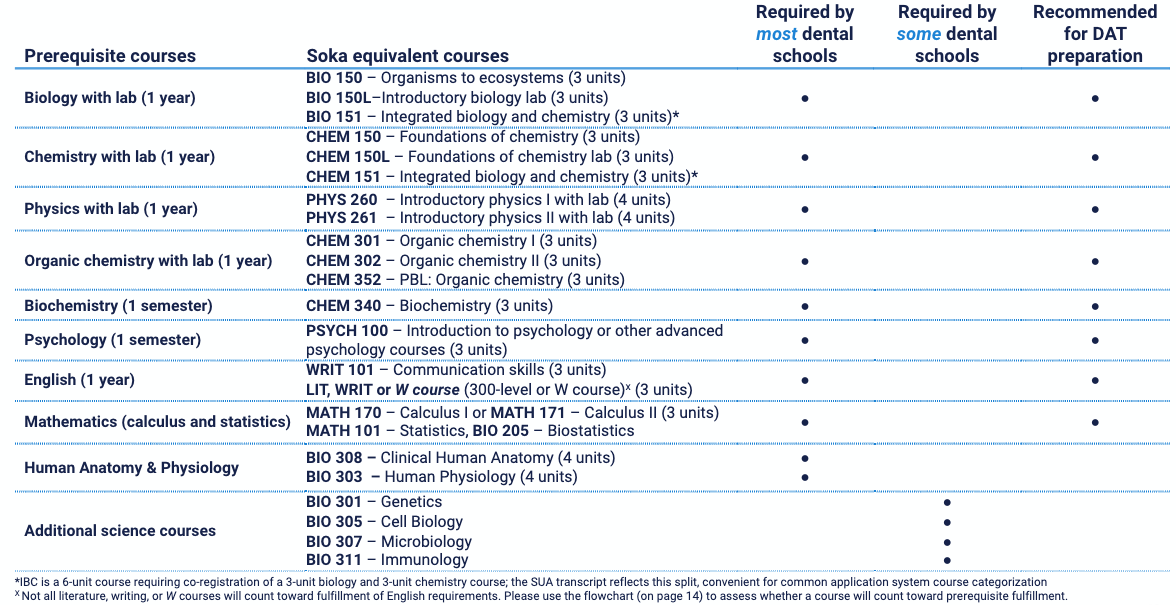
Prerequisite courses​Soka equivalent courses​Required by most programs​Required by some programs​

Recommended for DAT preparation​

Biology with lab (1 year)​BIO 150 – Organisms to ecosystems (3 units)​
BIO 150L–Introductory biology lab (3 units)​
BIO 151 – Integrated biology and chemistry (3 units)*​
 
Chemistry with lab (1 year)​CHEM 150 – Foundations of chemistry (3 units)​
CHEM 150L – Foundations of chemistry lab (3 units)​
CHEM 151 – Integrated biology and chemistry (3 units)*​
 
Physics with lab (1 year)​PHYS 260  – Introductory physics I with lab (4 units)​
PHYS 261  – Introductory physics II with lab (4 units)​
 
Organic chemistry with lab (1 year)​CHEM 301 – Organic chemistry I (4 units)​
CHEM 302 – Organic chemistry II (3 units)​
CHEM 352 – PBL: Organic chemistry (3 units)
●​ 
Biochemistry (1 semester)​CHEM 340 – Biochemistry (3 units)​ 
Psychology (1 semester)​PSYCH 100 – Introduction to psychology or other advanced psychology courses (3 units)​ 
English (1 year)​WRIT 101 – Communication skills (3 units)​
LIT, WRIT or W course (300-level or W course)x (3 units)​
 
Mathematics (calculus and statistics)​MATH 170 – Calculus I or MATH 171 – Calculus II (3 units)​
MATH 101 – Statistics, BIO 205 – Biostatistics
 
Human Anatomy & Physiology​BIO 308 – Clinical Human Anatomy (4 units)​
BIO 303 – Human Physiology (4 units)​

  
Additional science courses​BIO 301 – Genetics​
BIO 305 – Cell Biology​
BIO 307 – Microbiology​
BIO 311 – Immunology ​


* IBC is a 6-unit course requiring co-registration of a 3-unit biology and 3-unit chemistry course; the SUA transcript reflects this split, convenient for common application system course categorization ​
x Not all literature, writing, or W courses will count toward fulfillment of English requirements. Please use the flowchart (on HPA handbook page 14) to assess whether a course will count toward prerequisite fulfillment.​​

Competitive applicants typically demonstrate:​

  • Strong academic performance, particularly in the sciences.​
  • Completion of prerequisite coursework.​
  • Competitive DAT scores.​
  • Meaningful dental shadowing and clinical exposure.​
  • Leadership, service, and community engagement.​
  • Research experience, while not required, can strengthen an application.​
  • Excellent communication and interpersonal skills.​
  • Manual dexterity and attention to detail.​
  • A clear understanding of the dental profession and commitment to patient-centered care.​

Dental schools use a holistic admissions process. While academic achievement is important, successful applicants also demonstrate compassion, professionalism, integrity, leadership, and sustained commitment to serving others.​

Employment Outlook

Demand for dentists remains strong as the population grows, ages, and increasingly values preventive oral healthcare. Dentists enjoy diverse career opportunities in private practice, community health centers, hospitals, academia, military service, research, public health, and organized dentistry.​
Dentistry offers considerable professional autonomy and flexibility. Many dentists own their practices, while others work within group practices, health systems, or academic institutions. The profession also provides opportunities to combine patient care with research, teaching, administration, entrepreneurship, or global oral health.​

Areas of Practice​

Dentists may specialize in:​

  • General Dentistry​
  • Orthodontics and Dentofacial Orthopedics​
  • Oral and Maxillofacial Surgery​
  • Pediatric Dentistry​
  • Endodontics​
  • Periodontics​
  • Prosthodontics​
  • Oral and Maxillofacial Pathology​
  • Oral and Maxillofacial Radiology​
  • Dental Public Health
  • Orofacial Pain​

Related Careers​

Students interested in dentistry may also wish to explore:​

  • Dental Hygiene​
  • Medicine (MD/DO)​
  • Podiatric Medicine​
  • Pharmacy​
  • Physician Assistant/Associate​
  • Public Health​
  • Oral Health Research​
  • Craniofacial Research​

Professional Resources​

  • Professional Association: American Dental Association (ADA)​
  • Application Service: American Dental Education Association Associated American Dental Schools Application Service (ADEA AADSAS) Admissions Exam: Dental Admission Test (DAT) ​
  • Accreditation: Commission on Dental Accreditation (CODA)​