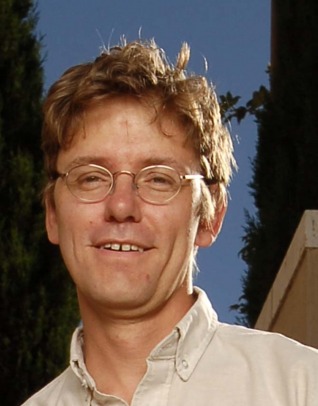
Sarah England, PhD
I graduated from the University of California at Davis with a PhD in Sociocultural Anthropology in 2000 and was hired as SUA faculty in 2002. All of the research that I have conducted has been in Cent...
Anthropology is the study of what it means to be human. Anthropologists study humans across time by looking at the origins of our species, how it has changed over millennia to adapt to different environments, and what makes us unique as a species. We study the origins of language, technology, social institutions, world views, and other aspects of what we call “culture” and how they have changed over time. And we study what it means to be human across space, that is, how do humans in different parts of the world organize themselves in order to form families, produce food and other goods, create laws and political systems, produce art, music, philosophy, and conceptualize the relationship between the “natural” and the “supernatural” worlds.
On one hand, then, we are interested in what unites us as a species: what are the universal concerns, social problems, skills, and potentials for creativity that all human societies possess? At the same time, we are interested in the diversity of what it means to be human: how have humans used their creativities in different ways to solve the problems of survival, cooperation, and conflict, and the creation of meaning? Anthropology then is an important field of study for those who want to have a deeper understanding of the diversity of cultures and societies that have existed over time and space, as well as develop tools for critically examining the role that culture plays in many of the social issues facing humanity today.
Taking anthropology courses will prepare you for work in a variety of professional non-academic settings and businesses and for graduate work in a variety of the social sciences such as anthropology, sociology, history as well as in a number of interdisciplinary fields such as global health, urban planning, development studies, social medicine, public health, social work, education, cultural studies, women’s studies, ethnic studies, American studies, Latin American studies, Asian studies, etc. It is also a good grounding for work in human rights and other social justice organizing, as well as for careers that require working internationally and/or with a diverse population. And finally, an understanding of cultural diversity and a sensitivity to a variety of social settings can contribute to a more rounded approach to all kinds of fields such as medicine and global health, law, education, economic development, business, and many others. Many students who have focused on anthropology courses at SUA have gone on to professional work in these applied fields.
Anthropology courses at SUA are divided into those that introduce students to a particular topic in anthropology (such as race, gender, poverty) and draw on examples from many parts of the world; and those that focus on a particular “culture area” such as Oceania, Central America, and North America that introduce students to the particularities of those areas in terms of social organization, cultural ideologies, social problems, as well as how they have been impacted by and integrated into global processes. Our hope is to give students a sense of the diversity of human societies, as well as the tools to be able to analyze them through an anthropological lens.
Two of our faculty are trained as cultural anthropologists and have conducted fieldwork in Oceania, Latin America, the Caribbean, North America, and Europe. Our affiliate faculty member is a historian and uses ethno-historical methods to research North American history. We research and publish on the topics of feminist theories of gender, sexuality, and gender violence, critical race studies, poverty and urban space, place-making, medical anthropology, human rights, immigration, slavery, indigenous peoples, education, colonialism, imperialism, and social movements.